
Burst Tomato Burrata Pasta
Burst tomato burrata pasta delivers the kind of glossy, clingy sauce that makes a bowl of pasta feel far more luxurious than the effort it asks for. The tomatoes don’t…
Tip: save now, cook later.Burst tomato burrata pasta delivers the kind of glossy, clingy sauce that makes a bowl of pasta feel far more luxurious than the effort it asks for. The tomatoes don’t just soften here — they blister, collapse, and turn into a sweet-savory pan sauce that coats every ridge of rigatoni or every wide ribbon of pappardelle. Then burrata goes on at the very end, where its cool creaminess melts into the heat without disappearing completely.
The trick is giving the tomatoes time to do their job in a wide skillet. If the pan is crowded, they steam and stay watery; if the garlic burns before the tomatoes go in, the whole sauce tastes sharp instead of round. A little sugar helps the tomatoes taste fuller, not sugary, and a splash of reserved pasta water pulls everything into one glossy sauce instead of leaving oil and juices separated in the pan.
Below, I’m walking through the exact point where the tomatoes go from blistered to jammy, plus the one way to finish this dish so the burrata stays creamy and the pasta stays saucy right to the last bite.
I was nervous the burrata would just melt away, but keeping it off the heat worked perfectly. The tomatoes got jammy and the sauce coated the pasta instead of pooling at the bottom, which is usually my problem with tomato pasta.
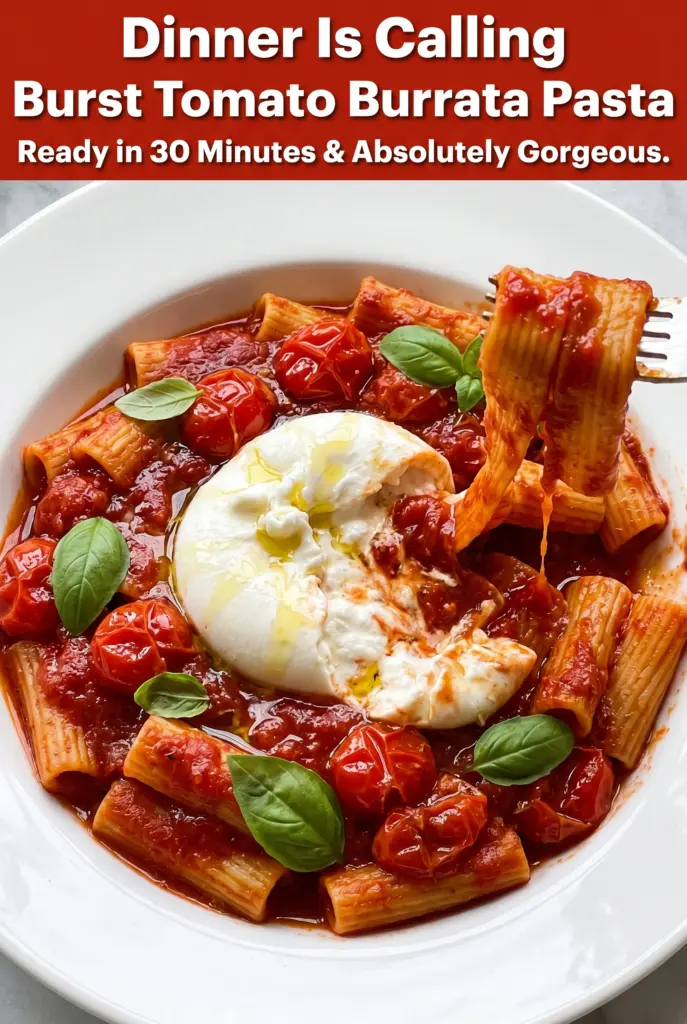
Burst tomato burrata pasta with jammy tomatoes, creamy burrata, and a glossy finish that clings to every bite
The Reason the Tomatoes Need Room to Burst
The biggest mistake with this kind of pasta is treating the tomatoes like a sauce base that can rush itself. They need direct contact with the hot pan first, which means a wide skillet and enough oil to help the skins blister before the juices come out. Once they start collapsing, the pan changes from sharp and oily to thick and glossy. That’s the moment you want to keep cooking, because the flavor deepens fast once the tomato liquid reduces.
Garlic belongs early, but not too early. If it sits in the pan long enough to brown hard before the tomatoes go in, the sauce gets bitter and the sweetness of the tomatoes disappears. The red pepper flakes bloom in the oil and give the dish heat without making it taste hot in a thin, one-dimensional way. The point is building a sauce that tastes layered, not just acidic tomato with cheese on top.
What Each Ingredient Is Actually Doing in This Dish
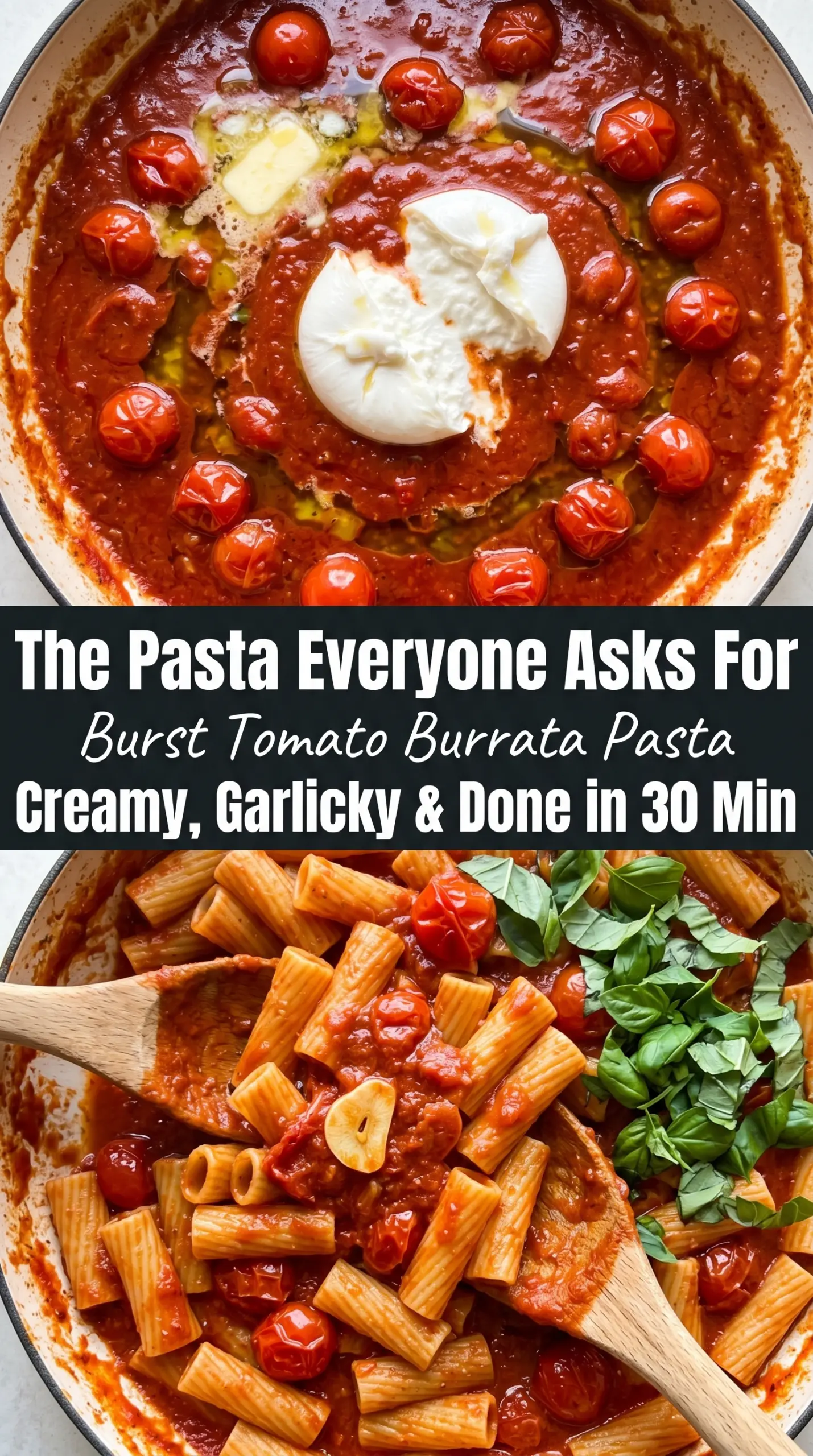
- Rigatoni or pappardelle — Both give the sauce places to cling. Rigatoni traps little pockets of tomato, while pappardelle gives you broad ribbons coated in the glossy sauce. Use whichever shape you have, but don’t swap in a very delicate pasta that will break under the weight of the burrata.
- Cherry tomatoes — These are the heart of the recipe because they burst into a sweet, concentrated sauce without needing long simmering. Mixed colors add a little extra brightness, but any ripe cherry tomato works. If your tomatoes are bland, the sauce will be bland too, so choose the best-looking ones you can find.
- Burrata — Burrata gives you both the creamy center and the softer outer shell, which melts into the pasta without turning fully into a sauce. Fresh mozzarella can stand in, but it won’t give you the same lush finish. Tear it by hand so the center stays irregular and melts naturally over the hot pasta.
- Reserved pasta water — This is what helps the sauce go from oily and chunky to silky and cohesive. The starch in the water binds with the tomato juices and butter, so add it gradually instead of dumping it all in at once. You may not need every drop, but you do need enough to help the sauce coat the pasta cleanly.
- Butter and basil — Butter rounds out the acidity and gives the sauce that glossy, restaurant-style finish. Basil goes in at the end because heat flattens its brightness fast. Tear it instead of chopping it so the edges don’t bruise and darken before you serve.
The 12 Minutes That Turn Tomatoes Into Sauce
Getting the Garlic Fragrant, Not Bitter
Heat the olive oil until it shimmers, then add the sliced garlic and red pepper flakes. Stir for 60 to 90 seconds, just until the garlic turns pale gold at the edges and smells sweet and sharp at the same time. If it goes dark brown, pull the pan off the heat and start again, because burnt garlic will stay in the sauce no matter how many tomatoes you add.
Letting the Tomatoes Collapse on Their Own
Add the cherry tomatoes in a single layer and leave them alone for a couple of minutes so the bottoms blister against the hot pan. Once they begin to split, season them and press gently with the back of a spoon. You’re looking for a thick, jammy sauce with some skins still visible, not a watery skillet full of tomato juice.
Finishing the Sauce Before the Cheese Goes In
Stir in the butter and torn basil, then add the drained pasta straight into the skillet with a splash of reserved water. Toss constantly until every piece is coated and the sauce clings instead of pooling. Remove the pan from the heat before you add the burrata; if the pan is still raging hot, the cheese disappears into the sauce instead of staying creamy in little rich pockets.
Make It Spicier or Keep It Mild
The red pepper flakes give the sauce a gentle heat, but you can push them higher if you want the tomatoes to taste a little more assertive. For a milder version, cut the flakes in half and keep the garlic just barely golden. The tomatoes and burrata still carry the dish; the heat is there to sharpen the edges, not dominate them.
Dairy-Free Version
Skip the butter and burrata and finish the pasta with a little more olive oil and extra basil. You lose the creamy contrast, so lean harder on well-reduced tomatoes and a generous pinch of flaky salt at the end. If you want a richer finish without dairy, a spoonful of dairy-free cashew cream stirred in off the heat will soften the acidity.
Gluten-Free Pasta Swap
Use a sturdy gluten-free pasta with some shape to it, not a delicate noodle that turns soft too fast. Gluten-free pasta often needs less tossing time in the sauce, so stop as soon as it’s coated and glossy. Reserve a little extra pasta water, since some gluten-free shapes drink up more liquid than wheat pasta.
Turning It Into a Bigger Meal
Add sautéed shrimp, grilled chicken, or crispy chickpeas if you want more protein without changing the core sauce. Keep the add-ins cooked separately so they don’t steal space from the tomatoes in the pan. The sauce works best when it stays focused and jammy, so fold extras in at the end instead of crowding the skillet early.
Storage and Reheating
- Refrigerator: Store leftovers for up to 3 days. The burrata won’t stay as creamy after chilling, but the sauce still holds up well.
- Freezer: The pasta and tomatoes freeze better than the burrata, so freeze the sauced pasta without the cheese if you want to save a batch. Thaw overnight in the fridge and add fresh burrata after reheating.
- Reheating: Warm gently in a skillet over low heat with a splash of water to loosen the sauce. Microwaving on high tends to tighten the pasta and make the cheese separate, so low, gentle heat works better here.
Questions I Get Asked About This Recipe
Burst Tomato Burrata Pasta
Ingredients
Equipment
Method
- Bring a large pot of heavily salted water to a boil. Cook the pasta according to package directions until al dente, stirring occasionally so it cooks evenly.
- Before draining, scoop out 1/2 cup of pasta water and set aside. Drain the pasta and return it to the pot so it doesn’t cool too much.
- Heat 3 tbsp olive oil in a large wide skillet over medium-high heat until shimmering. Keep it hot so the garlic browns quickly without burning.
- Add the thinly sliced garlic and red pepper flakes to the skillet. Stir and cook for 60–90 seconds until golden and fragrant, watching closely so it doesn’t burn.
- Add all the cherry tomatoes in a single layer to the skillet. Let them sit undisturbed for 2 minutes until the bottoms begin to char and blister.
- Season the tomatoes with sugar, salt, and black pepper. Toss gently and continue cooking for 6–8 minutes, pressing lightly on the tomatoes with the back of a spoon until they burst and release their juices.
- Add the unsalted butter and stir until melted. Toss in the torn basil so it wilts into the jammy tomato sauce.
- Add the drained pasta directly into the skillet. Pour in the reserved pasta water a splash at a time, tossing constantly until the pasta is coated and the sauce looks glossy.
- Cook for 1–2 minutes more until everything is glossy and cohesive. Keep tossing so the sauce clings to the ridges of the pasta.
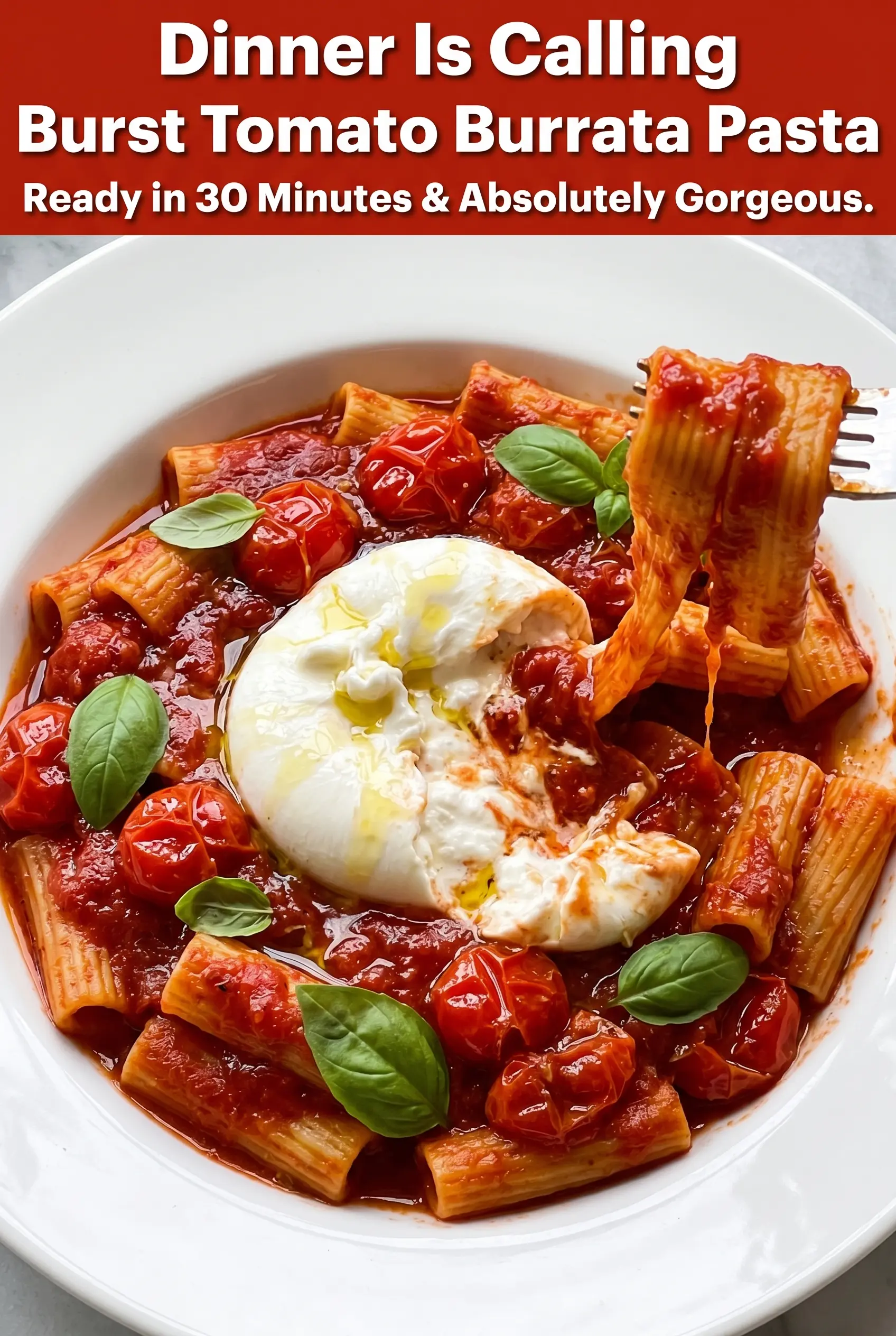
- Remove the pan from heat and tear the burrata balls. Nestle the burrata directly on top of the pasta in large, generous pieces without stirring yet.
- Drizzle generously with extra virgin olive oil and add flaky sea salt and freshly cracked black pepper. Garnish with extra basil leaves, then serve immediately while the burrata is soft and melts at the table.