
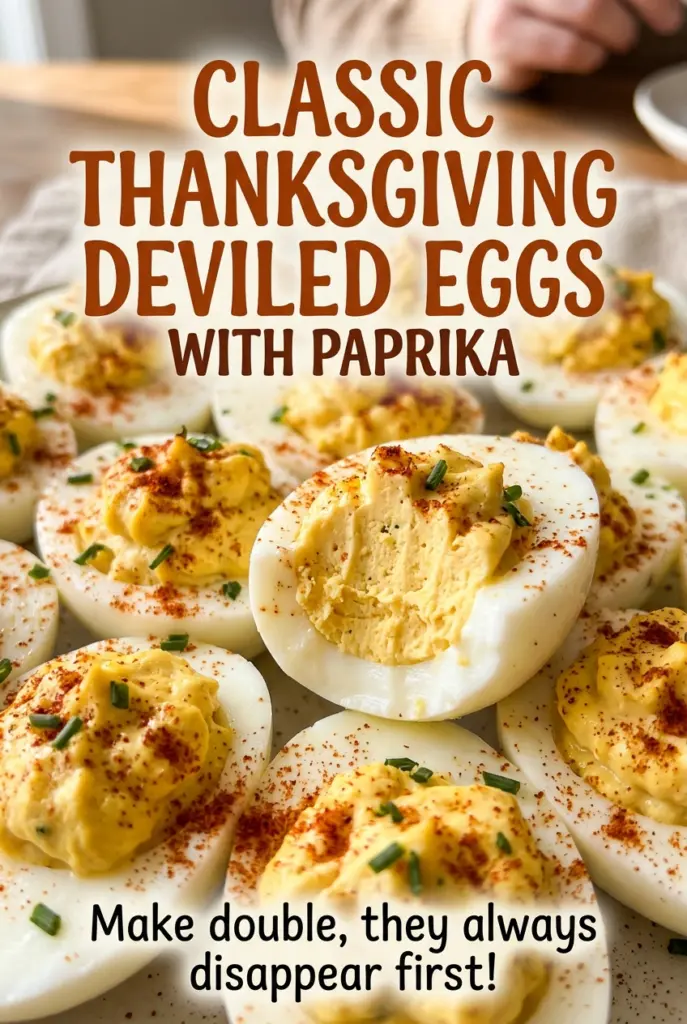
Classic Thanksgiving Deviled Eggs with Paprika
The water reaches a rolling boil, and that’s when I used to keep the burner on, thinking a harder boil would cook the eggs more reliably. It didn’t; it left…
Tip: save now, cook later.The water reaches a rolling boil, and that’s when I used to keep the burner on, thinking a harder boil would cook the eggs more reliably. It didn’t; it left me with dry yolks and whites that were tougher than they needed to be. For these classic Thanksgiving deviled eggs, I bring the water to a boil, cover the pan, and let the eggs cook off the heat instead.
That gentler finish gives the yolks a soft texture that mashes smoothly with mayonnaise, Dijon, and a little vinegar. I keep the filling simple so each bite tastes creamy and tangy, with paprika on top for its familiar color and mild warmth. The finished halves are easy to arrange on a platter, and every one gets the same silky filling and delicate dusting of red.
Kitchen Note
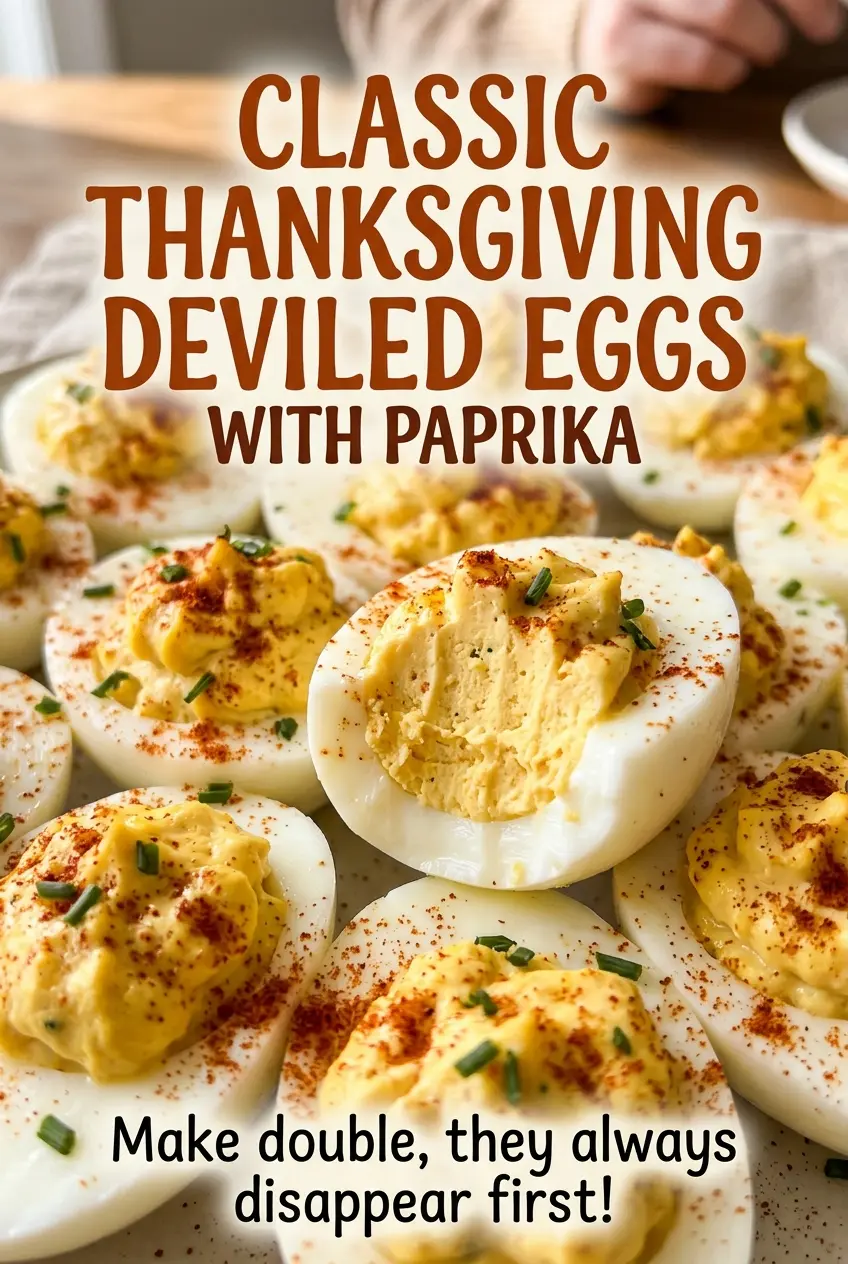
I use a small spoon to nudge the filling all the way into the narrow ends of each egg white. It makes a tidy mound without needing a piping bag.
Save these classic Thanksgiving deviled eggs with paprika for a platter of creamy, tangy bites topped with a simple red sprinkle.
Why I Take the Eggs Off the Heat Before the 12-Minute Rest
Once the water reaches a rolling boil, the eggs don’t need to keep bubbling away. Covering the pan and taking it off the burner lets the hot water finish cooking them more gently. The timing matters: the eggs stand in that covered pan for 12 minutes, not while the water continues boiling over high heat. That controlled approach helps the whites stay tender while the yolks cook through.
Eggs left in actively boiling water can cook beyond the point you want for deviled eggs. The yolks become drier and harder to mash into a smooth filling, and an overcooked yolk can develop a gray-green ring around its edge. Starting with cold water and removing the covered pan from the heat after the boil gives the eggs a consistent rest. Keep the lid on while they stand; lifting it lets heat escape and makes the cooking less predictable.
What the Yolks, Mustard, and Vinegar Each Bring
- Large eggs — Large eggs give you sturdy halves and enough yolk for the filling. Choose eggs with intact shells; the size matters here because the standing time is set for large eggs. There isn’t a direct substitute that gives you the same white-and-yolk base.
- Mayonnaise — Mayonnaise makes the mashed yolks creamy and helps the filling hold together. A standard store-brand mayonnaise works well; there’s no need to seek out a specialty brand. For a dairy-free version, use dairy-free mayonnaise in the same quantity, knowing the finished filling may taste a little different depending on the brand.
- Dijon mustard — Dijon brings a mellow, sharp tang without making the filling taste strongly of mustard. Yellow mustard can replace it in the same quantity for a milder, more familiar flavor. A basic jar is fine; the vinegar and salt already contribute plenty of brightness.
- White vinegar — A small amount cuts through the richness and keeps the yolk mixture from tasting flat. Lemon juice can stand in for it in the same quantity, though it gives the filling a more citrusy edge. Use a plain, inexpensive white vinegar; its clean acidity is what you need.
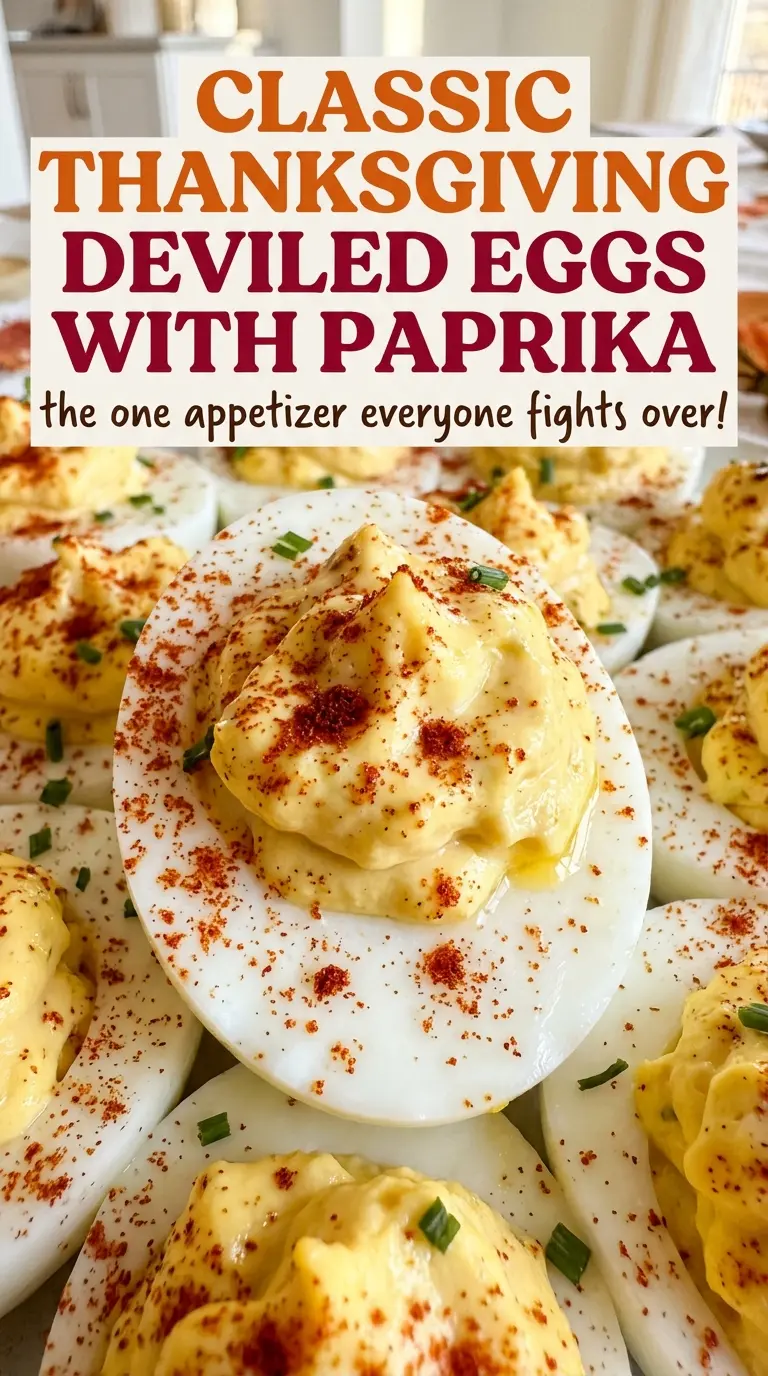
- Paprika — Regular paprika gives the finished eggs their classic color and a gentle, earthy note. Smoked paprika works in the same quantity if you want a deeper, smoky finish, but it will change the traditional flavor. Keep it dry and sprinkle it over the filled eggs so the red garnish stays visible.
From Covered Pot to Filled Egg Halves
Bring the Water to a Boil, Then Step Away from the Burner
Arrange the large eggs in a single layer in a 4-quart saucepan and add cold water until it covers them by 1 inch. Set the pan over high heat and bring the water to a rolling boil. Cover the pan, remove it from the heat, and let the eggs stand for 12 minutes. Don’t leave the pan on the burner to keep boiling; that defeats the gentler cooking method.
Cool the Eggs in an Ice Bath
While the eggs stand, fill a large bowl with 4 cups of ice and enough cold water to cover the eggs. Transfer the hot eggs into the ice bath and let them cool for 10 minutes. Check that the water reaches over the eggs rather than leaving part of the shell exposed. Cooling them before peeling makes them easier to handle and prepares them for clean halves.
Separate the Yolks Without Damaging the Whites
Peel the cooled eggs, then cut each one in half lengthwise. Lift the yolks into a medium bowl and arrange the white halves cut-side up on a serving platter. Keep the whites steady as you remove the yolks; clean, intact halves give the filling a neat place to sit. If a white tears, set it aside rather than trying to force filling into a narrow split.
Mash Until the Filling Looks Even
Mash the yolks with the mayonnaise, Dijon mustard, white vinegar, kosher salt, and black pepper until the mixture is smooth. Press any larger yolk pieces against the side of the bowl as you mash, then work them back into the filling. A few dry crumbs left in the bowl can turn into little lumps in the finished eggs. Stop when the mixture looks creamy and evenly blended.
Fill, Dust with Paprika, and Chill
Spoon the yolk mixture evenly into the egg-white halves. Divide it across the whites as you go so the last few eggs aren’t left with too little filling. Sprinkle the paprika over the tops, then cover the platter and refrigerate until serving. Don’t leave the eggs at room temperature for more than 2 hours.
Two Ways to Adapt the Platter Without Losing Its Classic Feel
Make the Filling Dairy-Free
Replace the mayonnaise with dairy-free mayonnaise, using the same quantity and mashing it with the yolks and seasonings. The filling stays creamy, though the exact tang and richness depend on the brand. The eggs themselves remain the same, so this is a dairy-free adaptation rather than an egg-free one.
Turn the Same Filling into Egg Salad
For a more casual format, chop the cooked egg whites and fold them into the yolk mixture instead of filling the halves. You’ll lose the tidy individual portions, but the same creamy, tangy mixture becomes easy to scoop. Keep the paprika as a finishing sprinkle over the bowl.
Make-Ahead and Serving
- Refrigerator: Keep the covered eggs refrigerated. For the freshest-looking platter, assemble them on the day you plan to serve them.
- Freezer: Freezing isn’t a good fit; the whites can turn watery and the creamy filling can lose its smooth texture.
- Serving: Serve them chilled. Reheating isn’t needed and can soften the whites and loosen the filling.
Questions That Come Up When Making Deviled Eggs
Classic Thanksgiving Deviled Eggs with Paprika
Ingredients
Equipment
Method
- Place the eggs in a 4-quart saucepan in a single layer.
- Add cold water to cover the eggs by 1 inch.
- Bring the water to a rolling boil over high heat.
- Cover the pan and remove it from the heat.
- Let the eggs stand for 12 minutes.
- Transfer the eggs to a large bowl filled with the ice.
- Add enough cold water to cover the eggs, and let them cool for 10 minutes.
- Peel the eggs.
- Cut the eggs in half lengthwise.
- Remove the yolks to a medium bowl.
- Arrange the egg-white halves on a serving platter.
- Mash the yolks with the mayonnaise, Dijon mustard, white vinegar, kosher salt, and black pepper until smooth.
- Spoon the yolk mixture evenly into the egg-white halves.
- Sprinkle with paprika.
- Cover and refrigerate until serving; do not leave at room temperature for more than 2 hours.