
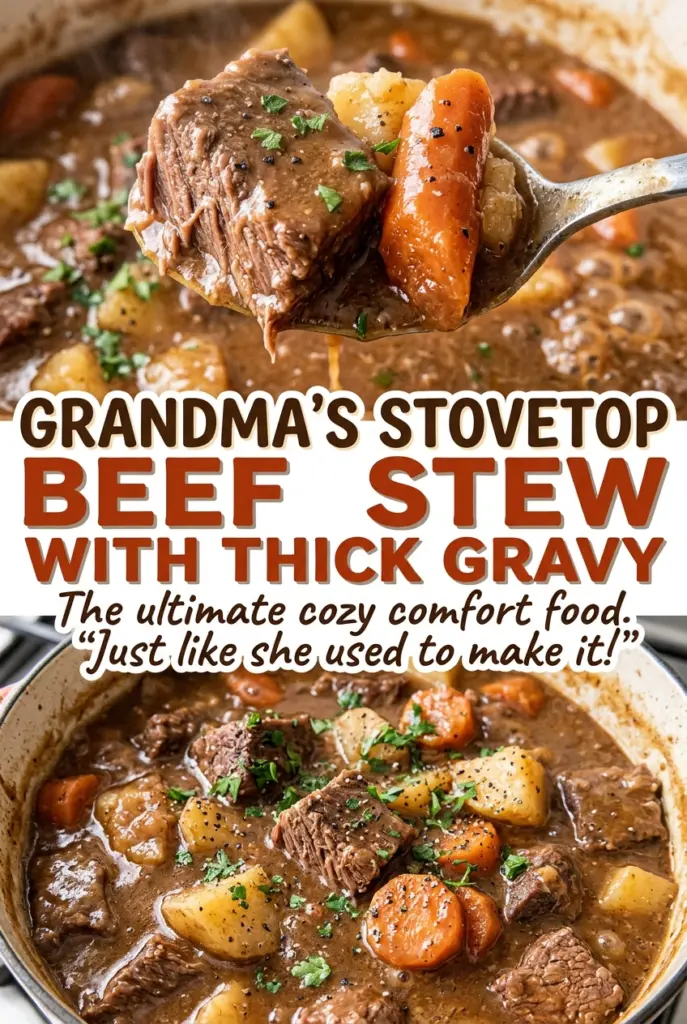
Grandma’s Stovetop Beef Stew with Thick Gravy
The oil gives a soft shimmer in the Dutch oven, and then the beef starts to brown in batches while the kitchen fills with that deep, savory smell. That first…
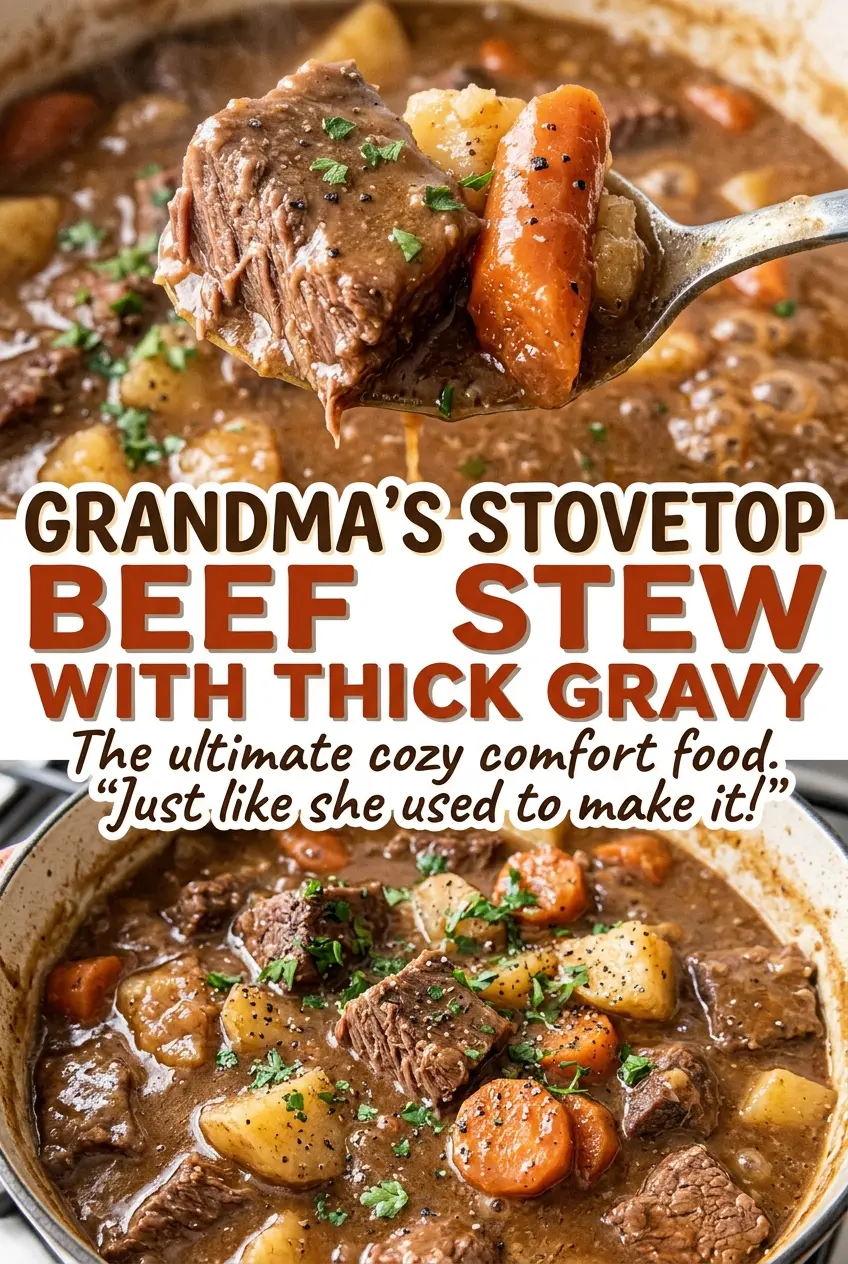
Tip: save now, cook later.The oil gives a soft shimmer in the Dutch oven, and then the beef starts to brown in batches while the kitchen fills with that deep, savory smell. That first bit of color is worth taking your time over. Grandma’s stovetop beef stew with thick gravy is the kind of dinner I want when a cold evening calls for something hearty, with fork-tender beef and vegetables tucked into gravy that clings to the spoon.
I like that this stew builds its flavor in one pot, from the browned beef to the softened onion and celery. The beef gets a long, gentle simmer before the carrots and potatoes join it, so everything has time to become tender without the vegetables spending the whole afternoon in the pot. The finished bowl is rich without being fussy: beef, potatoes, carrots, and a thick gravy that brings them all together.
Kitchen Note
Brown the beef in batches and let each piece stay put for 3 to 4 minutes per side. Crowding the pot traps steam, and you want browned edges rather than gray, wet beef.
Save Grandma’s stovetop beef stew with thick gravy for a cozy dinner built around tender beef, carrots, and potatoes.
Why the Flour Has to Cook Before the Broth Goes In
Thick gravy starts before the broth ever reaches the pot. Once the onion and celery have softened, the garlic and tomato paste cook briefly, then the flour goes in and cooks for two minutes. That gives the flour time to coat the vegetables and mingle with the tomato paste instead of landing in the liquid as a raw, powdery lump.
When you add the beef broth gradually, each addition loosens the flour mixture before the next one goes in. Scrape the bottom as you stir, too; the browned bits left from the beef are packed with flavor, and the broth lifts them into the gravy. The mixture may look loose at this point, but it thickens during the long covered simmer and again as the carrots and potatoes cook. Keep the heat low once the pot reaches a gentle boil. A hard boil can make the meat cook unevenly and the liquid reduce faster than you want.
The Chuck, Flour, and Potatoes Each Have a Job
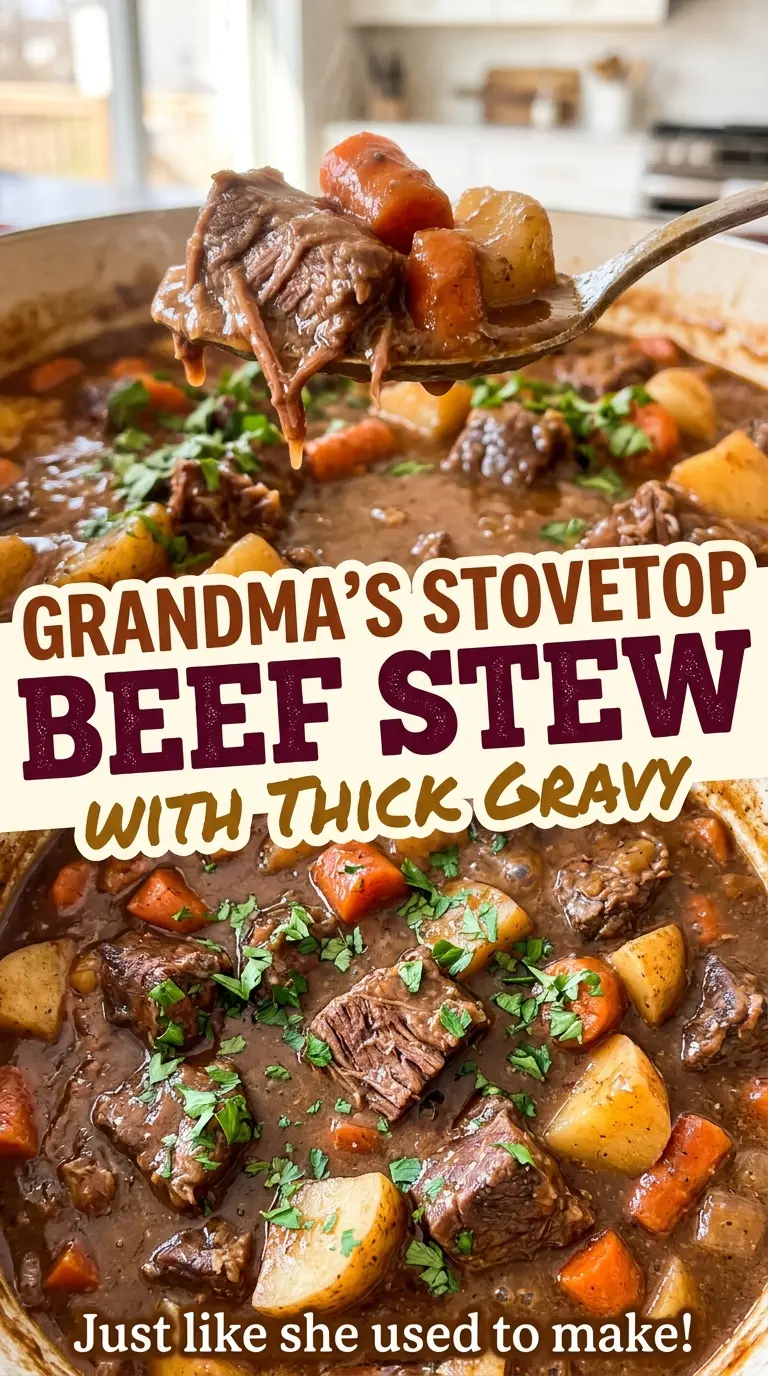
- Beef chuck — Chuck has the connective tissue that softens during a slow simmer, giving the meat a tender texture and the gravy a full, beefy taste. Cut the pieces evenly so they cook at a similar pace; a consistent 1 1/2-inch size is a good fit for this stew.
- All-purpose flour — Flour gives the gravy its body as the stew simmers. It also helps the browned vegetable and tomato-paste mixture turn into a smooth base. For a gluten-free adaptation, use a cup-for-cup gluten-free flour blend made for thickening; see the variation below.
- Low-sodium beef broth — Low-sodium broth lets the beef, Worcestershire sauce, and measured kosher salt contribute without the broth overwhelming them. Broth quality matters here because it makes up the bulk of the gravy; choose one you like the taste of on its own.
- Yukon Gold potatoes — Their creamy texture suits the thick gravy, and their pieces stay substantial through the simmer. Keep the pieces close to the specified size so they become tender during the vegetable stage rather than disappearing into the sauce.
- Onion, celery, garlic, and tomato paste — These build the savory base before the liquid is added. Tomato paste brings a concentrated, rounded note, while the onion and celery soften into the gravy instead of competing with the beef.
- Carrots — Carrots bring sweetness and a little bite to balance the savory broth. Cut them into even 1-inch pieces so they have time to turn fork-tender alongside the potatoes.
From Browned Beef to Gravy That Clings
Brown the Beef in Uncrowded Batches
Heat the vegetable oil in a 6-quart Dutch oven over medium-high heat until it shimmers, about 2 minutes. Season the beef with kosher salt and black pepper, then brown it in batches for 3 to 4 minutes per side, transferring each batch to a plate. Work in batches rather than piling the pieces on top of one another; browned surfaces give the finished gravy a deeper color and savory base.
Soften the Vegetables and Tomato Paste
Add the chopped onion and sliced celery to the pot, then cook over medium heat, stirring often, for about 5 minutes. They’re ready when they’ve softened and the onion looks less opaque, not when they’ve browned heavily. Stir in the minced garlic and tomato paste and cook for 1 minute. Keep stirring so the garlic doesn’t catch on the bottom of the hot pot.
Coat the Base, Then Add Broth Gradually
Sprinkle the flour over the vegetables and stir for 2 minutes, letting it coat the mixture. Pour in the beef broth a little at a time, stirring between additions and scraping up the browned bits from the bottom. Stir in the Worcestershire sauce, dried thyme, and bay leaf once the broth is incorporated. The liquid should look evenly mixed, without visible streaks of dry flour.
Simmer the Beef Until Nearly Tender
Return the beef and any juices on the plate to the pot. Bring the liquid to a gentle boil, then cover and simmer over low heat for 1 to 1 1/2 hours, until the beef is nearly tender. Keep the simmer gentle rather than letting the surface bubble vigorously. The beef should be heading toward fork-tender, but it still has another stretch of cooking with the vegetables.
Finish with Carrots and Potatoes
Stir in the carrots and potatoes, cover the pot, and continue simmering over low heat for 30 to 40 minutes. Check that the largest pieces are fork-tender and that the beef has softened all the way through. The gravy should be thick, with enough body to coat the meat and vegetables. Lift out the bay leaf before serving.
Two Swaps That Preserve the Stew’s Texture
Make It Gluten-Free with a Cup-for-Cup Flour Blend
Replace the all-purpose flour with the same amount of a cup-for-cup gluten-free blend intended for thickening. Stir it into the vegetables and tomato paste, cook for the same 2 minutes, then add the broth gradually. The gravy may have a slightly different texture depending on the blend, so choose one that works in sauces as well as baking.
Trade Yukon Golds for Red Potatoes
Use the same weight of red potatoes, cut into the same 1 1/2-inch pieces. They hold their shape well in a simmered stew, though their texture is a little firmer and less creamy than Yukon Golds. Keep the same timing and check that the largest pieces are fork-tender before serving.
Storage and Reheating
- Refrigerator: Store in a covered container for 3 to 4 days. Cool and refrigerate within 2 hours; the potatoes may soften a little as they sit.
- Freezer: Freeze in airtight containers for up to 3 months. Leave a little room at the top for expansion; the potatoes may be softer after thawing.
- Reheating: Warm gently in a covered saucepan over low heat, stirring now and then, until the stew reaches 165°F. Avoid a hard boil, which can break up the potatoes and make the beef seem drier.
Questions That Come Up While the Stew Simmering
Grandma's Stovetop Beef Stew with Thick Gravy
Ingredients
Equipment
Method
- Heat the vegetable oil in a 6-quart Dutch oven over medium-high heat until shimmering, about 2 minutes.
- Season the beef with the kosher salt and black pepper.
- Brown the beef in batches for 3 to 4 minutes per side.
- Transfer each batch of browned beef to a plate.
- Add the onion and celery to the pot and cook over medium heat, stirring often, until softened, about 5 minutes.
- Stir in the garlic and tomato paste and cook for 1 minute.
- Sprinkle in the flour and cook, stirring, for 2 minutes.
- Gradually stir in the beef broth, scraping up any browned bits.
- Stir in the Worcestershire sauce, dried thyme, and bay leaf.
- Return the beef and any accumulated juices to the pot, and bring the liquid to a gentle boil.
- Cover and simmer over low heat for 1 to 1 1/2 hours, until the beef is nearly tender.
- Stir in the carrots and potatoes.
- Cover and simmer over low heat for 30 to 40 minutes, until the beef and vegetables are fork-tender and the gravy is thick.