
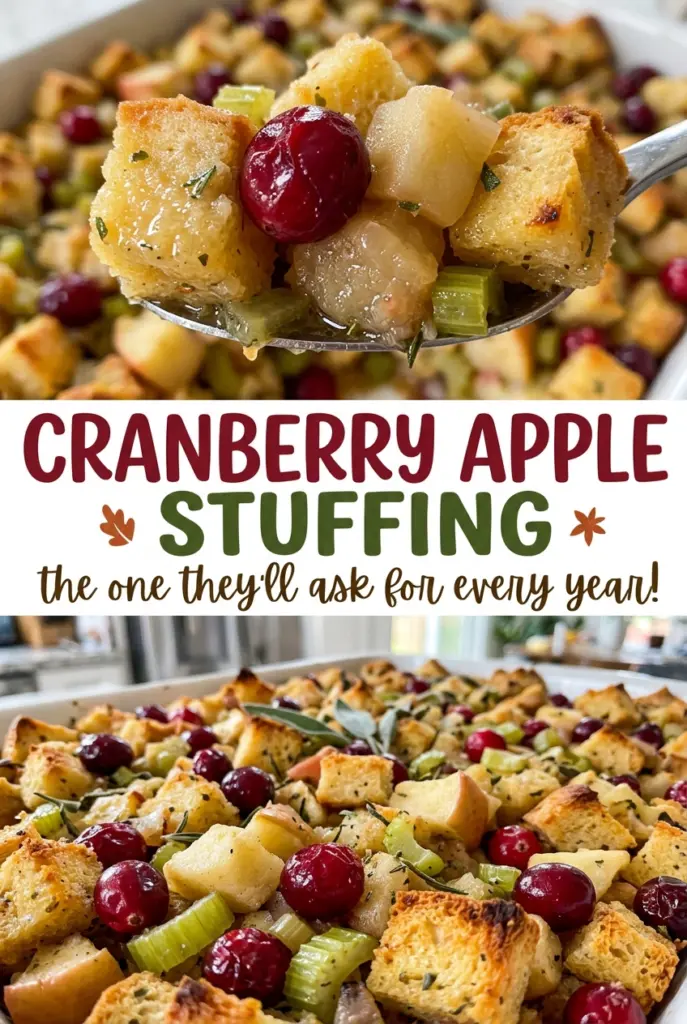
Cranberry Apple Stuffing
The onion and celery turn soft and fragrant in the skillet before the apples go in, and that quick cook keeps the fruit from disappearing into the bread. I like…
Tip: save now, cook later.The onion and celery turn soft and fragrant in the skillet before the apples go in, and that quick cook keeps the fruit from disappearing into the bread. I like how the dried cranberries bring little tart-sweet bites throughout this cranberry apple stuffing, instead of leaving all the fruit flavor in one spot. It’s a cozy, savory side with a golden top and a tender center.
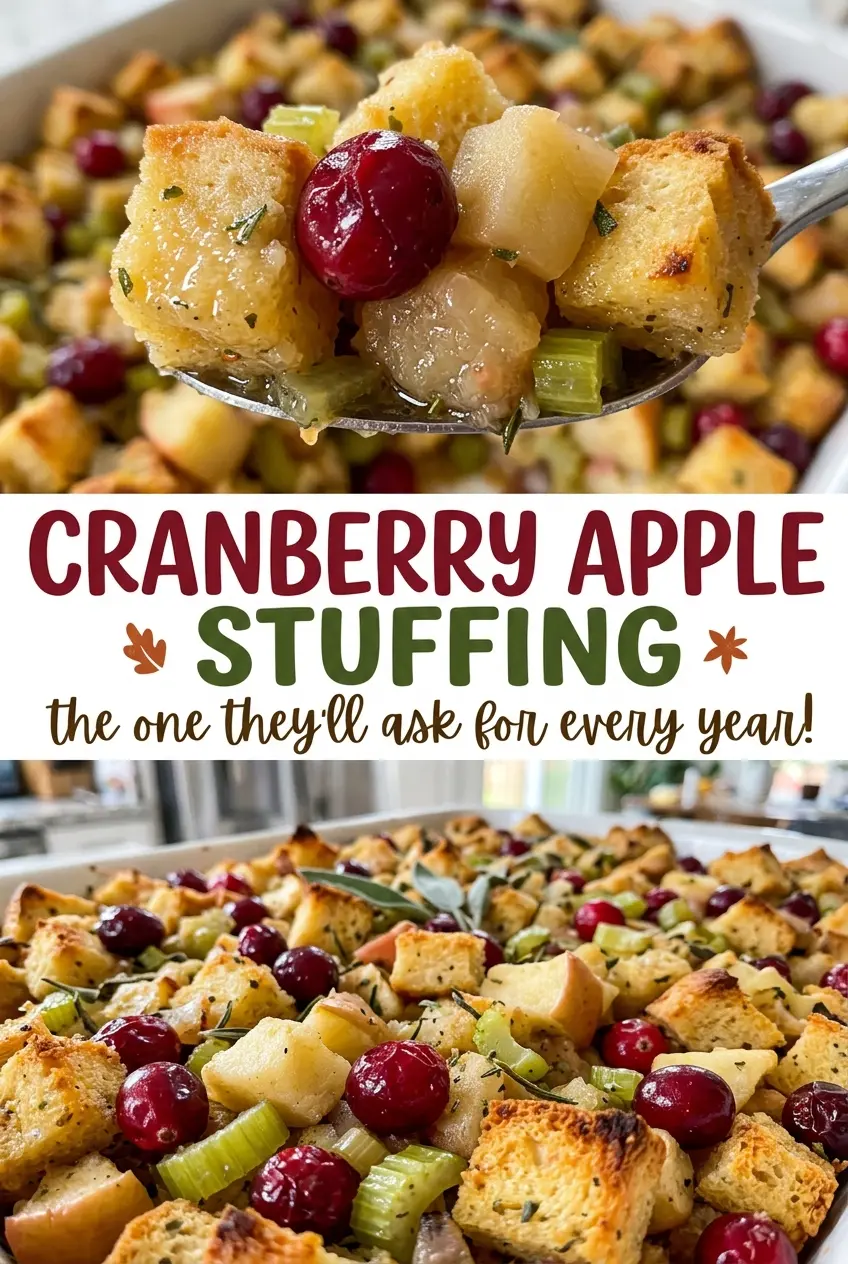
The texture comes down to using dried, unseasoned bread cubes and giving them a chance to drink in the broth and egg mixture. After five minutes, I toss everything again so the liquid reaches the drier pieces, then bake the dish covered before uncovering it for the golden finish. You get a stuffing that holds together without turning into a wet, heavy mass.
Kitchen Note
Don’t skip the five-minute stand before the second toss. The bread has time to absorb some of the egg and broth, and that second pass helps moisten any cubes that stayed dry on top.
Save this cranberry apple stuffing for a holiday table or a comfort-food dinner, with sweet-tart fruit tucked into every savory, golden scoop.
Why This Stuffing Gets a Golden Top Without Drying Out
A stuffing casserole has two jobs that can pull against each other: the center needs time to set, while the exposed bread needs a chance to brown. Baking it covered first gives the egg-and-broth mixture time to heat through without letting the top dry out too soon. Uncovering it for the final stretch lets the surface turn golden.
That sequence matters more than chasing a deeply browned top from the start. If the dish goes into the oven uncovered for the full bake, the upper cubes can dry and crisp before the center is ready. The foil holds in moisture during the first part; taking it off later changes the surface from soft to lightly crisp. The center should reach 160°F, so use an instant-read thermometer in the middle rather than judging only by the color on top. Then give the dish a ten-minute rest before serving so the hot, moist bread can settle and scoop more neatly.
What the Bread, Fruit, and Broth Each Bring to the Dish
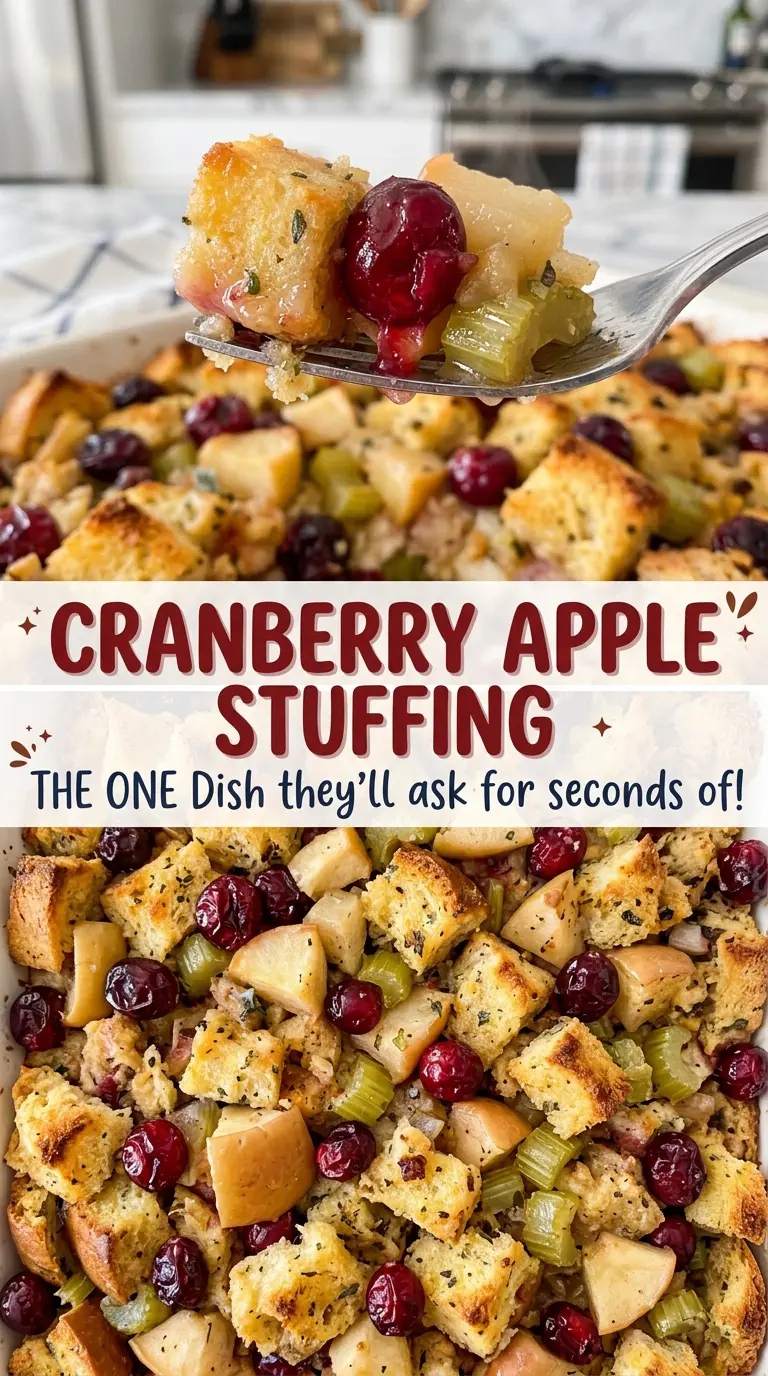
- Dried unseasoned bread cubes — These are the structure of the casserole, and their dryness gives them room to absorb the broth without collapsing. Seasoned cubes can bring extra salt and herbs that change the balance, so unseasoned is the dependable choice. For a gluten-free version, use dried gluten-free bread cubes in the same amount.
- Apples and dried cranberries — Apples soften but keep some shape, while dried cranberries concentrate their sweet-tart flavor and give the stuffing little chewy pockets. Choose firm apples that won’t turn to puree in the skillet; there’s no need for a specialty variety. Fresh cranberries aren’t a like-for-like swap because they’re more tart and release extra moisture.
- Butter, onion, and celery — Butter carries the savory base through the bread, while onion and celery give each bite that familiar aromatic backbone. Unsalted butter keeps the salt level easier to control, and ordinary yellow onion and celery work well here. Cook them until softened before adding the fruit so they aren’t left with a raw, firm bite.
- Eggs and chicken broth — The eggs help the soaked bread set into a scoopable casserole, and broth brings savory flavor while moistening the cubes. Low-sodium broth leaves room for the measured kosher salt and is easy to find; use low-sodium vegetable broth if you want a vegetarian dish. Keep the eggs in place even for that adaptation, since they help bind the stuffing.
- Dried sage and thyme — These herbs season the buttery base without adding extra moisture. Dried herbs are convenient and distribute well when stirred into the warm skillet mixture; fresh herbs don’t have a direct one-for-one swap here, so keep the dried versions for the intended balance.
Building the Stuffing So the Center Sets and the Top Browns
Soften the Onion and Celery in Butter
Heat the oven to 350°F and grease a 9×13-inch baking dish. Melt the butter in a 12-inch skillet over medium heat, then add the diced onion and celery. Cook for 6 to 8 minutes, stirring now and then, until both vegetables have softened. If they still feel crisp, give them the full cooking time; the oven bake won’t replace this first softening.
Warm the Apples with the Herbs and Cranberries
Stir the diced apples, dried cranberries, dried sage, and dried thyme into the softened vegetables. Cook for 2 minutes, stirring to coat the fruit with the butter and herbs. The apples should still hold their shape at this point; this short skillet cook starts the flavors without making the fruit mushy. Take the skillet off the heat once the two minutes are up.
Coat the Bread Cubes Evenly
In a large bowl, whisk the eggs with the chicken broth, kosher salt, and black pepper. Add the dried bread cubes and the skillet mixture, then toss until the cubes are evenly moistened. Let the mixture stand for 5 minutes and toss again, paying attention to the cubes that were on top or along the sides. If you see dry patches, keep turning the mixture until the egg-and-broth mixture is distributed across the bread.
Bake Covered, Then Brown the Surface
Transfer everything to the prepared baking dish and cover it tightly with foil. Bake for 30 minutes, then remove the foil and continue baking for 20 to 25 minutes, until the top is golden and the center reaches 160°F. If the top looks pale, use the end of that uncovered bake to let it color; check the center with a thermometer rather than extending the bake just to darken the edges. Rest the stuffing for 10 minutes before serving.
Three Ingredient Swaps That Keep the Stuffing’s Texture
Make It Gluten-Free with Dried Gluten-Free Bread Cubes
Replace the unseasoned bread cubes with the same amount of dried gluten-free bread cubes. The casserole keeps its savory fruit-and-herb character, though the exact firmness depends on the bread; choose cubes that are dry rather than soft so they can absorb the broth.
Make It Vegetarian with Vegetable Broth
Swap the low-sodium chicken broth for low-sodium vegetable broth, keeping the amount the same. It stays savory and moist, with a slightly different broth flavor; the eggs still bind the bread, so this version is vegetarian but not vegan.
Make It Dairy-Free with Plant-Based Butter
Use an equal amount of a plant-based butter that melts and cooks like dairy butter. The onion and celery still soften in the skillet, though the buttery flavor will depend on the brand. The eggs and broth remain, so this swap removes the dairy but doesn’t make the dish vegan.
Storage and Reheating
- Refrigerator: Refrigerate leftovers within 2 hours and keep them covered for 3 to 4 days. The bread softens as it sits, so the top won’t stay as crisp.
- Freezer: Freeze cooled portions in an airtight, freezer-safe container for up to 1 month for best texture. Thaw overnight in the refrigerator; the bread may be softer after freezing.
- Reheating: Reheat covered in a 325°F oven until the center reaches 165°F, uncovering near the end if you want to bring back some color. Don’t reheat uncovered the whole time, or the edges can dry before the middle is hot.
Questions About Cranberry Apple Stuffing
Cranberry Apple Stuffing
Ingredients
Equipment
Method
- Heat the oven to 350°F.
- Grease a 9x13-inch baking dish.
- Melt the butter in a 12-inch skillet over medium heat.
- Add the onion and celery, and cook for 6 to 8 minutes until softened.
- Stir in the apples, cranberries, sage, and thyme and cook for 2 minutes.
- In a large bowl, whisk together the eggs, broth, salt, and pepper.
- Add the bread cubes and skillet mixture to the bowl and toss until evenly moistened.
- Let stand for 5 minutes.
- Toss again.
- Transfer the mixture to the prepared baking dish.
- Cover tightly with foil.
- Bake for 30 minutes.
- Uncover and bake for 20 to 25 minutes until golden on top and the center reaches 160°F.
- Rest the stuffing for 10 minutes before serving.