
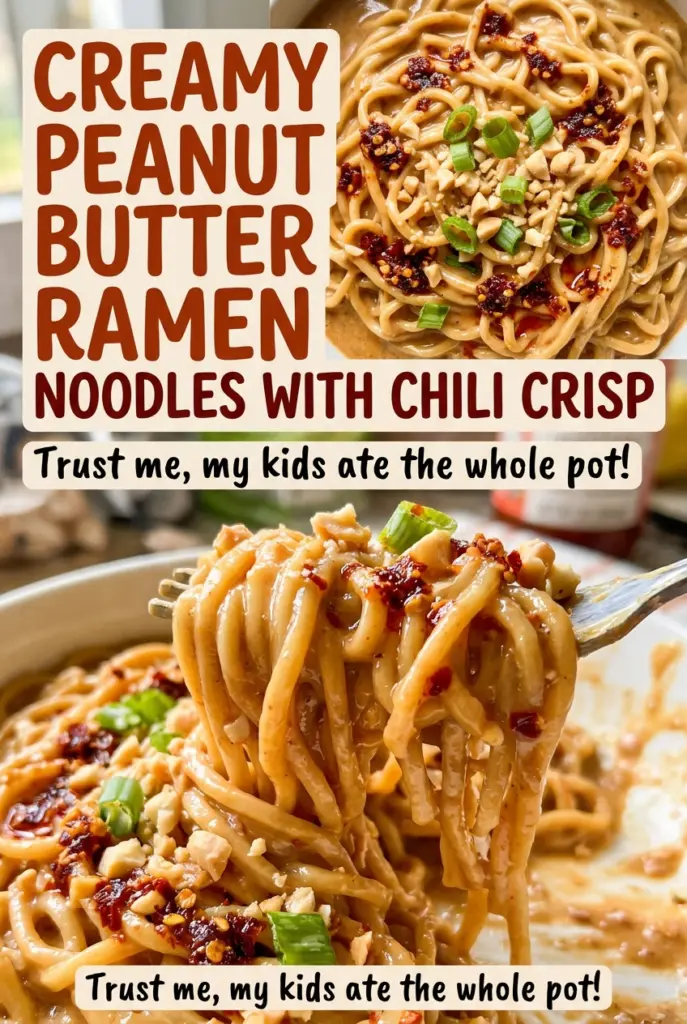
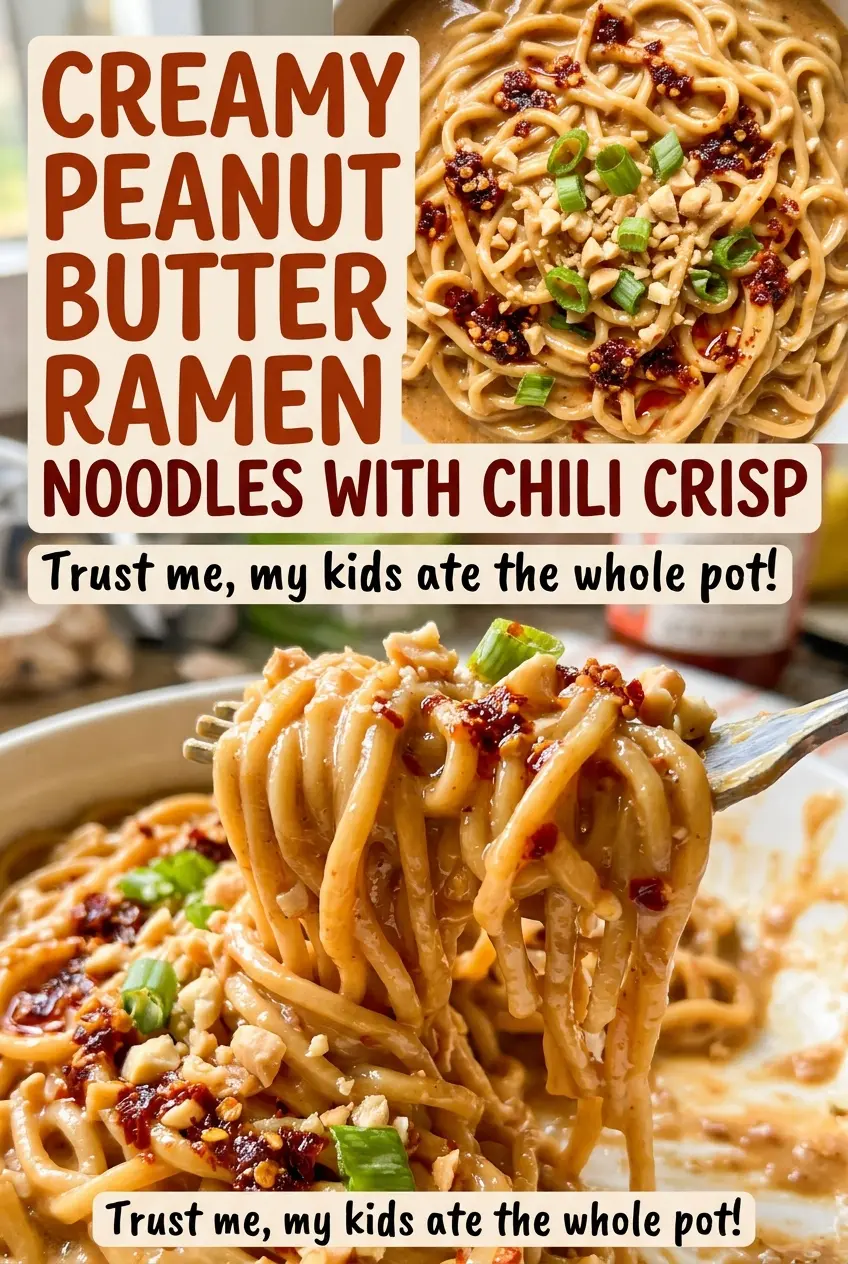
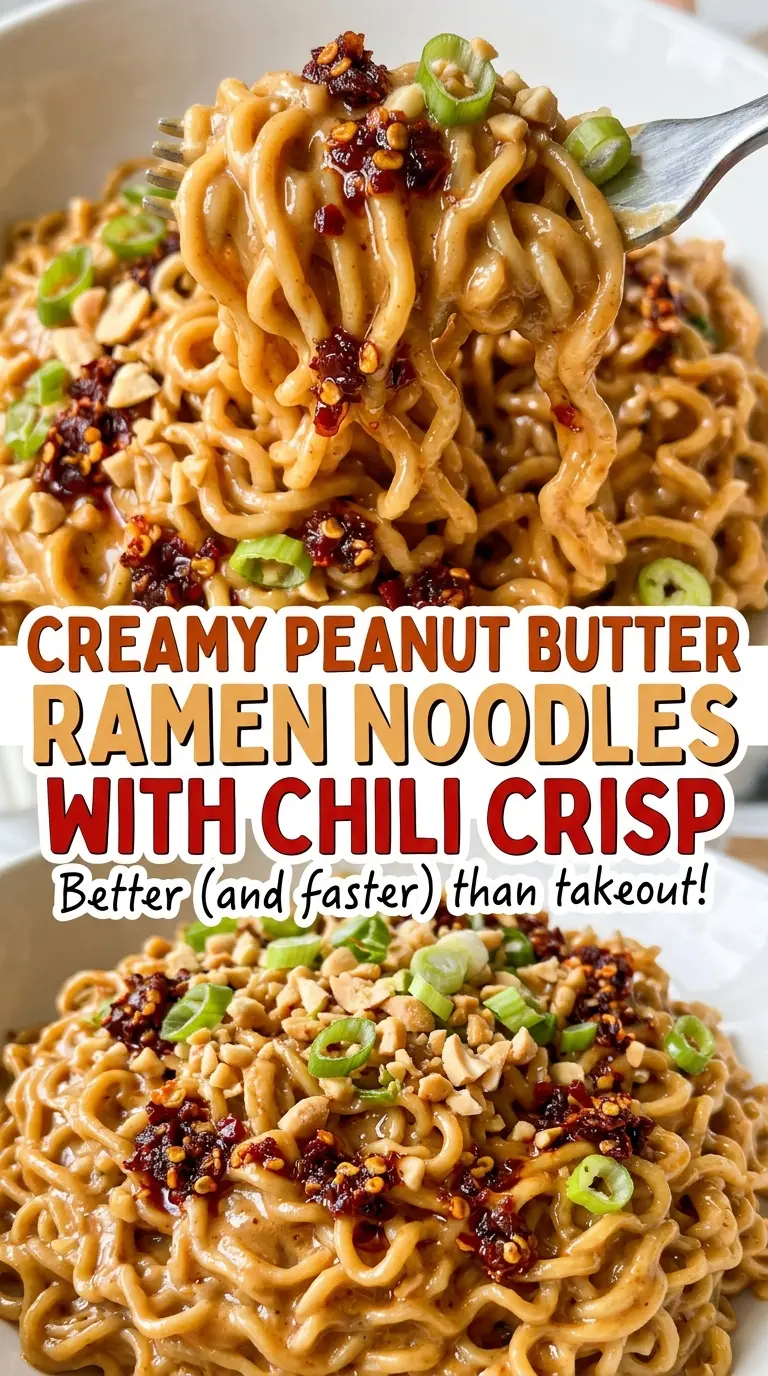
Creamy Peanut Butter Ramen Noodles with Chili Crisp
Peanut butter can turn a bowl of ramen into a thick, sticky tangle if the sauce doesn’t have enough warmth and moisture to loosen it. I whisk the sauce with…
Tip: save now, cook later.Peanut butter can turn a bowl of ramen into a thick, sticky tangle if the sauce doesn’t have enough warmth and moisture to loosen it. I whisk the sauce with hot noodle water before the noodles ever touch it, so it coats each strand instead of clumping in the bottom of the bowl. These creamy peanut butter ramen noodles with chili crisp come together quickly, but the order makes a noticeable difference.
The chili crisp goes in two places: some gets whisked into the peanut butter sauce, and the rest stays on top. That split gives the noodles a savory, gently spicy base while the last spoonful brings its own texture and a brighter hit of heat. Freshly grated garlic and ginger disappear into the sauce, and sliced scallions keep each rich, glossy bite from feeling heavy.
It’s a straightforward bowl for two, with the ramen seasoning packets left behind and no separate pan needed for the sauce. The noodles are ready in about the time it takes to stir everything together, and the finished sauce clings to them without hiding the chili crisp.
Kitchen Note
Ramen cooks fast, so I start checking it right around the package’s suggested time instead of walking away. Most dried ramen takes 3 to 4 minutes; drain it once it’s tender, not soft enough to fall apart when tossed.
Save these creamy peanut butter ramen noodles with chili crisp for a quick bowl with a silky sauce and a crunchy, spicy finish.
Why the Chili Crisp Belongs in Two Places, Not Just on Top
Putting all the chili crisp on top gives you heat in a few bites, but the peanut butter sauce underneath stays comparatively plain. Whisking part of it into the sauce spreads its savory, spicy oil through the noodles, so the flavor doesn’t depend on where the topping lands. Saving the rest for serving preserves the crisp bits and gives the bowl a fresh spark right at the end.
That contrast matters in a sauce this rich. Peanut butter brings body, sesame oil rounds it out, and honey softens the salty edge of the soy sauce. Rice vinegar cuts through that richness, while the garlic and ginger make the sauce taste lively rather than simply nutty. If you stir every bit of chili crisp into the bowl at the start, you lose the difference between the smooth coating and the crunchy finish.
Keep the final topping for the moment you serve the noodles. It stays distinct instead of softening in the hot sauce, and you can see where the extra heat is concentrated. The scallions add a crisp, fresh bite alongside it.
What Gives This Peanut Sauce Its Balance
- Creamy peanut butter — This is the sauce’s body, not just its peanut flavor. A well-stirred creamy peanut butter makes the smoothest coating; natural peanut butter can work, but mix it thoroughly first because separated oil can make the sauce uneven. For a peanut-free bowl, smooth sunflower seed butter is the closest practical swap, though the taste will be earthier.
- Chili crisp — The oil carries heat and seasoning into the sauce, while the crisp pieces give the topping its crunch. Brands vary in heat and saltiness, so taste yours before deciding how assertive you want each bite to be.
- Soy sauce and rice vinegar — Soy sauce adds a savory, salty backbone; rice vinegar keeps the peanut butter from tasting heavy. For a gluten-free variation, use tamari in place of soy sauce and choose gluten-free ramen noodles.
- Toasted sesame oil, honey, garlic, and ginger — Together they round out the sauce: sesame oil adds a roasted aroma, honey smooths the sharp edges, and fresh grated garlic and ginger bring a bright, pungent note. Fresh grating helps them blend into the sauce rather than leaving larger, fibrous bits.
- Scallions — Their clean, oniony bite offsets the rich sauce. Slice them thinly so a little lands in each forkful.
- Dried ramen noodles — Use the noodles, not the seasoning packets; the sauce has its own salty, savory seasoning. The packet flavor would compete with the peanut butter and chili crisp.
How to Get the Sauce Smooth Before the Noodles Go In
Cook the ramen and save the starchy water
Bring a large pot of water to a boil and cook the dried ramen according to the package directions, usually 3 to 4 minutes. Before draining, reserve one-third cup of the hot cooking water; setting it aside first avoids the common scramble of realizing it has gone down the drain. Drain the noodles once they’re tender. They’ll be tossed with sauce, so don’t leave them in the pot to keep cooking.
Whisk the peanut butter sauce until glossy
In a medium bowl, whisk together the peanut butter, soy sauce, rice vinegar, toasted sesame oil, honey, finely grated garlic, ginger, two tablespoons of the chili crisp, and the reserved hot noodle water. At first, the mixture may look thick or slightly uneven; keep whisking until it becomes smooth and glossy. The hot water loosens the peanut butter and helps the ingredients come together. If you stop while streaks of peanut butter remain, those dense patches will cling to the noodles in clumps.
Toss while the noodles are hot
Add the drained noodles to the bowl and toss until the sauce coats them evenly. Use a broad tossing motion to lift noodles from the bottom, where the thicker sauce tends to collect. Divide the noodles between two bowls while they’re warm. Finish each serving with the remaining chili crisp and thinly sliced scallions.
Three Practical Ways to Change the Bowl
Make the heat gentler
Use less chili crisp in the sauce and leave off some or all of the finishing spoonful. The peanut and sesame notes come forward, but you’ll give up some of the chili crisp’s crunch and heat.
Make the noodles gluten-free
Replace the ramen with gluten-free ramen noodles and use tamari instead of soy sauce. Cook the noodles according to their package directions; their texture and timing may differ from dried ramen, but the peanut sauce still works as the coating.
Make a vegan version
Swap the honey for maple syrup and use vegan chili crisp. The sauce will taste a little less honeyed, but the sweet note still balances the vinegar and savory soy sauce.
Storage and Reheating
- Refrigerator: Store leftovers in a covered container for up to 3 days. The noodles will absorb some sauce and soften as they sit.
- Freezer: Freezing isn’t a good fit; the noodles turn soft and the peanut sauce can separate after thawing.
- Reheating: Warm leftovers gently in a skillet over low heat with a small splash of water, stirring until the sauce loosens and the noodles are hot. High heat can make the sauce tighten and stick before the noodles warm through.
Questions That Come Up When Making Peanut Butter Ramen
Creamy Peanut Butter Ramen Noodles with Chili Crisp
Ingredients
Method
- Bring a large pot of water to a boil.
- Cook the ramen according to package directions, usually 3 to 4 minutes.
- Reserve 1/3 cup of the cooking water.
- Drain the noodles.
- In a medium bowl, whisk together the peanut butter, soy sauce, rice vinegar, sesame oil, honey, garlic, ginger, 2 tablespoons of the chili crisp, and the reserved hot noodle water until smooth.
- Add the noodles to the sauce and toss until coated.
- Divide between bowls.
- Top with the remaining 1 tablespoon chili crisp and the scallions.