
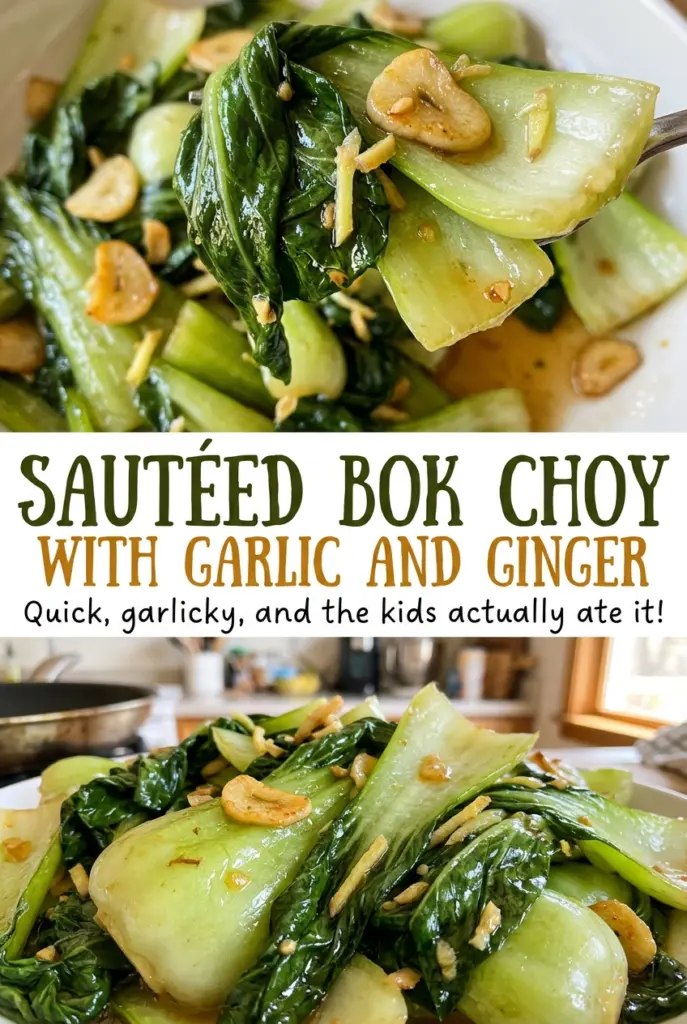
Sautéed Bok Choy with Garlic and Ginger
The leaves soften fast in a hot skillet, while the thick stems need a few extra minutes to lose their raw crunch. Keeping those parts on separate schedules is what…
Tip: save now, cook later.The leaves soften fast in a hot skillet, while the thick stems need a few extra minutes to lose their raw crunch. Keeping those parts on separate schedules is what gives this sautéed bok choy with garlic and ginger its best texture: tender leaves, stems that still have a little bite, and no pile of limp greens.
Baby bok choy is mild enough to let the ginger and garlic come through without masking its fresh, green taste. I like this quick side because the skillet does the work in just a few minutes, and the short covered finish softens the leaves without turning the stems mushy.
Once the soy sauce and ginger-scented steam hit the pan, the leaves turn glossy and the whole dish smells savory and bright. Serve it while the stems are still crisp-tender and the leaves are just wilted.
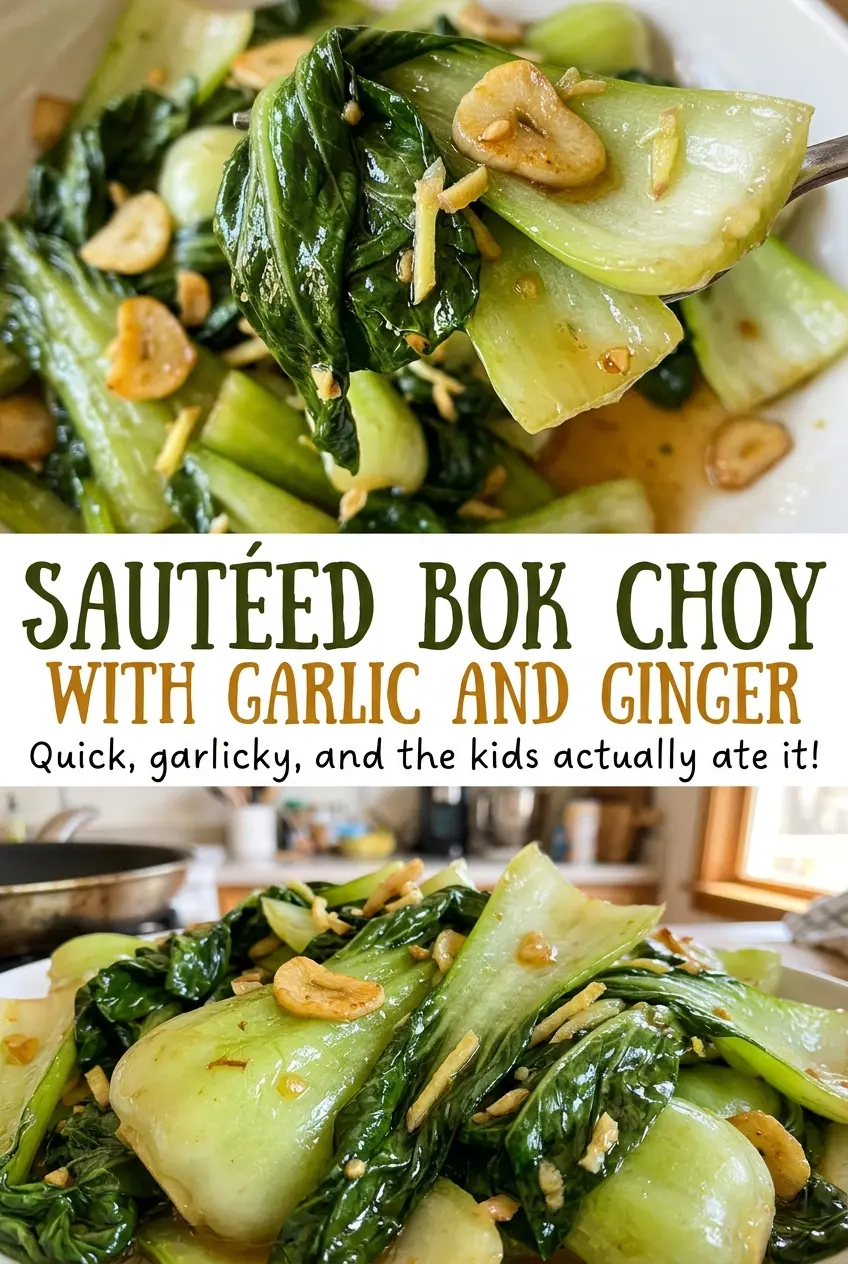
Kitchen Note
Keep the ginger and garlic moving in the oil, and stop at about 30 seconds, as soon as they smell fragrant. If they start to brown, they can turn bitter before the bok choy even goes in.
Save this sautéed bok choy with garlic and ginger for a quick green side with crisp-tender stems and fragrant, glossy leaves.
Why the Stems Go In Before the Leaves
Bok choy has two very different textures in one vegetable. The sturdy white stems hold their crunch longer than the tender green leaves, so tossing everything into the skillet at once gives you an awkward choice: stop while the stems are still tough, or keep cooking until the leaves collapse.
Separating the stems from the leaves fixes that timing problem without adding extra pans or complicated steps. The stems get a head start in the hot skillet, where they soften at the edges but stay crisp-tender. The leaves go in only after that, then the covered finish gives them a brief burst of steam. They wilt quickly while the stems keep their bite.
Cutting the bok choy into similar 1-inch pieces also helps the timing stay predictable. If a few stems are much thicker than the rest, they may need a little longer to reach that tender-crisp stage; look for a slight bend when you stir them, not a limp, fully softened texture. The goal isn’t to cook the stems until they feel like the leaves. That contrast is what makes each forkful work.
What Fresh Ginger, Garlic, and Baby Bok Choy Bring to the Skillet
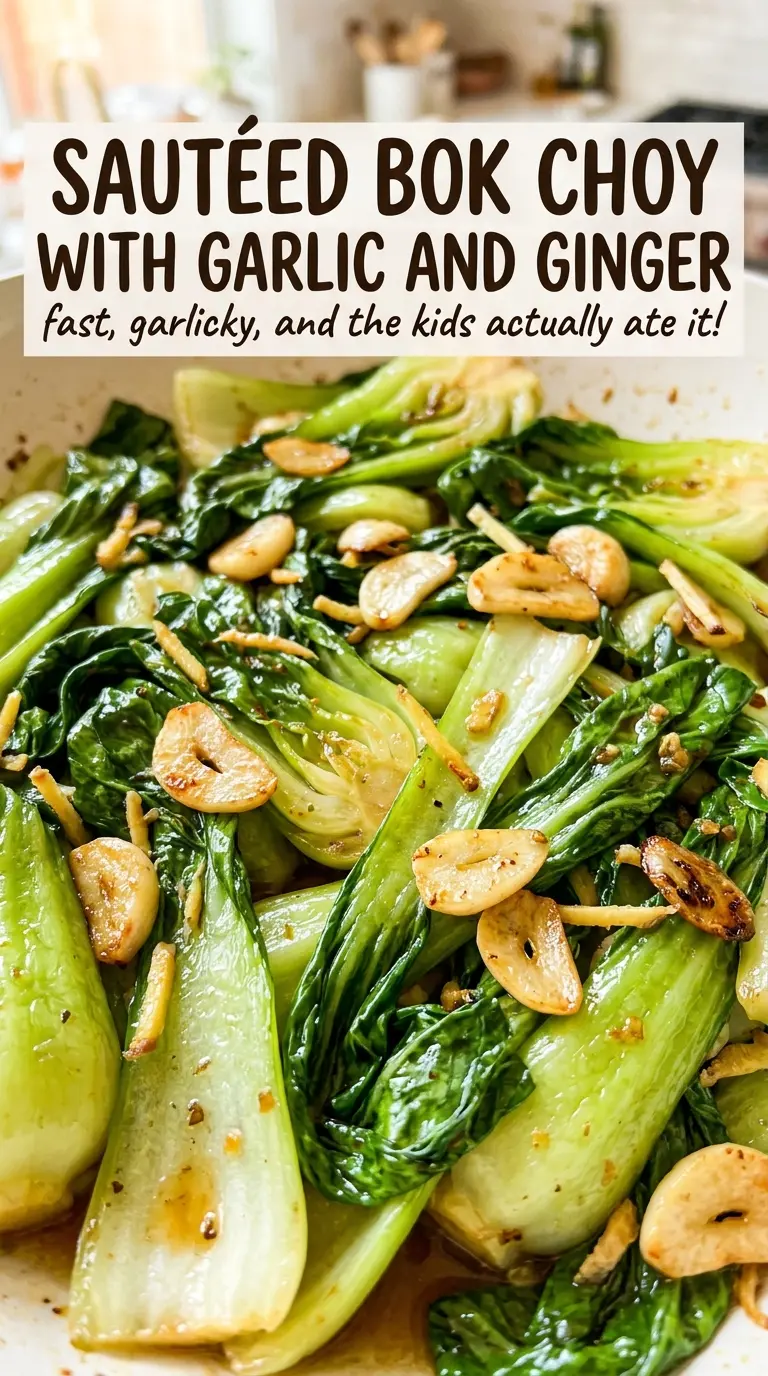
- Baby bok choy — Choose compact heads with firm, pale stems and fresh-looking leaves. Rinsing matters because grit can hide where the leaves meet the stems; dry the pieces well so they sauté instead of giving off excess water. Keep the stems and leaves in separate piles after cutting. Mature bok choy works in a pinch, but its bigger stems can take longer to turn crisp-tender.
- Fresh ginger — Freshly grated ginger gives the oil a bright, warm aroma that ground ginger can’t quite match. Pick a firm piece with smooth skin; a small amount of peeling and grating is worth it here because ginger is one of the main flavors. Jarred grated ginger can stand in, though its flavor is usually softer and less sharp.
- Garlic — Freshly minced cloves have a clear, savory bite that pairs well with the ginger. The inexpensive bulb is fine; look for firm cloves without soft spots. Pre-minced garlic works if that’s what you have, but it can cook and brown faster, so watch it closely.
- Vegetable oil — A neutral cooking oil lets the aromatics and bok choy lead. There’s no need for an expensive bottle; canola oil is a practical substitute in the same amount. Save strongly flavored oils for another use, since they can compete with the fresh ginger.
- Soy sauce — It seasons the greens and adds savory depth in one step. For a gluten-free version, use the same amount of gluten-free tamari; it gives a similar salty, savory finish. Reduced-sodium soy sauce also works if you prefer a gentler saltiness.
The Quick Skillet Sequence That Keeps the Greens Crisp-Tender
Fragrance the Ginger and Garlic
Heat the vegetable oil in a 12-inch skillet over medium-high heat, then add the grated ginger and minced garlic. Stir for about 30 seconds, just until the aromatics smell fragrant. Keep them moving across the skillet rather than letting them sit in one spot. If they brown before the bok choy is ready, the flavor can turn bitter.
Give the Stems Their Head Start
Add the bok choy stems and stir often for 3 to 4 minutes. They should begin to soften while still feeling crisp-tender, not bendy or mushy. Keep them moving so they cook evenly and pick up the ginger and garlic from the pan. If the stems still seem rigid, give them time to reach that texture before adding the leaves.
Steam the Leaves Just Until Wilted
Add the leaves, soy sauce, and water, then cover the skillet. Cook for 1 to 2 minutes, until the leaves have wilted and the stems are tender-crisp. The lid traps steam for a short finish, so don’t leave it on longer than needed. Lift the lid when the greens look glossy and softened, then serve while the stems still have a little bite.
Easy Swaps for a Different Pantry or a Milder Bite
Make It Gluten-Free with Tamari
Replace the soy sauce with the same amount of gluten-free tamari. The finished greens keep their savory, salty character, though tamari can taste a little fuller and less sharp than some soy sauces. Use a gluten-free tamari specifically if you’re cooking for someone avoiding gluten.
Turn Down the Ginger
For a milder, less peppery finish, use 2 teaspoons of grated ginger instead of the full tablespoon and keep the garlic as listed. You’ll still get the savory garlic base, but the ginger won’t lead the first bite. This is a good adjustment when the ginger root you have is especially sharp.
Storage and Reheating
- Refrigerator: Store leftovers in a covered container for up to 3 to 4 days. The leaves soften and the stems lose some of their original crunch.
- Freezer: Freezing isn’t a good fit for this dish. The bok choy releases water as it thaws, leaving the leaves limp and the stems less pleasant to eat.
- Reheating: Warm leftovers briefly in a skillet over medium heat, stirring until hot. Avoid a long reheat; extended cooking makes the leaves mushy and takes the remaining bite out of the stems.
Questions That Come Up When Sautéing Bok Choy
Sautéed Bok Choy with Garlic and Ginger
Ingredients
Equipment
Method
- Heat the vegetable oil in a 12-inch skillet over medium-high heat.
- Add the ginger and garlic and cook, stirring, for about 30 seconds, until fragrant.
- Add the bok choy stems and cook, stirring often, for 3 to 4 minutes, until crisp-tender.
- Add the bok choy leaves, soy sauce, and water, then cover and cook for 1 to 2 minutes, until the leaves are wilted and the stems are tender-crisp.