
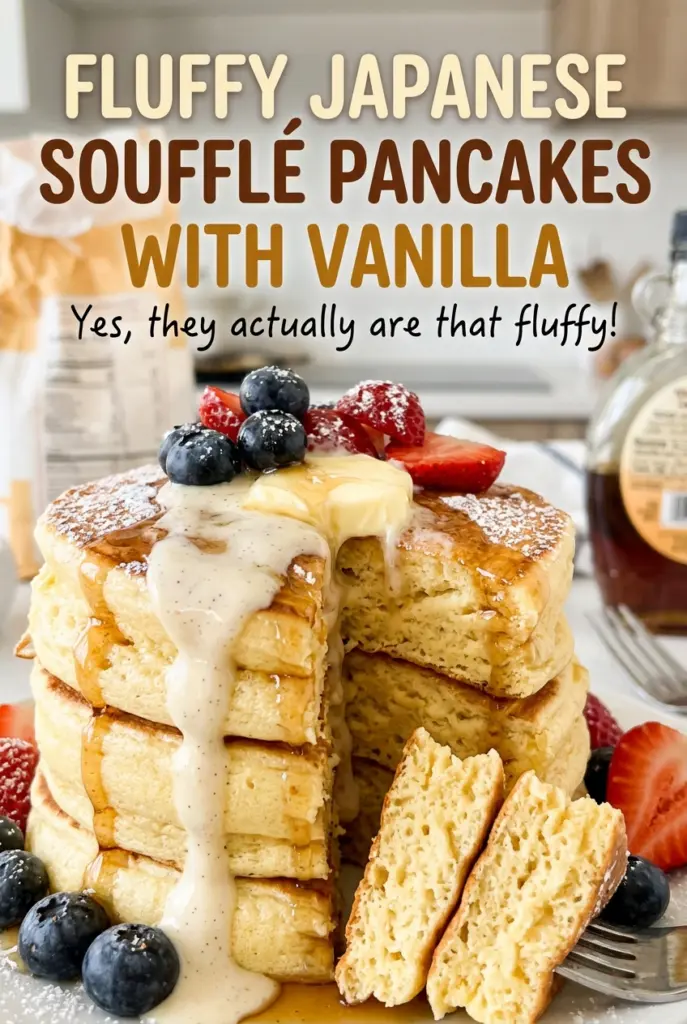
Fluffy Japanese Soufflé Pancakes with Vanilla
The batter looks almost too delicate to touch once the egg whites have been folded in, but that airy mixture is what gives these pancakes their height. I cook them…
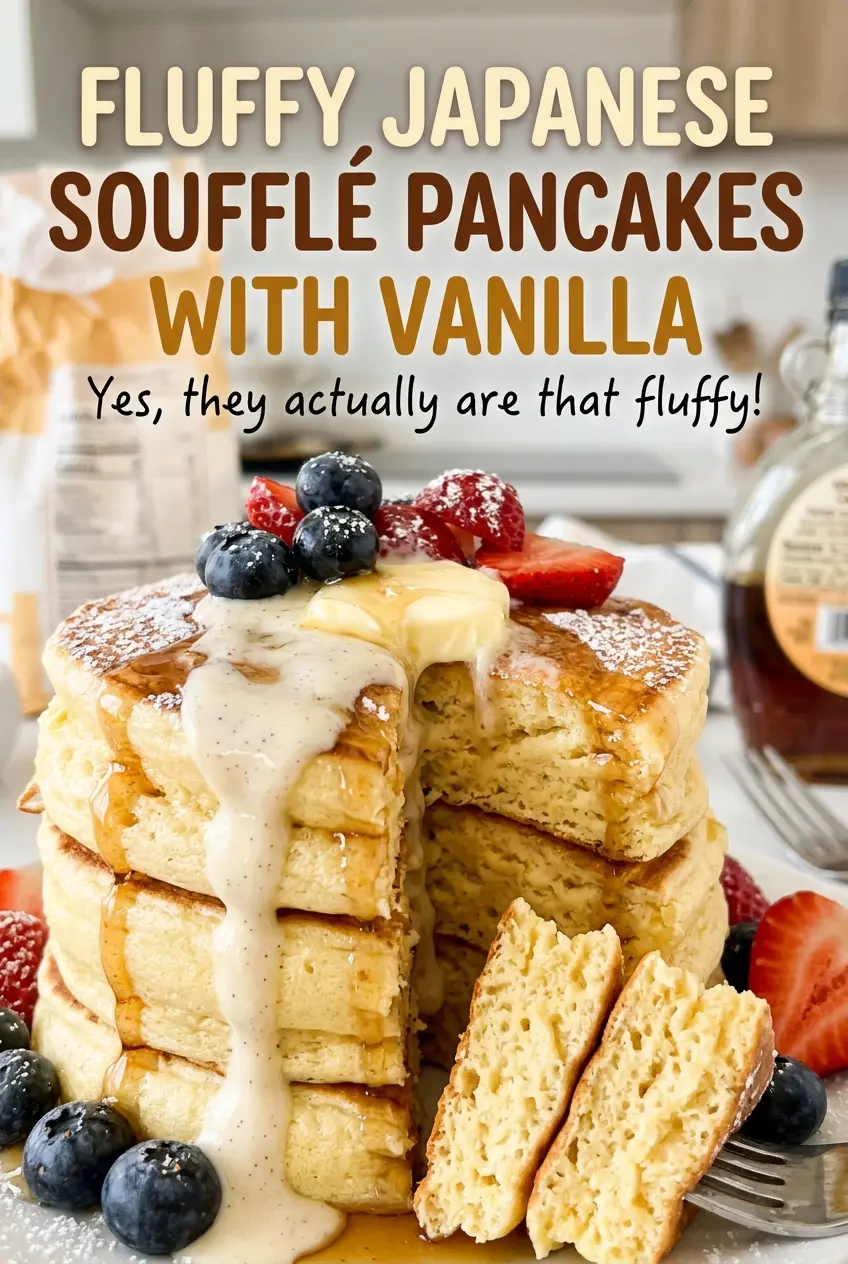
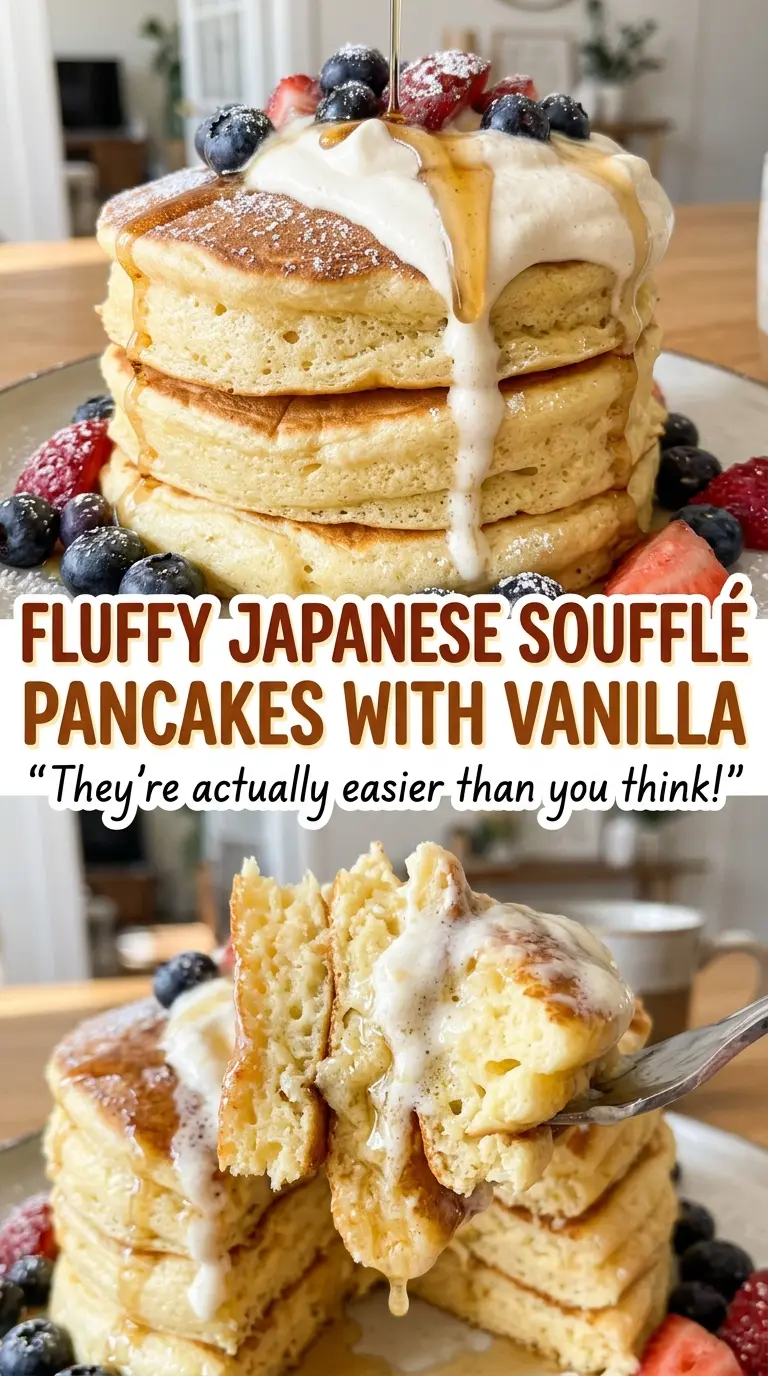
Tip: save now, cook later.The batter looks almost too delicate to touch once the egg whites have been folded in, but that airy mixture is what gives these pancakes their height. I cook them low and slow in covered ring molds, where a little water in the skillet creates steam while the centers set. The result is a stack of fluffy Japanese soufflé pancakes with vanilla and a lightly golden outside.
Separating the eggs carefully and whipping the whites to glossy stiff peaks gives the batter enough structure to rise. I fold in the meringue in stages, keeping the motion gentle so it stays airy without leaving white streaks behind. Then the pancakes cook covered on the lowest burner setting, first on one side and then the other, until they spring back and the center is cooked through. Serve them right away, while they’re still tall and soft.
Kitchen Note
Start with a clean, grease-free bowl for the egg whites. Even a trace of grease can make it harder to whip them into the glossy, stiff meringue these pancakes need.
Save these fluffy Japanese soufflé pancakes with vanilla for a slow breakfast—the covered skillet and ring molds help each one rise tall and tender.
Why These Pancakes Need Steam, Not Just a Hot Pan
Soufflé pancakes are thick, so browning the outside quickly over strong heat can leave the center unset. The ring molds give the loose batter a boundary to rise against, while the covered skillet traps the steam needed to cook through the height of each pancake. That combination lets the pancakes expand and set gradually instead of forcing you to choose between a pale middle and a dark bottom.
The meringue is the other part of that balance. It holds air in the batter, but those bubbles are delicate; a heavy hand during folding knocks out the lift before the pancakes ever reach the skillet. Folding in a portion first lightens the yolk mixture, so the remaining meringue can be incorporated with fewer strokes. You’re aiming for an even batter without visible white streaks, not a perfectly smooth mixture at any cost.
These are best cooked and served right away. Their height comes from the air whipped into the egg whites, so they don’t behave like a sturdy diner pancake that can sit around waiting. Get the skillet and molds ready before the meringue is folded in, then move from mixing to cooking while the batter is still full of air.
What Each Ingredient Contributes to the Rise
- Eggs — Separating them gives the yolks a place in the tender base and the whites a chance to build the lift. Large eggs provide the proportions this batter relies on; smaller eggs can leave you with less meringue and a tighter result.
- Whole milk — It loosens the yolk mixture and adds richness. Water can stand in if you need a dairy-free version, though the pancakes will taste less rich.
- Vanilla extract — It gives the pancakes their warm, familiar aroma. Use an extract you enjoy smelling straight from the bottle; because the rest of the batter is mild, a harsh or stale one will show.
- Cake flour — Its fine, low-protein texture helps keep the pancakes tender. Sifting it with the baking powder and salt breaks up clumps before they become difficult to whisk out. All-purpose flour is not a like-for-like swap here; it can make the crumb heavier.
- Baking powder and cream of tartar — Baking powder supports the rise in the yolk batter, while cream of tartar helps the egg whites whip into a stable meringue. They do different jobs, so don’t treat one as a replacement for the other.
- Granulated sugar — Beating it gradually into the whites helps create a glossy meringue that holds its shape. Dumping it in all at once makes it harder to incorporate evenly.
- Neutral oil — A light coating on the ring molds and skillet helps the pancakes release without adding a strong flavor. A neutral-tasting oil is a better fit than an aromatic one.
From Glossy Meringue to Tall, Set Pancakes
Whisk the yolk batter just until smooth
Put the yolks in a large bowl and the whites in a separate medium bowl. Whisk the milk and vanilla into the yolks, then sift in the cake flour, baking powder, and salt. Whisk only until no dry flour remains; continuing to beat after that can make the batter tougher than it needs to be.
Build a glossy meringue with stiff peaks
Beat the egg whites with the cream of tartar on medium speed until foamy, then raise the mixer to medium-high and continue to soft peaks. Add the sugar gradually and beat until the meringue looks glossy and holds stiff peaks. If it still slides or droops when you lift the beaters, it needs more whipping before you fold it into the yolks.
Fold in stages and keep the air
Fold one-third of the meringue into the yolk batter first; this loosens the base so the remaining whites are easier to incorporate. Add the rest in two portions, folding gently until no white streaks remain. Scrape along the bottom of the bowl as you fold, since unincorporated yolk batter tends to hide there, but stop once the mixture is even.
Steam, turn, and check the center
Brush the inside of four 3-inch-by-2-inch metal ring molds with 1 teaspoon of the oil, then brush the remaining oil over a 12-inch nonstick skillet with a lid. Heat the skillet on the lowest burner setting for 2 minutes, arrange the molds inside, and divide the batter among them, filling each about halfway; spoon any remaining batter over the portions. Pour the water around the molds, cover, and cook for 8–10 minutes, until the pancakes have risen and their tops look set rather than wet. Carefully turn each ring-and-pancake with a thin spatula, cover, and cook for 5–7 minutes more, until golden underneath and springy to a light touch; lift off the rings with tongs and check the thickest pancake’s center with an instant-read thermometer. It should reach 160°F; if it hasn’t, cook for 1–2 minutes more and check again.
Small Changes That Still Suit a Soufflé Pancake
A quieter vanilla note
Leave out the vanilla extract for a plainer, egg-forward pancake. The batter will still get its lift from the meringue, but the finished pancakes won’t have the same aromatic vanilla flavor.
A dairy-free adjustment
For a dairy-free batter, use water in place of the whole milk in the yolk mixture and keep the skillet water separate for steaming. The pancakes will be a little less rich, while the whipped egg whites still provide their characteristic airy texture.
Storage and Reheating
- Refrigerator: Keep leftovers in an airtight container for up to 3 days. They’ll lose some of their height and softness as they chill.
- Freezer: Freeze cooled pancakes in a single layer until firm, then transfer them to a freezer-safe container. Their texture will be denser after thawing, but they’re still useful for a quick leftover breakfast.
- Reheating: Warm gently in the microwave until hot throughout. Avoid high heat or a long reheat, which can make the egg-based pancakes rubbery.
Questions That Come Up When Making Soufflé Pancakes
Fluffy Japanese Soufflé Pancakes with Vanilla
Ingredients
Equipment
Method
- Put the egg yolks in a large bowl and the whites in a clean, grease-free medium bowl.
- Whisk the milk and vanilla into the yolks.
- Sift the cake flour, baking powder, and salt into the yolk mixture, then whisk just until no dry flour remains.
- Beat the egg whites with the cream of tartar using a hand mixer on medium speed until foamy, then increase to medium-high and beat until soft peaks form.
- Gradually beat in the sugar and continue until the meringue is glossy and holds stiff peaks.
- Fold one-third of the meringue into the yolk mixture to lighten it, then gently fold in the remaining meringue in two additions until no white streaks remain.
- Brush the inside of four 3-inch-by-2-inch metal ring molds with 1 teaspoon of the oil, and brush the remaining oil over a 12-inch nonstick skillet with a lid.
- Set the skillet over the lowest burner setting and heat for 2 minutes, then arrange the ring molds in the skillet.
- Divide the batter among the molds, filling each about halfway, and spoon any remaining batter over the portions.
- Pour the water into the skillet around the molds, cover, and cook for 8-10 minutes, until the pancakes have risen and their tops look set rather than wet.
- Carefully turn each ring-and-pancake over with a thin spatula, cover, and cook for 5-7 minutes, until the pancakes are golden underneath and spring back when lightly touched.
- Lift off the rings with tongs and check the center of the thickest pancake with an instant-read thermometer; it should reach 160°F, or cook the pancakes for 1-2 minutes more and check again.
- Serve the pancakes immediately.