
Fresh Strawberry Pie
Fresh strawberry pie is the kind of dessert that disappears fast because it tastes like pure berries, not a heavy filling dressed up as fruit. The crust stays crisp, the…
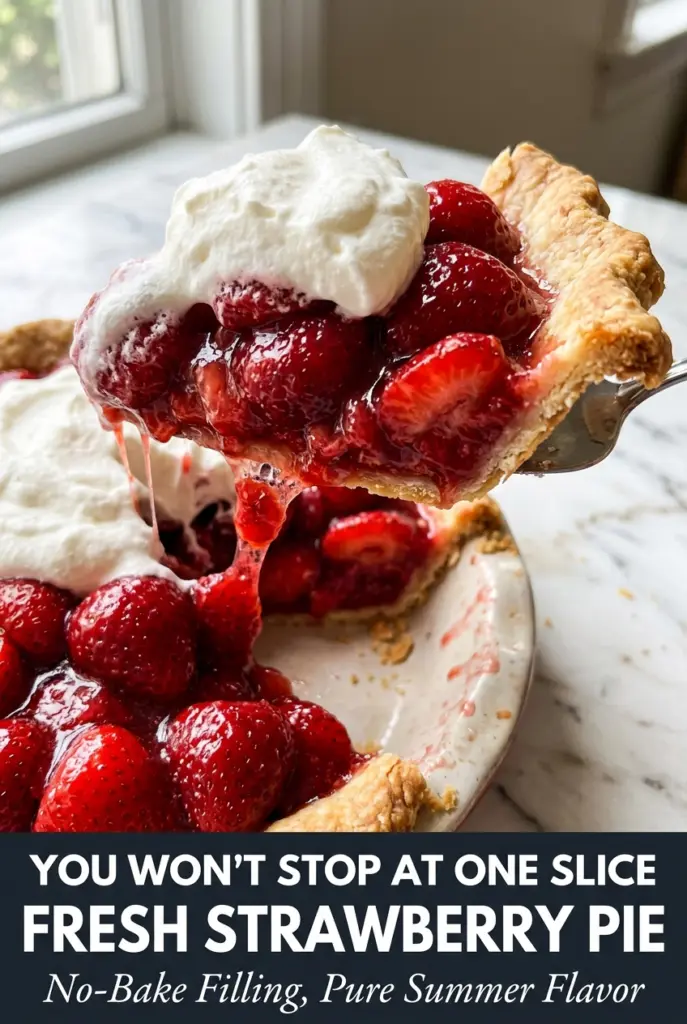
Tip: save now, cook later.Fresh strawberry pie is the kind of dessert that disappears fast because it tastes like pure berries, not a heavy filling dressed up as fruit. The crust stays crisp, the glaze sets into a glossy sliceable layer, and every bite gives you that soft, juicy strawberry texture with just enough sweetness to pull it all together.
What makes this version work is restraint. The glaze starts with mashed strawberries, so it tastes like the fruit instead of a candy shell, and the lemon juice keeps the sweetness from going flat. Cooking the glaze until it goes from cloudy to deeply shiny matters more than the clock; that’s what gives you a filling that holds the berries in place without turning gluey.
Below, I’ve laid out the little details that matter here: how to keep the crust crisp, how to avoid a runny glaze, and how to pack the berries so every slice comes out neat and full of summer color.
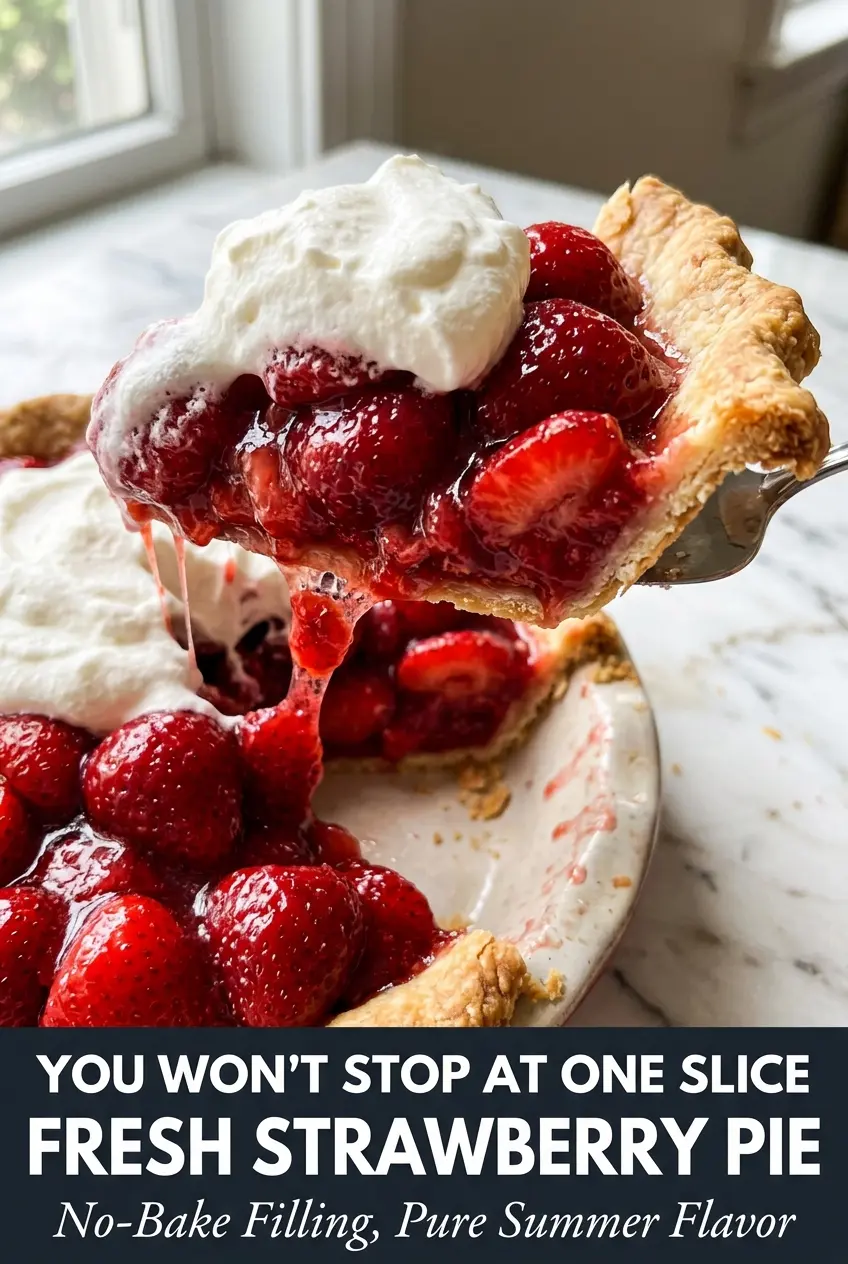
The glaze set up beautifully and stayed sliceable after chilling, and the whipped cream on top made it taste like a bakery dessert without covering up the strawberries.
Save this fresh strawberry pie for the days when you want a chilled dessert with a glossy berry filling and a crisp crust.
The Reason Most Strawberry Pies Get Watery Before the First Slice
The mistake usually happens in one of two places: the glaze never cooks long enough to fully thicken, or the berries go into the crust while both the fruit and the glaze are still warm. Warm filling starts breaking down the strawberries immediately, and that extra juice is what turns a clean slice into a puddle on the plate.
This pie holds together because the glaze is cooked until it loses that raw, chalky look from the cornstarch and turns glossy and spoon-coating. Then it cools before it meets the berries. That pause matters. It lets the crust stay crisp and keeps the strawberries from giving off more liquid than the filling can support.
Pack the berries in tightly, too. Gaps between the fruit turn into empty pockets of glaze, and those pockets are what slide apart when you cut the pie.
What Each Ingredient Is Actually Doing in This Pie
- Pre-baked 9-inch pie crust — The crust has to be fully baked and cooled before the filling goes in. A raw or underbaked shell softens under the glaze and loses that clean snap at the edge. Store-bought works fine here if you blind bake it until it’s fully golden.
- Fresh strawberries for the glaze — The mashed berries are what make the filling taste like strawberries instead of sugar and cornstarch. You only need a cup, but use ripe fruit because the glaze gets its best color and aroma from that mash. If your berries are a little tart, that’s fine; the sugar balances them.
- Cornstarch — This is the thickener that sets the pie. There isn’t a real substitute that behaves the same way in this filling, though tapioca starch can work if you want a slightly glossier finish. Whisk it in thoroughly before heating so you don’t end up with little gelled lumps.
- Lemon juice — A small amount sharpens the glaze and keeps the sweetness from flattening out. Fresh is best because it tastes brighter, but bottled works in a pinch. Skip it and the pie can taste one-note.
- Heavy whipping cream — The cream is for the topping, and it should be cold enough to whip into soft, billowy peaks. If all you have is topping from a carton, it won’t whip the same way. Keep it unsweetened or lightly sweetened so it doesn’t fight the strawberries.
- Powdered sugar and vanilla — Powdered sugar dissolves cleanly into the cream, which keeps the topping smooth. Vanilla adds warmth without turning the whole pie into a bakery-vanilla dessert. Use a light hand here; the strawberries should still lead.
Building the Filling So It Sets Cleanly
Start With a Fully Cool Crust
The crust needs to be completely cool before the berries go in. If it’s even slightly warm, the steam softens the bottom and the filling starts to slide before it has a chance to set. Set it on a wire rack and leave it alone until the pan feels neutral to the touch.
Cook the Glaze Until It Turns Glossy
Combine the mashed strawberries, sugar, cornstarch, water, and lemon juice in a small saucepan and stir until the cornstarch disappears. Once it comes over medium heat, keep stirring so the starch doesn’t settle and scorch on the bottom. The glaze is ready when it thickens enough to coat a spoon and turns a deep, shiny red instead of looking cloudy.
Let the Glaze Cool Before It Meets the Berries
Cooling is not wasted time here. Hot glaze softens the strawberries and can make them weep, which is how the filling ends up loose even if the cornstarch was cooked properly. Let it sit until room temperature; it should still pour, but not feel warm.
Pack, Pour, Chill
Arrange the strawberries cut side down and snugly together in the crust. Pour the cooled glaze over them and nudge it around with a spoon so it slips into every gap. Chill the pie until the glaze is fully set and the slices hold their shape, which usually takes at least two hours.
Three Useful Ways to Adapt This Pie
Gluten-Free Crust Swap
Use a gluten-free pre-baked pie crust and treat it the same way you would a standard one: fully baked, fully cooled, and sturdy enough to hold a wet filling. A flimsy crust will buckle under the berries, so choose one that bakes up crisp rather than soft.
Dairy-Free Finish
Skip the whipped cream or top each slice with a dairy-free whipping topping that holds soft peaks. The pie itself is already dairy-free as written, so this swap only changes the finish. Keep the topping lightly sweetened so it doesn’t drown out the strawberries.
Mixed Berry Version
Replace up to half the strawberries with raspberries or blueberries for a sharper, more layered filling. Raspberries soften faster, so use them if you want a looser, jammy pie; blueberries hold their shape better and give the glaze a deeper color. Keep the total fruit amount the same.
Storage and Reheating
- Refrigerator: Store covered for up to 3 days. The crust softens a little by day two, but the filling stays nicely sliceable.
- Freezer: This pie doesn’t freeze well. The strawberries break down after thawing and the glaze turns watery.
- Reheating: Don’t reheat it. Serve straight from the fridge for the cleanest slices. If it sits out too long, the glaze loosens and the whipped cream melts.
Answers to the Questions Worth Asking
Fresh Strawberry Pie
Ingredients
Equipment
Method
- Pre-bake your pie crust according to package or recipe directions, then let it cool completely on a wire rack before filling.
- In a small saucepan, combine mashed fresh strawberries, granulated sugar, cornstarch, water, and fresh lemon juice; stir well to dissolve the cornstarch.
- Cook the glaze over medium heat, stirring constantly, until thickened and deep glossy red, about 5–7 minutes.
- Remove the glaze from heat and let it cool to room temperature, about 20–25 minutes, until pourable.
- Arrange the fresh strawberries in the cooled pie crust, cut side down, packing them in snugly and generously.
- Pour the cooled glaze evenly over the strawberries, using a spoon to coat every berry so the glaze settles into all the gaps.
- Refrigerate the pie for at least 2 hours, until the glaze is fully set and the pie slices cleanly.
- When ready to serve, whip the heavy whipping cream with powdered sugar and pure vanilla extract until soft, billowy peaks form.
- Slice the pie and top each piece with a generous cloud of whipped cream, then serve immediately.