

Garlic Butter Turkey Breast in the Oven
Once the buttered turkey breast goes into the oven, the skin starts to brown long before the center is ready; that gap can make you want to pull it early.…
Tip: save now, cook later.Once the buttered turkey breast goes into the oven, the skin starts to brown long before the center is ready; that gap can make you want to pull it early. I watch the thermometer instead of the color. For this garlic butter turkey breast, a steady roast gives the skin time to turn golden while the meat cooks through without the guesswork of roasting a whole bird.
Softened butter is easy to spread beneath the skin, where it carries garlic and herbs close to the meat, and the rest coats the outside. Patting the turkey dry first helps that butter stay put instead of sliding over a damp surface. The result is tender slices with fragrant garlic, fresh herbs, and a richly browned skin.

Kitchen Note
Loosen the skin a little at a time rather than pulling hard from one spot. If you feel it resisting, shift your fingers and work from another edge; a gentle touch helps keep the skin intact for the butter.
Save this garlic butter turkey breast for a roast with golden skin, garlic, and fresh herbs.
Why the Garlic Butter Belongs in Two Places
Butter only on top seasons the skin and gives it a savory finish, but the meat underneath gets less of that garlic-and-herb mixture. Tucking some beneath the skin puts the seasoning closer to the breast meat, while the outer coating stays where it can brown along with the skin. Those two placements do different jobs, and neither is a substitute for the other.
Keep the butter softened rather than melted. Soft butter holds the minced garlic and chopped herbs in an even mixture, so you can spread it where you want it instead of having melted butter run off the turkey. Dividing it between the two surfaces also helps avoid a thick patch of herbs on one spot and bare skin nearby. The payoff is a more even, fragrant coating from the first slice to the last.
What the Turkey, Butter, and Herbs Each Bring to the Roast
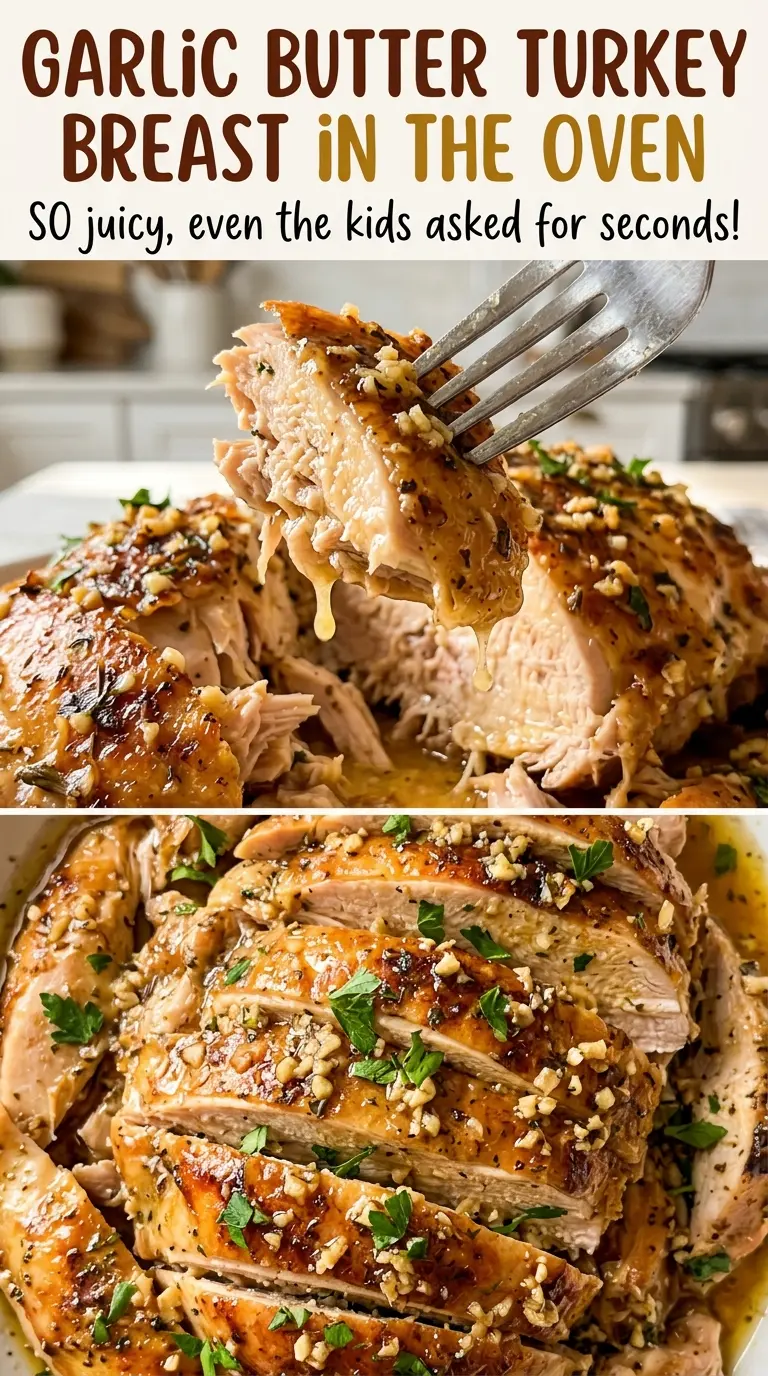
- Bone-in, skin-on turkey breast — The bone and intact skin are part of how this roast is designed, and the skin gives the butter a surface to coat. Buy it fully thawed, with the skin unbroken where possible. The specified 4- to 5-pound size fits the timing and roasting setup used here.
- Unsalted butter — Softened butter spreads easily without running off, and choosing unsalted butter leaves the seasoning under your control. A standard grocery-store butter works well; there’s no need to seek out a specialty brand. Let it soften enough to stir smoothly, but don’t melt it.
- Fresh garlic — Finely minced cloves disperse through the butter and are easier to spread evenly than large pieces. Take a moment to mince them small; coarse chunks can gather in one place and are more likely to brown on the outer skin.
- Fresh thyme and rosemary — Chopped fresh herbs bring a fragrant, leafy quality to the butter. Their texture and flavor are different from dried herbs, so use fresh as listed for this version. Choose sprigs with fragrant leaves, then chop them just before mixing.
- Black pepper — Freshly ground pepper gives the butter a little warmth and a more pronounced aroma. If you already have ground black pepper, it works fine here; the garlic and herbs are the bigger flavor notes.
The Four Stages of a Juicy, Evenly Seasoned Turkey Breast
Set Up the Pan Before the Turkey Goes In
Heat the oven to 350°F and set a rack inside a 9×13-inch roasting pan. Getting the pan ready first means you won’t have to handle the buttered turkey more than necessary. The rack keeps the breast lifted above the bottom of the pan. Set it in place before you start seasoning.
Mix the Butter and Season the Breast
Stir the softened butter with the finely minced garlic, chopped thyme, chopped rosemary, kosher salt, and black pepper until the mixture looks evenly speckled. Pat the thawed turkey breast dry with paper towels; moisture on the skin makes the butter harder to spread. Gently loosen the skin, then work about half the butter beneath it. Spread the rest over the outside, taking care to coat the skin rather than leaving one thick mound.
Roast Until the Thickest Part Reaches Temperature
Set the turkey skin-side up on the rack and roast for 1 1/2 to 2 1/4 hours. The size and shape of the breast affect where it lands in that range, so use a thermometer rather than relying on the skin’s color. Insert it into the thickest part without touching bone; the reading should reach 165°F. If the skin browns too quickly, tent the breast loosely with foil for the rest of the roast.
Rest Before Carving
Transfer the turkey to a cutting board and tent it loosely with foil. Let it rest for 20 minutes before carving so the meat has time to settle after roasting. Keep the foil loose rather than wrapping the breast tightly; you want to hold some warmth without trapping so much steam that the skin softens. Then carve and serve the slices while they’re warm.
Three Ways to Shift the Herb Balance or Serving Style
Let Rosemary Lead
For a more woodsy, rosemary-forward roast, leave the thyme out and use the rosemary in the butter. The result has a bolder herbal aroma and a less delicate finish, while the garlic butter method stays the same.
Make It Thyme-Forward
Leave out the rosemary and keep the thyme in the garlic butter for a softer, more understated herb flavor. This version keeps the same buttery coating but lets the thyme come through without rosemary’s stronger piney notes.
Carve It for a Different Table
For a neat platter, carve the breast into even slices. For a more casual meal or to portion leftovers, cut the slices into smaller pieces after carving; the flavor stays the same, but the smaller pieces are easier to serve in individual portions.
Storage and Reheating
- Refrigerator: Refrigerate leftovers within 2 hours and keep them in an airtight container for 3 to 4 days. Sliced turkey loses moisture faster than a larger piece, so store it in larger portions when you can.
- Freezer: It freezes well. Wrap portions tightly or pack them in an airtight freezer-safe container, and use within 2 to 6 months for best quality.
- Reheating: Warm slices covered in a microwave-safe dish at medium power in short intervals, checking between bursts. Long, high-power heating can make lean breast meat tough and dry.
Questions I Get Asked About Roasting Turkey Breast
Garlic Butter Turkey Breast in the Oven
Ingredients
Equipment
Method
- Heat the oven to 350°F.
- Set a rack in a 9x13-inch roasting pan.
- Stir together the butter, garlic, thyme, rosemary, salt, and pepper in a small bowl.
- Pat the turkey breast dry with paper towels.
- Gently loosen the skin.
- Spread about half the garlic butter under the skin and the rest over the outside.
- Set the turkey breast skin-side up on the rack.
- Roast for 1 1/2 to 2 1/4 hours, until a thermometer inserted into the thickest part without touching bone reads 165°F; tent loosely with foil if the skin browns too quickly.
- Transfer the turkey to a cutting board, tent loosely with foil, and rest for 20 minutes before carving.