

Southern Baked Mac and Cheese
The macaroni should still have a little bite when it leaves the pot; the oven finishes the job while the cheese melts around it. I learned that the hard way…
Tip: save now, cook later.The macaroni should still have a little bite when it leaves the pot; the oven finishes the job while the cheese melts around it. I learned that the hard way after a first attempt came out softer than I wanted. Now I pull the elbows two minutes before the package’s al dente time, and this Southern baked mac and cheese holds its shape beneath that golden top.
The other detail that makes this bake feel different from stovetop mac is the egg-and-milk mixture. It gets poured over the layered pasta and cheese, then sets in the oven, so you get a cohesive casserole rather than a sauce that needs stirring on the stove. Sharp cheddar brings a clear cheese flavor, while Monterey Jack melts smoothly between the elbows.
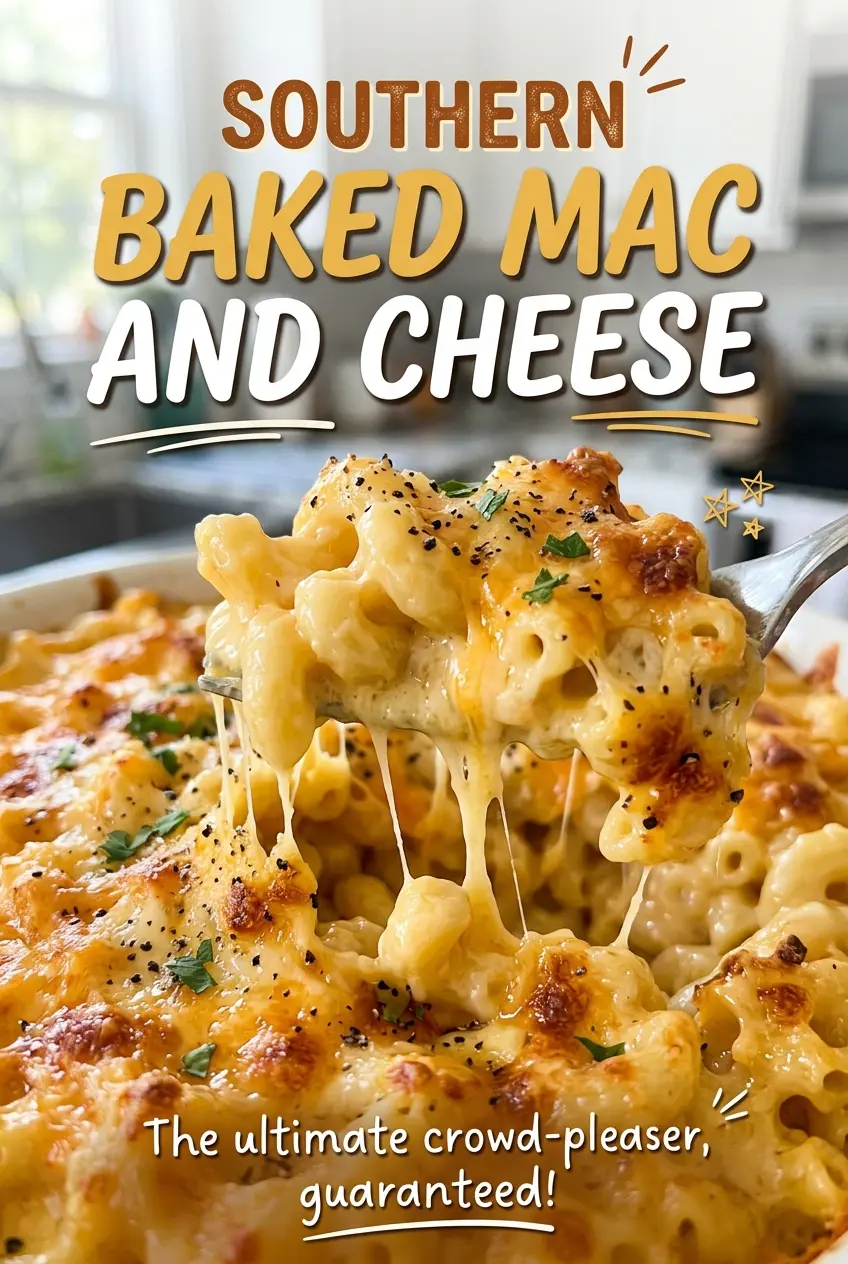
Let it rest before serving. The center settles, the layers hold together, and each scoop comes out with tender macaroni and a browned, bubbling cap of cheese.
Kitchen Note
Drain the macaroni well before it goes back into the pot. Extra water clinging to the elbows can thin the egg-and-milk mixture, so give the colander a good shake before adding the butter.
Save this Southern baked mac and cheese for a bubbling, golden-topped casserole with tender elbows and two kinds of cheese.
Why the Macaroni Goes Into the Oven Two Minutes Early
Boiled pasta keeps softening after it leaves the water, and this casserole gives it another 30 to 35 minutes in the oven. Cooking the elbows all the way to package al dente before baking can leave them too soft by the time the center sets. Pulling them two minutes early gives the pasta room to finish in the milk mixture without losing its shape.
That timing matters because the dish isn’t built around a thick stovetop cheese sauce. The eggs and milk form a custard-like base that settles around the macaroni as it bakes. The cheese melts into that mixture and between the pasta layers, so the finished casserole holds together when you serve it. If the pasta starts out fully soft, it has less structure left to handle that bake.
Watch the center, not just the browned top. The surface can look ready while the middle still needs time to set. Once the center reaches 160°F and the top is golden and bubbling, the bake is ready to rest. This balance—slightly firm pasta going in, a set center coming out—is what keeps the casserole hearty instead of mushy.
The Milk-and-Cheese Pairing That Gives This Bake Its Body

- Elbow macaroni — Its curved shape catches the egg-and-milk mixture and melted cheese. Keep the elbows just shy of al dente before baking; a different pasta shape can change how the custard sits among the noodles.
- Sharp cheddar — This is where the casserole gets its bold, familiar cheese flavor. Shredding it from a block gives it a more even melt; pre-shredded cheddar is convenient, though its coating can make the texture less silky.
- Monterey Jack — Jack softens the sharper cheddar and melts into the layers without taking over. The combination gives you both distinct cheese flavor and a supple texture, so replacing all of it with a sharper cheese changes the balance.
- Evaporated milk and whole milk — Evaporated milk adds body, while whole milk loosens the mixture enough to pour through the pasta. Sweetened condensed milk is not a substitute; its sweetness and thickness don’t suit this savory bake.
- Eggs — The eggs help the casserole set as it bakes, which is why this version slices and scoops differently from loose stovetop mac and cheese. They’re part of the structure, not just an enrichment.
- Dry mustard, paprika, and black pepper — Dry mustard adds a savory edge to the cheese, and paprika and pepper round out the seasoning. The dry mustard is worth keeping even if you’re tempted to skip it; it adds depth without making the dish taste like mustard.
- Unsalted butter — Stirring it into the hot drained macaroni coats the elbows and gives the casserole a richer base. Unsalted butter also lets the measured kosher salt do the seasoning work.
From Slightly Firm Elbows to a Set, Golden Casserole
Stop the Pasta Before It Turns Soft
Heat the oven to 350°F and grease a 9×13-inch baking dish. Bring a large pot of water to a boil, add the tablespoon of kosher salt, then cook the elbow macaroni until it’s two minutes shy of the package’s al dente time. The noodles should be flexible but still have a firm bite in the center. Drain them well, return them to the pot while hot, and stir in the butter until it melts.
Whisk the Milk Mixture Until Even
In a medium bowl, whisk the eggs with the evaporated milk, whole milk, dry mustard, paprika, black pepper, and remaining kosher salt. Keep whisking until the eggs are blended through and no streaks of yolk or white remain. An even mixture pours more consistently over the casserole than one with pockets of unblended egg. Set the bowl nearby while you layer the pasta and cheese.
Layer the Cheeses Through the Pasta
Spread half the macaroni in the greased baking dish, then sprinkle over half the cheddar and half the Monterey Jack. Add the rest of the macaroni and finish with the remaining cheeses. Keep the layers reasonably even so every portion has pasta and cheese rather than one dense pocket. Pour the egg mixture evenly over the top; take a moment to distribute it across the whole dish.
Bake Until the Center Sets
Bake for 30 to 35 minutes, until the top is golden and bubbling and the center is set and reaches 160°F. A browned surface alone isn’t enough—the middle needs to set, too. If the center still looks loose, give it more time in the oven and check again. Let the casserole rest for 10 minutes before serving so the layers settle and the scoops hold together.
Two Smart Ways to Adapt the Cheese Layers
A Gluten-Free Pan of Mac and Cheese
Replace the regular elbow macaroni with the same amount of gluten-free elbow macaroni. Cook it two minutes shy of its package’s al dente time, then drain it well and continue with the same layering and bake. Gluten-free pasta can soften or break more readily, so use a sturdy elbow shape and handle it gently when you spread the layers.
A More Continuous Cheesy Top
Keep the same amounts of cheddar and Monterey Jack, but put all the macaroni in the dish first and spread all the cheese over the top. The casserole will have fewer cheese layers through the middle and a more unified browned surface. Pour the milk mixture evenly over the pasta before baking.
Storage and Reheating
- Refrigerator: Store leftovers covered for 3 to 4 days. The pasta will firm up as it chills, and the cheese won’t be as soft as it is straight from the oven.
- Freezer: Freeze portions in airtight containers for up to 2 to 3 months. Thaw them in the refrigerator before reheating; the texture may be a little softer after freezing.
- Reheating: Reheat covered in a 325°F oven until the center reaches 165°F, or warm an individual portion in the microwave. Avoid prolonged uncovered reheating, which dries out the pasta and browns the cheese further.
Questions That Come Up Before the First Bite
Southern Baked Mac and Cheese
Ingredients
Equipment
Method
- Heat the oven to 350°F.
- Grease a 9x13-inch baking dish.
- Bring a large pot of water to a boil, then add 1 tablespoon kosher salt.
- Add the macaroni and cook until 2 minutes shy of the package’s al dente time.
- Drain the macaroni well.
- Return the hot macaroni to the pot and stir in the butter until melted.
- In a medium bowl, whisk together the eggs, evaporated milk, whole milk, dry mustard, paprika, black pepper, and remaining 1/2 teaspoon kosher salt.
- Spread half the macaroni in the prepared baking dish and sprinkle with half the cheddar and half the Monterey Jack.
- Add the remaining macaroni and top with the remaining cheeses.
- Pour the egg mixture evenly over the macaroni.
- Bake for 30 to 35 minutes, until the center is set and reaches 160°F and the top is golden and bubbling.
- Let the mac and cheese rest for 10 minutes before serving.