
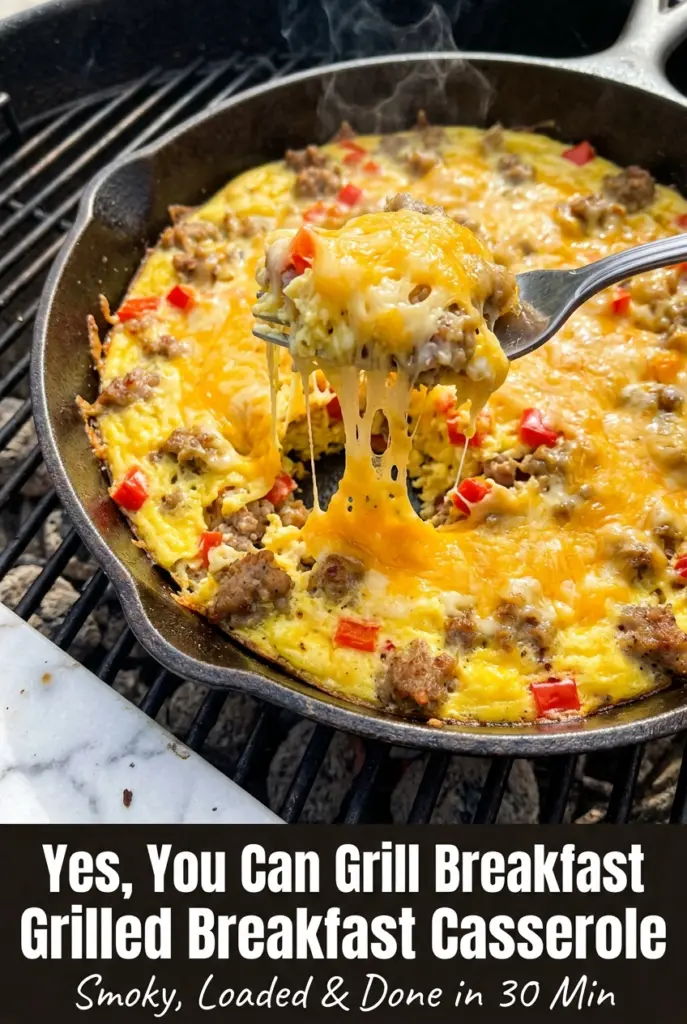
Grilled Breakfast Casserole
Smoky, hearty, and built for a crowd, this grilled breakfast casserole lands on the table with crisp edges, fluffy eggs, and a molten layer of cheddar that pulls into every…
Tip: save now, cook later.Smoky, hearty, and built for a crowd, this grilled breakfast casserole lands on the table with crisp edges, fluffy eggs, and a molten layer of cheddar that pulls into every scoop. The grill gives it something an oven can’t: a gentle char around the skillet and a little kiss of smoke that makes the sausage taste richer and the potatoes taste more like breakfast at a campsite than brunch at home.
The trick is keeping the whole dish on indirect heat once the fillings are cooked. That slow, covered finish lets the eggs set without turning rubbery and gives the cheese time to melt into the hash browns instead of sealing off the top too early. Thawed hash browns matter here, too. If they go in icy, they steam instead of browning, and you lose the best texture in the skillet.
Below, I’ll show you how to build that golden bottom crust, how to keep the eggs tender on the grill, and a few easy ways to change the casserole for different diets or whatever you’ve got in the cooler.
The hash browns got that crispy bottom I was hoping for, and the eggs stayed tender instead of drying out on the grill. My husband went back for seconds before I even sat down.
Grilled Breakfast Casserole like this one is perfect when you want smoky eggs, crisp hash browns, and a crowd-sized breakfast without turning on the oven.
The Reason the Bottom Goes Crispy Instead of Watery
The difference between a great breakfast casserole and a soggy one usually comes down to heat management and moisture. On the grill, the direct heat gets the sausage browned and the vegetables a little charred at the edges, but the actual bake needs indirect heat. If you leave the skillet over flame the whole time, the bottom scorches before the eggs set, and if you rush the fillings, the potatoes release steam and turn soft.
The other part people miss is the hash browns. Frozen potatoes need to be thawed and patted dry before they hit the pan. That small step is what lets them fry in the sausage drippings and oil instead of collapsing into a wet layer under the eggs. The result is a casserole with structure: crisp underneath, tender in the middle, and melted on top.
- Indirect grilling — This is what gives you gentle, even heat. The covered grill acts like an outdoor oven, which keeps the eggs from tightening up too fast.
- Thawed hash browns — Dry potatoes brown; wet potatoes steam. If yours still feel icy, spread them on a towel for a few minutes before they go in the skillet.
- Cast iron skillet — It holds heat beautifully and gives the casserole that deep, cooked-through bottom. A thin pan won’t brown the potatoes the same way.
What Each Ingredient Is Doing in This Dish
- Breakfast sausage — This brings the main savory backbone. If you swap in turkey sausage, the casserole will be leaner but a little less rich, so add a touch more olive oil if the pan looks dry.
- Hash browns — They bulk up the casserole and give it that hearty breakfast texture. Fresh grated potatoes can work, but they need to be rinsed and squeezed dry first or they’ll turn gummy.
- Onion and bell peppers — These add sweetness and a little bite after they soften on the grill. Don’t skip the light charring; it’s what keeps the vegetables from tasting flat.
- Sharp cheddar and Monterey Jack — Cheddar brings flavor, while Monterey Jack melts smoothly and keeps the top from feeling dense. If you only have cheddar, use it, but expect a slightly firmer melt.
- Whole milk — It loosens the eggs just enough so they bake up tender. Half-and-half works too, but the casserole will set a bit richer and heavier.
Building the Skillet So the Eggs Set Without Overcooking
Brown the sausage first
Heat the skillet over the direct side of the grill and cook the sausage until it’s no longer pink and you see browned bits stuck to the pan. Those browned bits matter; they season the potatoes and vegetables as they cook. If you crowd the sausage or keep stirring constantly, it steams instead of browns, and you lose that deeper flavor.
Give the vegetables a little edge
Add the onion and peppers to the same pan and cook just until softened and lightly charred at the corners. You want them aromatic and slightly sweet, not collapsed. If they go in raw and watery, they dump moisture into the casserole and keep the potatoes from crisping.
Fry the hash browns into a base
Spread the thawed hash browns into an even layer and leave them alone for several minutes. That undisturbed time is what forms the golden crust underneath. If you keep stirring, you break the layer before it sets, and the whole casserole loses its best texture.
Finish covered on indirect heat
Once the eggs and cheese are in, move the skillet to the cooler side of the grill and close the lid. The casserole is done when the center is just set and no longer looks wet in the middle, and the cheese is melted with browned spots at the edges. Pull it off the heat and let it rest a few minutes so the eggs finish setting without drying out.
How to Adapt This for Different Crowds and Diets
Make It Lighter with Turkey Sausage
Turkey sausage works well if you want a leaner skillet, but it doesn’t leave behind as much fat for browning the potatoes. Add the full amount of olive oil and cook until you see good color on the meat before moving on. The casserole will still taste hearty, just a little less rich.
Dairy-Free Version
Swap the milk for an unsweetened non-dairy milk with a neutral flavor, then use your favorite dairy-free shredded cheese that melts well. The texture stays close, though the top won’t brown quite as deeply as cheddar. Choose a brand that’s meant for melting, not a crumbly style.
Vegetarian Campfire Skillet
Skip the sausage and add extra bell pepper, sautéed mushrooms, or a handful of spinach stirred in at the end. The casserole loses some of its smoky depth, so lean harder on the smoked paprika and a pinch of extra salt. It’s a good fix when you need a meatless breakfast that still eats like a full meal.
Storage and Reheating
- Refrigerator: Store leftovers covered for up to 4 days. The hash browns soften a little, but the flavor holds up well.
- Freezer: This freezes best in portions. Wrap slices tightly and freeze for up to 2 months; the eggs stay usable, though the potatoes will be softer after thawing.
- Reheating: Warm slices in a 325°F oven until hot in the center, or use the microwave in short bursts. Don’t blast it on high heat or the eggs turn spongy and the cheese gets greasy.
Answers to the Questions Worth Asking
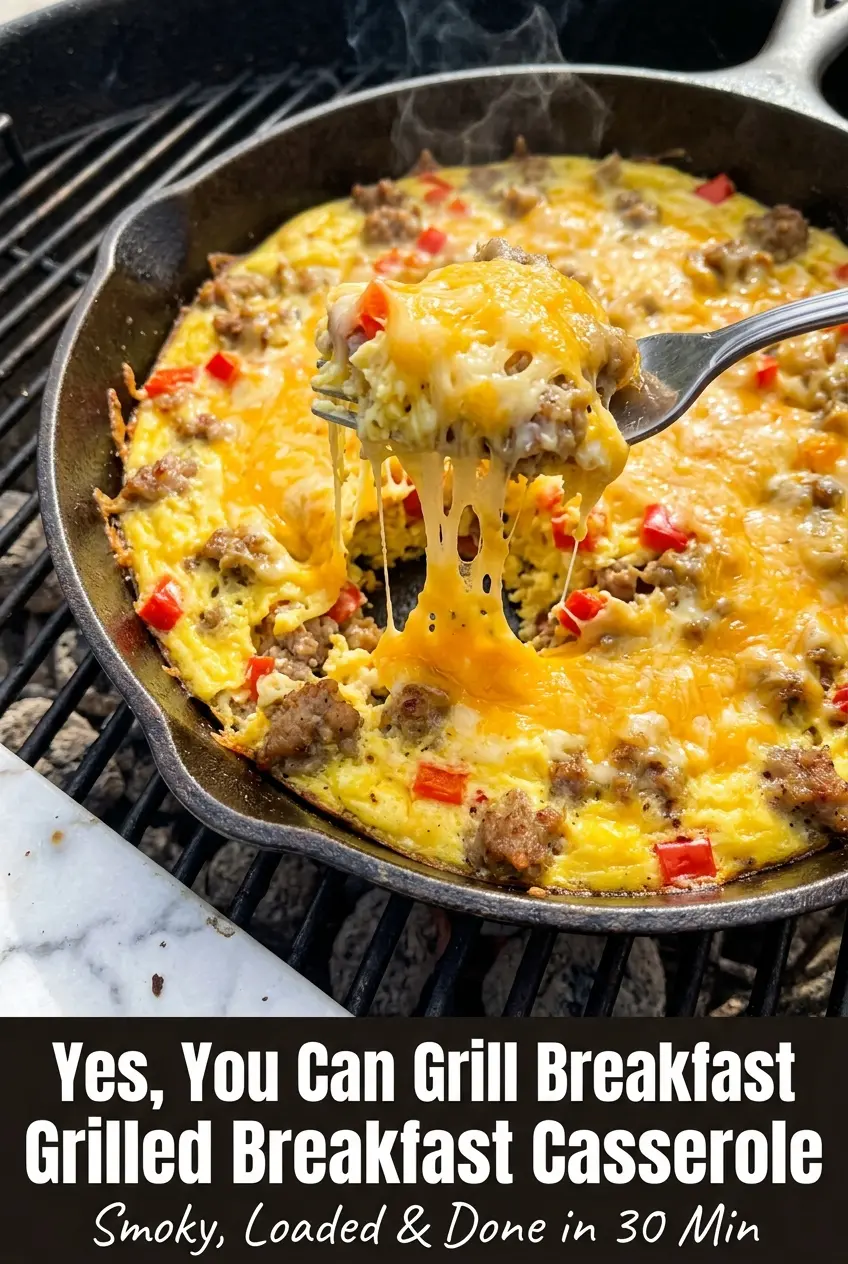
Grilled Breakfast Casserole
Ingredients
Equipment
Method
- Preheat your grill to medium heat, around 375°F / 190°C, and set up for indirect grilling with one side heated and the other side off.
- If using frozen hash browns, thaw them so they’re ready to spread into the skillet.
- Heat 1 tbsp olive oil in a cast iron skillet over the direct heat side, then add the breakfast sausage and cook for 6–8 minutes, breaking it apart, until browned and cooked through.
- Remove the cooked sausage from the skillet and set it aside.
- Add the remaining 1 tbsp olive oil to the same skillet, then cook the diced onion and bell peppers for 3–4 minutes until softened and lightly charred at the edges.
- Add the thawed hash browns and spread into an even layer, then cook undisturbed for 4–5 minutes until a golden crust forms on the bottom.
- Return the cooked sausage to the skillet and stir to distribute everything evenly.
- In a bowl, whisk the eggs, whole milk, garlic powder, onion powder, smoked paprika, salt, and black pepper until well combined, then pour the egg mixture evenly over the skillet filling.
- Sprinkle the shredded sharp cheddar and Monterey Jack over the top in an even, generous layer.
- Move the skillet to the indirect heat side of the grill, close the lid, and cook for 20–25 minutes until the eggs are fully set in the center and the cheese is melted, bubbly, and golden at the edges.
- Remove the skillet from the grill and let it rest for 5 minutes, then top with fresh chives and serve with sour cream or hot sauce if desired.