
Hawaiian Chicken Sheet Pan
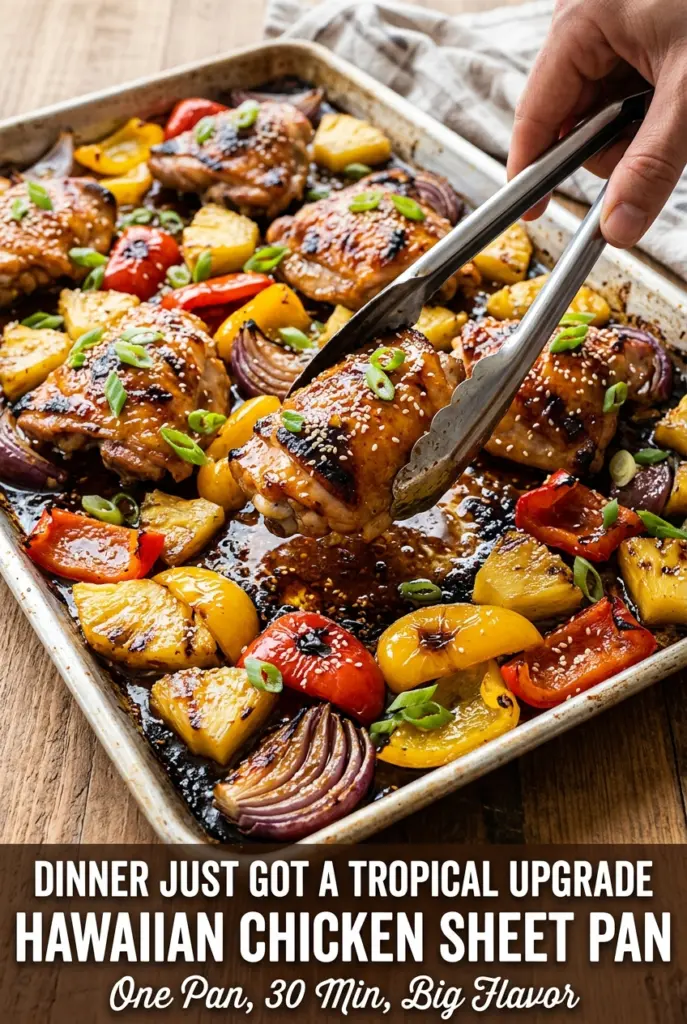
Sticky, caramelized chicken thighs with blistered peppers and sweet pineapple earn a permanent place in the weeknight rotation because they hit that rare balance of fast, bold, and low-effort. The…
Tip: save now, cook later.Sticky, caramelized chicken thighs with blistered peppers and sweet pineapple earn a permanent place in the weeknight rotation because they hit that rare balance of fast, bold, and low-effort. The edges of the chicken pick up a dark glaze in the oven, the pineapple softens just enough to turn jammy, and the onions bring a little sharpness that keeps the whole pan from tasting one-note.
What makes this version work is the two-stage glaze. Most of the marinade goes on the chicken early so the meat takes on flavor, but the reserved portion gets brushed on near the end, when it can reduce and cling instead of burning. That small change keeps the sauce glossy and prevents the sugars from turning bitter before the chicken is cooked through.
Below, you’ll find the timing that gives the vegetables color without turning them mushy, plus the one broiler move that adds restaurant-style caramelization without overcooking the thighs. It’s the kind of sheet pan dinner that looks like you worked harder than you did.
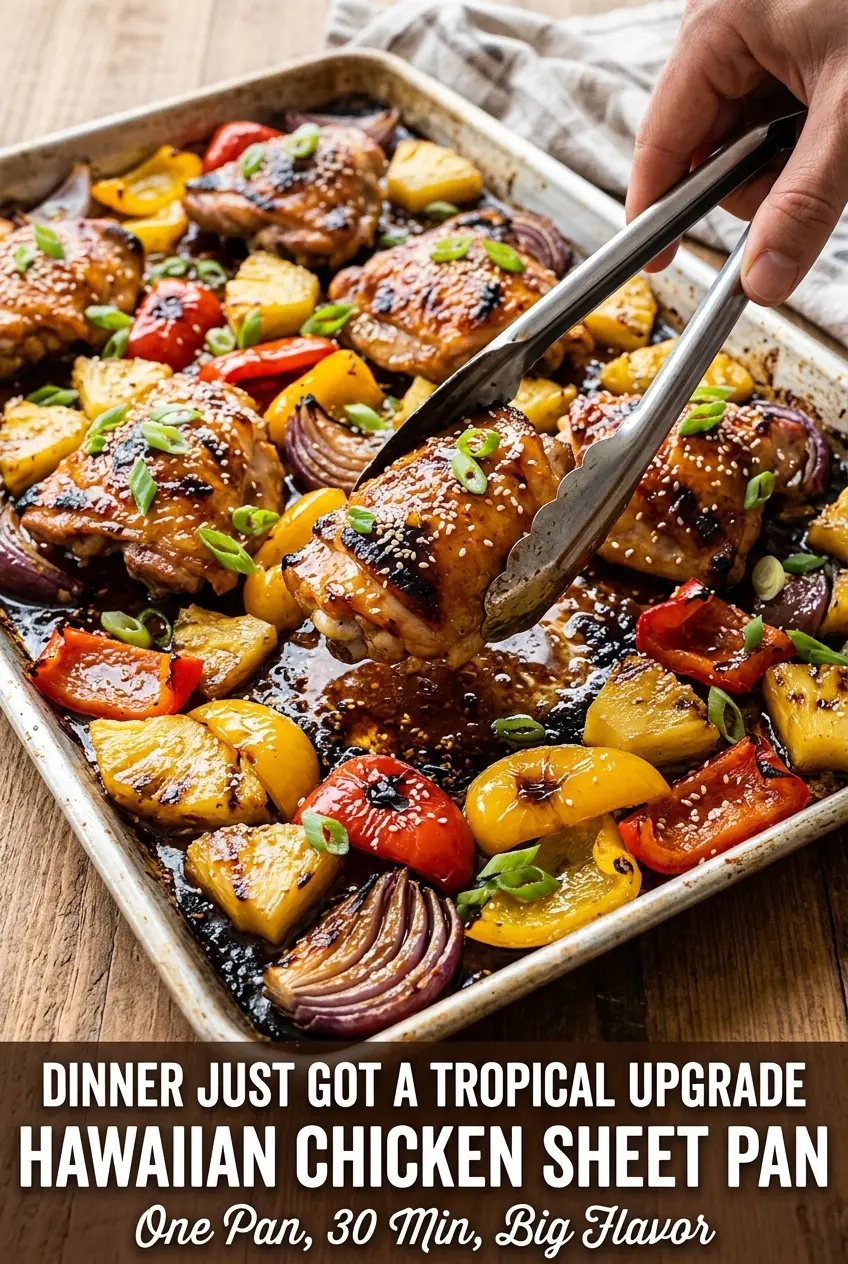
The glaze got sticky and glossy instead of burning, and the pineapple caramelized around the edges just like in the photos. I served it over rice and my husband went back for thirds.
Save this Hawaiian Chicken Sheet Pan for nights when you want sticky pineapple glaze, caramelized chicken, and one-pan cleanup.
The Marinade Trick That Keeps the Pineapple from Burning
The biggest mistake with a sweet sheet pan dinner is putting every drop of marinade on the food from the start. Sugar-heavy sauces darken fast in a hot oven, and once they cross from caramelized to scorched, there’s no fixing the flavor. Reserving part of the marinade and brushing it on after the first roast gives the chicken enough time to cook while still building that glossy, sticky finish.
Chicken thighs handle this method better than breasts because they stay juicy through a longer roast and tolerate the high heat needed for good color. The pineapple belongs on the pan, but it needs to be tucked into the edges of the vegetables, not buried under chicken juices, so it can brown instead of steam. If the pan looks crowded, the vegetables will soften before they take on any char.
- Boneless, skinless chicken thighs — These stay tender under high heat and soak up the marinade without drying out. Breasts can work, but they cook faster and need a closer eye so the sugars don’t overrun the meat before it’s done.
- Pineapple juice — This gives the glaze its tropical sweetness and a little acidity. Use the juice from canned pineapple if you can; it’s consistent and easy. Fresh pineapple juice works too, but it’s less predictable in sweetness.
- Honey and brown sugar — Both are doing the heavy lifting for color and stickiness. Honey gives shine, while brown sugar deepens the caramel notes. If you cut both too much, the glaze turns thin and never really clings.
- Sesame oil — A small amount adds that toasted, savory finish that makes the dish taste fuller. Don’t replace it with plain oil unless you have to; you’ll lose that nutty edge. If you need a swap, use avocado oil and add a pinch of toasted sesame seeds at the end.
- Bell peppers and red onion — These hold up well to a hot roast and bring color, sweetness, and a little bite. Slice them in larger pieces so they don’t collapse before the chicken is done.
Getting the Glaze Glossy Without Overcooking the Chicken
Building the Marinade
Whisk the soy sauce, pineapple juice, honey, brown sugar, sesame oil, garlic, ginger, rice vinegar, and red pepper flakes until the sugar starts to dissolve and the mixture looks smooth. That matters because undissolved sugar can burn in streaks on the pan. The marinade should taste balanced: salty up front, sweet after, with a clean hit of ginger at the end.
Coating the Chicken First
Marinate the chicken in a bag or shallow dish with only part of the sauce. The goal is flavor in the meat, not a pool of syrup that will scorch in the oven. If you let the chicken sit longer than 8 hours, the texture can start to get a little soft on the outside from the pineapple and vinegar, so keep the marinade window reasonable.
Roasting in Two Stages
Spread the vegetables and pineapple out first, then nestle the chicken into the open spaces so everything gets direct heat. Roast at 425°F until the chicken starts to color and the vegetables are beginning to soften. Brush on the reserved glaze, toss the vegetables gently, and finish roasting until the chicken reaches 165°F and the pineapple has browned at the edges.
Broiling for the Finish
The broiler is optional, but it’s the quickest way to get those dark sticky spots that make the dish taste like it came off a grill. Keep the pan close to the oven and watch it the whole time, because the jump from caramelized to burnt happens fast. Two or three minutes is enough.
How to Adapt This for Different Diets and Pantry Swaps
Make It Gluten-Free
Use tamari or a certified gluten-free soy sauce in place of regular soy sauce. The flavor stays savory and balanced, and the glaze still thickens the same way because the sweetness comes from the honey, brown sugar, and pineapple juice. Everything else in the recipe can stay exactly the same.
Make It Dairy-Free Without Changing a Thing
This recipe is naturally dairy-free as written, which is part of why it works so well for a mixed table. Just keep an eye on any side dishes you serve with it, especially rice mixes or store-bought garnishes, since those are where dairy tends to sneak in.
Swap the Chicken Thighs for Breasts
Chicken breasts work, but they need less time and a little more attention. Cut them into large, even pieces so they don’t dry out before the glaze has time to caramelize, and start checking them a few minutes earlier than you would thighs. The result is leaner and a little less forgiving, but still good.
Turn Down the Heat for a Mild Version
Leave out the red pepper flakes and use a little less black pepper on the vegetables if you want a softer, sweeter result. You’ll still get plenty of punch from the garlic, ginger, and soy sauce, but the finish will lean more tropical than spicy. That’s the easier version to serve with kids or spice-shy eaters.
Storage and Reheating
- Refrigerator: Store leftovers in an airtight container for up to 4 days. The chicken stays juicy, but the pineapple will soften more as it sits.
- Freezer: It freezes well for up to 2 months, though the peppers will lose some of their bite after thawing. Freeze in portions with rice only if you don’t mind a softer texture later.
- Reheating: Warm leftovers in a covered skillet over low heat with a splash of water or pineapple juice. High heat dries out the chicken and makes the glaze sticky in the wrong way before the center is hot.
Answers to the Questions Worth Asking
Hawaiian Chicken Sheet Pan
Ingredients
Equipment
Method
- In a bowl, whisk together soy sauce, pineapple juice, honey, brown sugar, sesame oil, garlic, ginger, rice vinegar, and red pepper flakes until fully combined. The mixture should look glossy and evenly dark.
- Place the chicken thighs in a zip-lock bag or shallow dish and pour 3/4 of the marinade over them. Reserve the rest for glazing, then marinate for at least 30 minutes (up to 8 hours in the fridge) so the chicken darkens slightly.
- Preheat your oven to 425°F (220°C) and line a large sheet pan with foil, then lightly grease it. You want the pan ready so everything starts roasting right away.
- Toss the bell peppers, red onion, and pineapple chunks with olive oil, salt, and black pepper. Spread them out on the sheet pan, leaving space in the center so they roast instead of steam.
- Remove the chicken from the marinade and place it among the vegetables. Discard the used marinade and set the thighs so they get direct heat.
- Roast for 20 minutes at 425°F (220°C). Look for browned edges on the chicken and vegetables that have started to soften.
- Remove from the oven and brush the reserved glaze over the chicken, then toss the vegetables gently. The glaze should look tacky as it coats the thighs.
- Return to the oven and roast for another 10–15 minutes at 425°F (220°C), until the chicken reaches an internal temperature of 165°F and the edges are caramelized with golden pineapple. The pineapple should look lightly browned and glossy.
- Broil for 2–3 minutes for extra caramelization if desired. Watch closely so the glaze darkens without burning.
- Garnish with sliced green onions, sesame seeds, and a squeeze of lime. Serve hot over steamed white rice.