
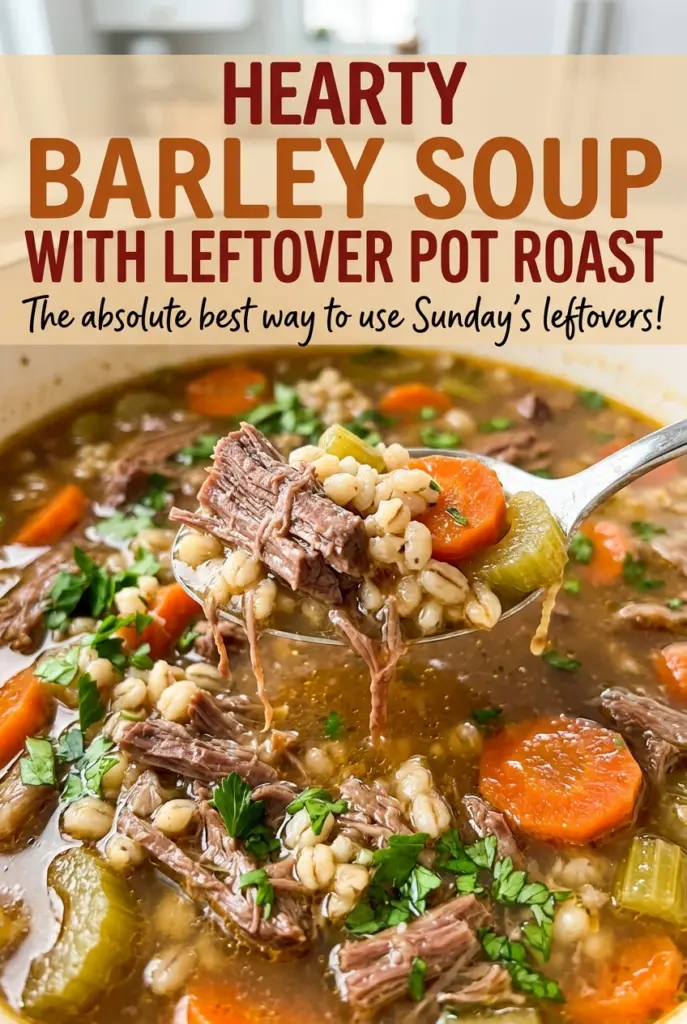
Hearty Beef Barley Soup with Leftover Pot Roast
When the barley starts to swell in the broth, it turns an ordinary pot of soup into a hearty meal. I built this beef barley soup around leftover pot roast,…
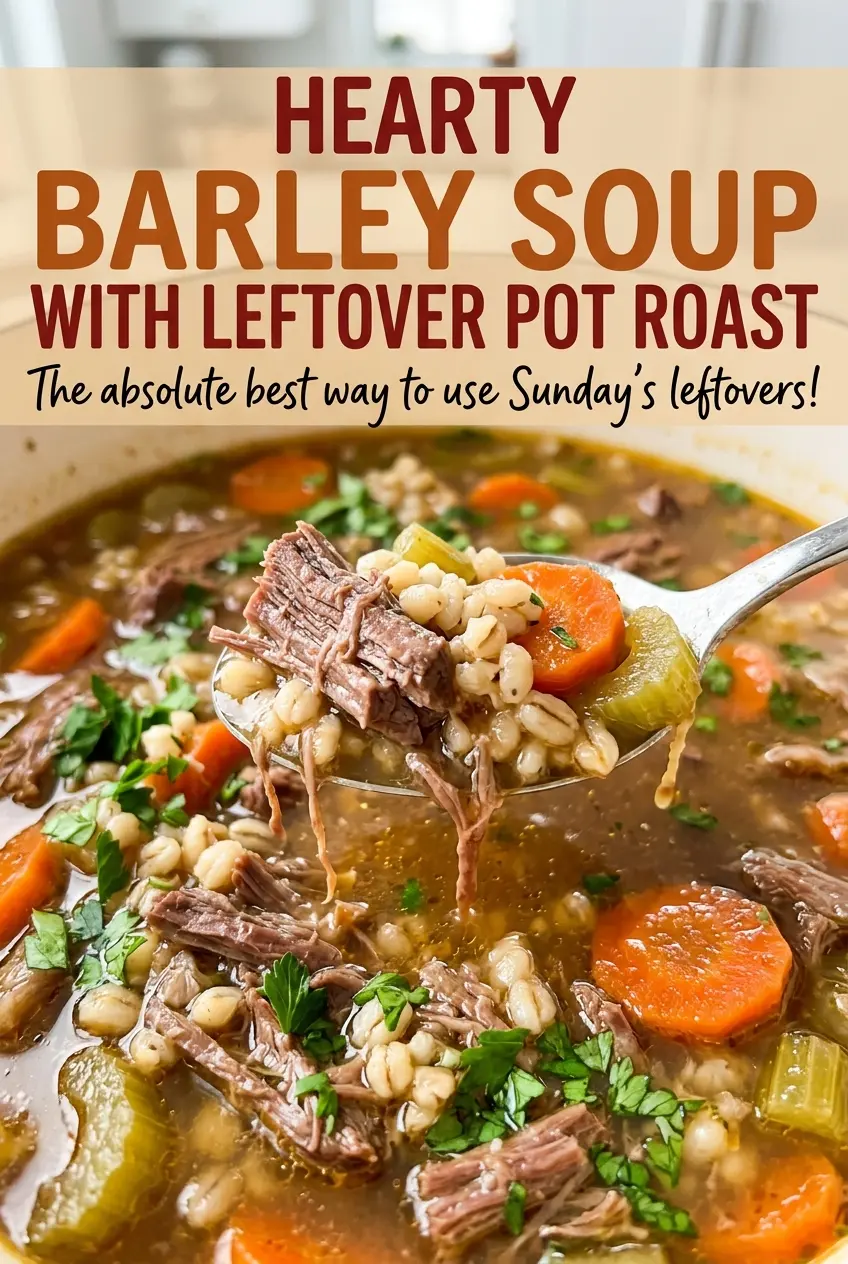
Tip: save now, cook later.When the barley starts to swell in the broth, it turns an ordinary pot of soup into a hearty meal. I built this beef barley soup around leftover pot roast, so the beef is already tender and all the long simmering can go toward the grains and vegetables. It’s a practical way to use a few cups of roast without letting them get lost in a pot that cooks for nearly an hour.
The order matters: the barley simmers first, and the cooked beef goes in near the end. That keeps the roast in tender, recognizable pieces while the broth picks up flavor from the onion, carrots, celery, garlic, and tomato paste. A little parsley at the finish brightens the rich broth, and frozen peas bring a soft, sweet pop to each bowl. This makes six generous servings, with pearl barley that’s tender and a broth that feels substantial without turning thick and pasty.
Kitchen Note
Keep the Dutch oven partially covered during the barley simmer rather than sealing the lid shut. I leave it slightly ajar so the soup can simmer steadily while some steam escapes.
Save this hearty beef barley soup for the next time you have leftover pot roast and want a cozy, filling meal from one pot.
Why the Tomato Paste Gets a Minute in the Pot Before the Broth
Tomato paste adds depth here, not a tomato-forward taste. Cooking it briefly with the garlic after the vegetables soften gives it a chance to mingle with the oil and coat the vegetables before the broth goes in. If you stir it straight into a full pot of broth, it’s harder to distribute evenly, and the base can taste sharper and less rounded.
That quick pause also keeps the soup from relying on the leftover roast alone for its savory character. The roast brings rich beef flavor, but the tomato paste gives the broth a darker, more grounded taste that carries through the barley. You don’t need to brown or reduce the paste for a long time; one minute is enough for this pot. Keep stirring during that minute so the garlic doesn’t sit against the hot bottom of the Dutch oven and scorch.
What Pearl Barley and Pot Roast Bring to This Soup
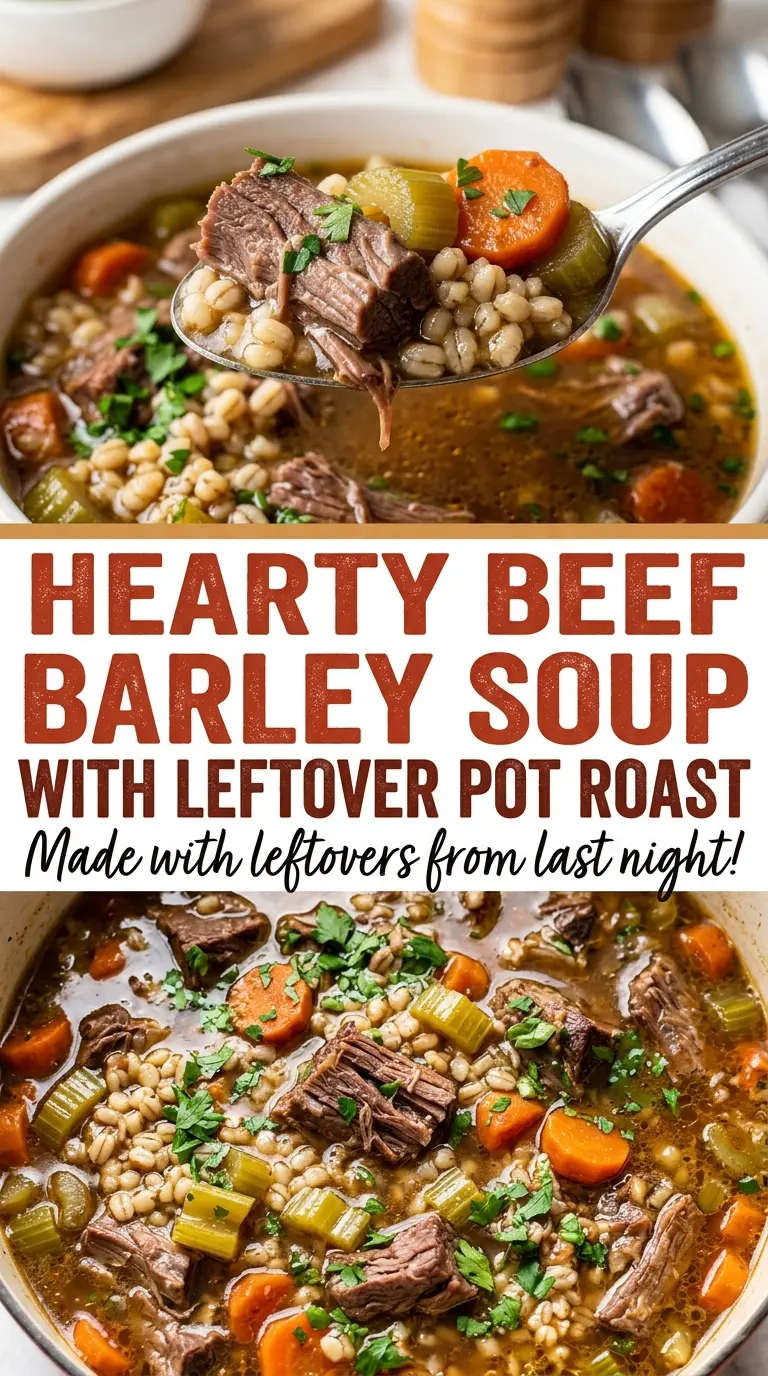
- Pearl barley — This is what makes the soup hearty while keeping a pleasantly chewy bite. Rinsing it removes loose surface starch before it goes into the pot. Pearl barley is the right choice for the simmering time here; hulled barley takes longer to soften, while quick-cooking barley would turn soft before the vegetables and broth have had this full simmer. For a gluten-free bowl, cooked rice works better as a separate adaptation than as a direct, same-timing swap.
- Cooked pot roast — Leftover roast brings the slow-cooked beef flavor without asking the beef to simmer for another long stretch. Shred it for tender strands throughout the bowl or chop it for larger bites; either way, use roast that’s already cooked. Another cooked beef roast works in the same role, though a leaner roast won’t have quite the same rich, yielding texture.
- Tomato paste and beef broth — The paste is concentrated, so it gives the broth savory depth without adding extra liquid. A tube or small can is fine; choose one that looks deep red rather than dried out at the opening. Use a beef broth you like the taste of on its own, since it makes up most of the soup. Lower-sodium broth is a useful choice if you want more control over the finished saltiness.
- Thyme, parsley, and peas — Dried thyme seasons the simmering broth, while fresh parsley stirred in at the end tastes brighter. If you’re out of dried thyme, use three times as much chopped fresh thyme. Frozen peas go straight into the pot near the end, so there’s no need to thaw them first; fresh parsley is worth using if available because it keeps its clean, lively flavor at the finish.
Build the Broth First, Then Warm the Roast Through
Soften the vegetables without browning them
Warm the olive oil in a 6-quart Dutch oven over medium heat, then add the diced onion, carrots, and celery. Cook for 6 to 8 minutes, stirring occasionally, until the vegetables begin to soften. They should look glossy and start to lose their raw, firm edges, but they don’t need deep color. If the onion begins browning quickly, lower the heat so the garlic and paste won’t scorch in the next stage.
Cook the garlic and tomato paste briefly
Stir in the minced garlic and tomato paste and cook for 1 minute, stirring so the paste spreads across the vegetables. The garlic should smell fragrant, not toasted or bitter. If paste clings in a thick layer to the bottom, keep stirring and loosen it with the vegetables rather than leaving it to catch. This short cook sets up the savory base before the liquid goes in.
Simmer until the barley is tender
Add the beef broth, rinsed pearl barley, dried thyme, bay leaf, kosher salt, and black pepper. Bring the pot to a boil, then reduce the heat to low, cover partially, and simmer for 40 to 50 minutes, stirring occasionally. Look for a gentle simmer rather than a hard boil, which can make the grains cook unevenly. The barley should be tender when you bite it, with a little chew remaining rather than a hard center.
Add the roast and finish with peas and parsley
Stir in the cooked pot roast and frozen peas, then simmer for 5 to 10 minutes, until the soup reaches 165°F and the beef is heated through. The roast only needs this final stretch to warm, so it stays tender rather than breaking down into the broth. Remove the bay leaf before serving. Stir in the chopped fresh parsley just before the soup goes into bowls.
Easy Ways to Adapt the Barley and Vegetable Mix
Make a gluten-free version with rice
Leave out the pearl barley and cook rice separately, using 3 cups cooked rice in the finished soup. Stir it in along with the pot roast and peas, and use gluten-free beef broth and pot roast. The rice makes the soup softer and less chewy than barley, but keeps it hearty.
Trade the peas for frozen corn
Use the same amount of frozen corn in place of the peas and add it with the pot roast. It brings a sweeter, slightly firmer bite and keeps the last stage just as simple. Add it frozen; there’s no need to thaw it first.
Storage and Reheating
- Refrigerator: Store in a covered container for 3 to 4 days. The barley continues absorbing broth, so the soup will be thicker after chilling.
- Freezer: Freeze in airtight containers for up to 2 to 3 months. The barley softens a little after thawing, but the soup holds up well.
- Reheating: Warm gently in a saucepan over medium-low heat, stirring often, until steaming hot throughout. You can also microwave a covered bowl in short intervals, stirring between them; avoid a long, vigorous boil, which can make the barley overly soft.
Questions That Come Up When Making Beef Barley Soup
Hearty Beef Barley Soup with Leftover Pot Roast
Ingredients
Equipment
Method
- Heat the olive oil in a 6-quart Dutch oven over medium heat, then add the onion, carrots, and celery and cook for 6 to 8 minutes, stirring occasionally, until the vegetables begin to soften.
- Stir in the garlic and tomato paste and cook for 1 minute.
- Add the beef broth, barley, thyme, bay leaf, salt, and pepper and bring to a boil.
- Reduce the heat to low, cover partially, and simmer for 40 to 50 minutes, stirring occasionally, until the barley is tender.
- Stir in the pot roast and peas and simmer for 5 to 10 minutes, until the soup reaches 165°F and the beef is heated through.
- Remove the bay leaf.
- Stir in the parsley and serve.