
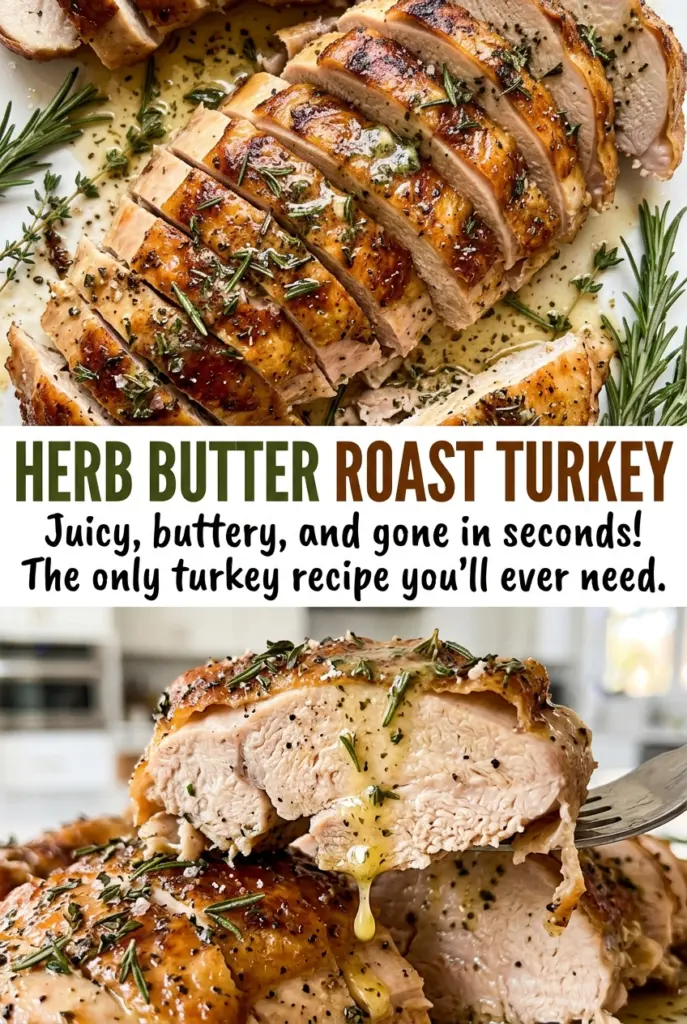
Herb Butter Roast Turkey
A whole turkey can look like a lot to manage, but the first signs of a good roast are easy to spot: the skin is dry, the herb butter is…
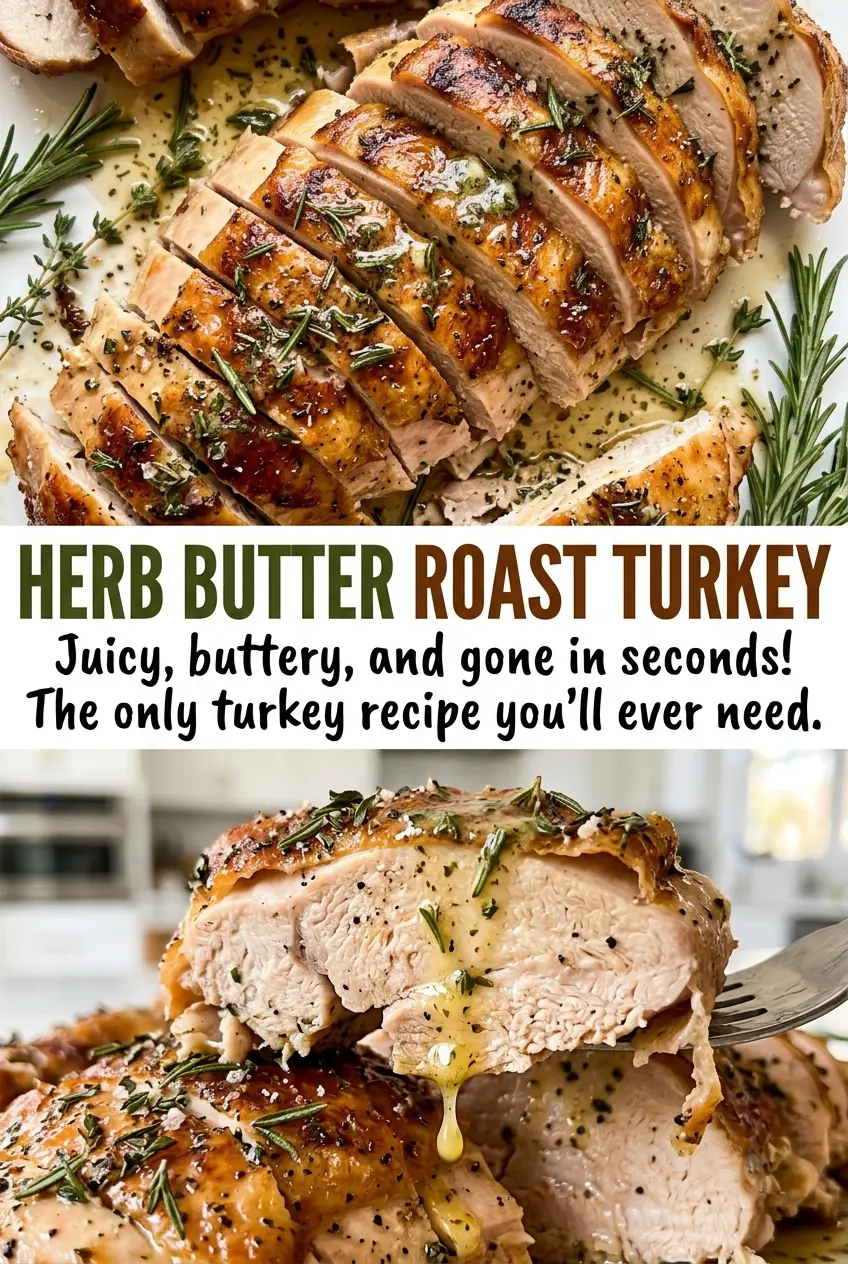
Tip: save now, cook later.A whole turkey can look like a lot to manage, but the first signs of a good roast are easy to spot: the skin is dry, the herb butter is spread evenly, and the bird sits breast-side up on its rack. I use those simple checks to keep the work calm and the turkey flavorful. This Herb Butter Roast Turkey gets thyme, rosemary, sage, and garlic in every bite, with lemon and onion tucked into the cavity.
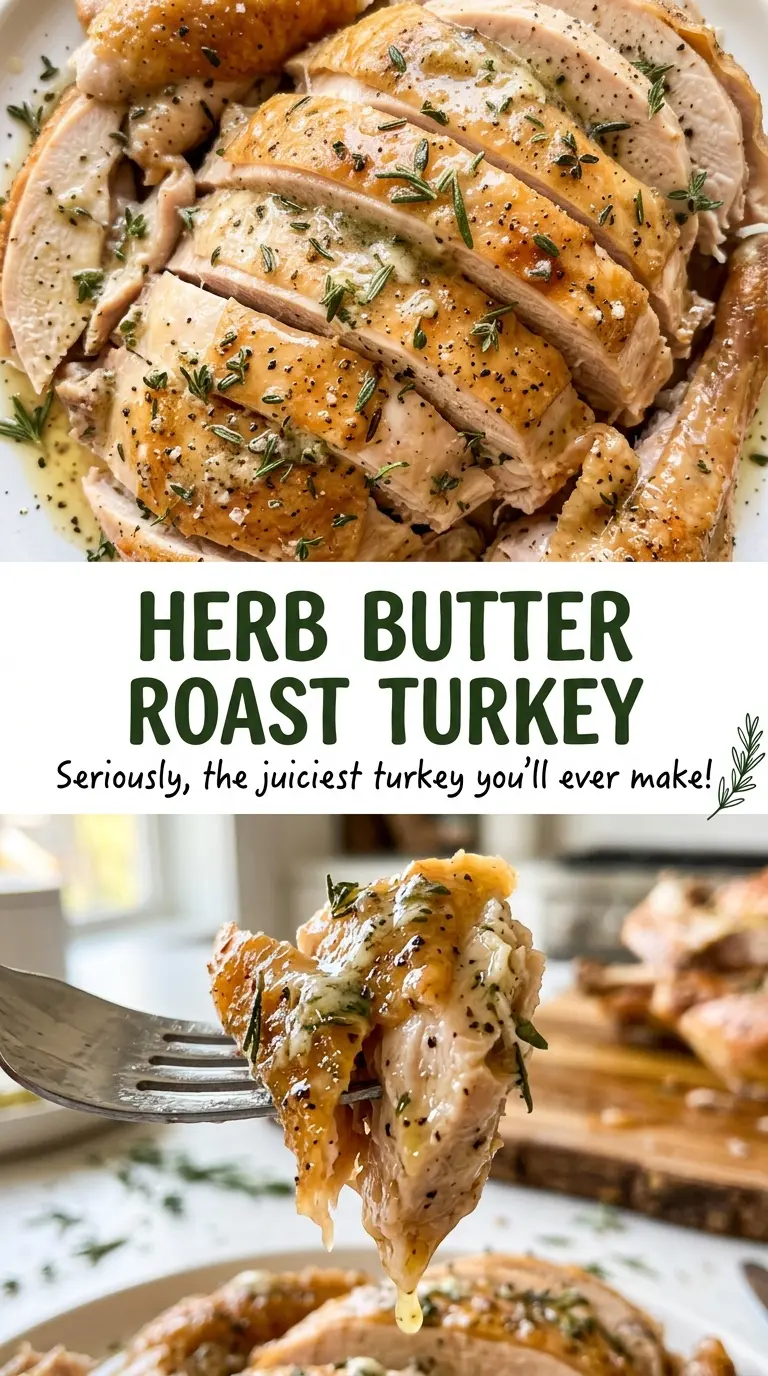
The butter does more than season the surface. A generous portion goes beneath the skin, where it stays close to the breast and thighs as the turkey roasts; the rest coats the outside. Once carved, the meat is fragrant with herbs and the skin has had time to turn golden in the oven. It’s a classic roast with a clear, savory flavor and tender slices for the table.
Kitchen Note
Tie the legs loosely, not tightly. The twine should hold them in place without pulling them into a hard knot.
Save this Herb Butter Roast Turkey for a golden-skinned centerpiece with thyme, rosemary, sage, and garlic tucked under the skin.
Why Herb Butter Belongs Under the Skin, Not Just on Top
Butter rubbed over the outside seasons the skin, but it can’t do the same job as butter placed directly against the meat. The skin is a barrier, so an outside-only coating leaves most of the herb mixture sitting on the surface. Sliding some underneath lets the thyme, rosemary, sage, and garlic stay in contact with the breast and thighs while they roast.
That placement also gives you a useful balance: butter beneath the skin for the meat, and a thinner coating on top for the exterior. It’s worth taking the time to loosen the skin gently rather than trying to push all the butter in from one opening. If you spread it in a broad, even layer, you avoid a thick clump in one spot and bare areas in another. Keep the remaining portion for the outside so the skin still gets its share of the herb butter.
This is especially helpful on a whole bird, where the breast and thighs don’t have identical shapes or thicknesses. The butter doesn’t replace careful roasting, but it makes the seasoning more evenly placed from the start.
Fresh Herbs, Soft Butter, and the Aromatics That Shape the Roast
- Unsalted butter — Softened butter mashes smoothly with chopped herbs and garlic, then spreads without sliding off the turkey. Unsalted gives you control over the seasoning; an everyday grocery-store butter is fine here. For a dairy-free version, use an equal amount of firm dairy-free butter, knowing it may spread and brown a little differently.
- Fresh thyme, rosemary, and sage — The three herbs bring distinct, savory notes, and using them fresh gives the butter a brighter aroma than dried herbs. Choose bunches that smell fragrant and have leaves that aren’t limp or browned. Chop them finely so the mixture spreads evenly; dried herbs won’t give the same texture or fresh-herb character.
- Garlic — Fresh minced cloves bring a sharp, savory note that settles into the butter as the turkey roasts. Use firm cloves and mince them finely so larger pieces don’t gather in one patch. There isn’t a direct swap that reproduces the fresh garlic flavor in this herb butter.
- Whole turkey — A fully thawed bird in the 12- to 14-pound range is the size this timing is built around. The neck and giblets need to be removed before seasoning. A supermarket turkey is perfectly suitable; freshness and careful thawing matter more here than paying for a particular label.
- Lemon and yellow onion — These go in the cavity to add their aroma as the turkey roasts. Choose a firm lemon and an onion without soft spots, then halve and quarter them as needed for the cavity. They aren’t a substitute for the herb butter; they add a separate aromatic layer.
Getting the Herb Butter Into Every Part of the Turkey
Mash the Herbs Into Softened Butter
In a small bowl, mash the softened butter with the chopped thyme, rosemary, sage, and minced garlic. Keep working until the herbs and garlic are distributed throughout instead of sitting in separate pockets. The mixture should be soft enough to spread, not melted or oily. If the butter is still firm, give it more time to soften before moving on.
Season the Bird Before Adding the Butter
Heat the oven to 325°F and set a rack in a large roasting pan. Pat the thawed turkey dry, set it breast-side up on the rack, and season both the cavity and skin with kosher salt and black pepper. Dry skin is easier to coat than damp skin, so pay attention to folds and creases as you pat. Remove the neck and giblets before you season the cavity.
Spread the Butter and Fill the Cavity
Gently loosen the skin over the breast and thighs, then spread about two-thirds of the herb butter underneath it. Rub the remaining butter over the outside, covering the skin as evenly as you can. Put the halved lemon and quartered onion in the cavity, tuck the wing tips under the body, and tie the legs with kitchen twine. Work gently around the skin; forcing your fingers through a tight spot can tear it.
Roast, Check the Center, and Rest
Roast for 3 to 3 3/4 hours, tenting the breast loosely with foil if it browns too quickly. Check the thickest part of the breast and the innermost part of the thigh with a thermometer; both should read 165°F. If the skin is already well browned before the turkey is ready, the loose foil tent slows further browning without changing the oven setting. Move the turkey to a carving board, tent it loosely, and let it rest for 30 minutes before carving.
Three Small Changes That Give This Roast a Different Turn
Make It Dairy-Free With Firm Plant Butter
Replace the unsalted butter with the same amount of firm dairy-free butter. A stick-style product holds its shape better for mixing and spreading than a soft tub spread. The herb mixture still works, though the flavor and browning may differ from dairy butter.
Let Rosemary Lead the Herb Butter
Leave out the sage and keep the thyme, rosemary, and garlic. The roast will taste more woodsy and less earthy, while the method stays the same. This is a useful adjustment if sage’s assertive flavor isn’t your favorite.
Keep the Cavity Lemon-Only
Use the halved lemon and leave out the onion. The cavity aroma will lean brighter and less sweet, with no change to the herb butter. This is an easy flavor adjustment that doesn’t require changing the roasting method.
Storage and Reheating
- Refrigerator: Store carved leftovers in a covered container for 3 to 4 days. The skin will soften in storage.
- Freezer: Freeze carved meat in airtight freezer-safe containers or bags for up to 2 to 6 months for best quality. Thaw it in the refrigerator before reheating.
- Reheating: Warm slices covered in the microwave in short bursts, or cover them in an oven-safe dish until hot throughout. Reheat only what you’ll serve; repeated heating dries the meat out.
Questions That Come Up Before the Turkey Goes in the Oven
Herb Butter Roast Turkey
Ingredients
Equipment
Method
- In a small bowl, mash the butter with the thyme, rosemary, sage, and garlic until evenly combined.
- Heat the oven to 325°F and set a rack in a large roasting pan.
- Pat the turkey dry and place it breast-side up on the rack.
- Season the cavity and skin with the salt and pepper.
- Gently loosen the skin over the breast and thighs, spread about two-thirds of the herb butter underneath, then spread the rest over the outside of the turkey.
- Place the lemon and onion in the cavity.
- Tuck the wing tips under the body.
- Tie the legs loosely with kitchen twine.
- Roast for 3 to 3 3/4 hours, tenting the breast loosely with foil if it browns too quickly, until a thermometer reads 165°F in the thickest part of the breast and the innermost part of the thigh.
- Transfer the turkey to a carving board and tent loosely with foil.
- Let it rest for 30 minutes before carving.