
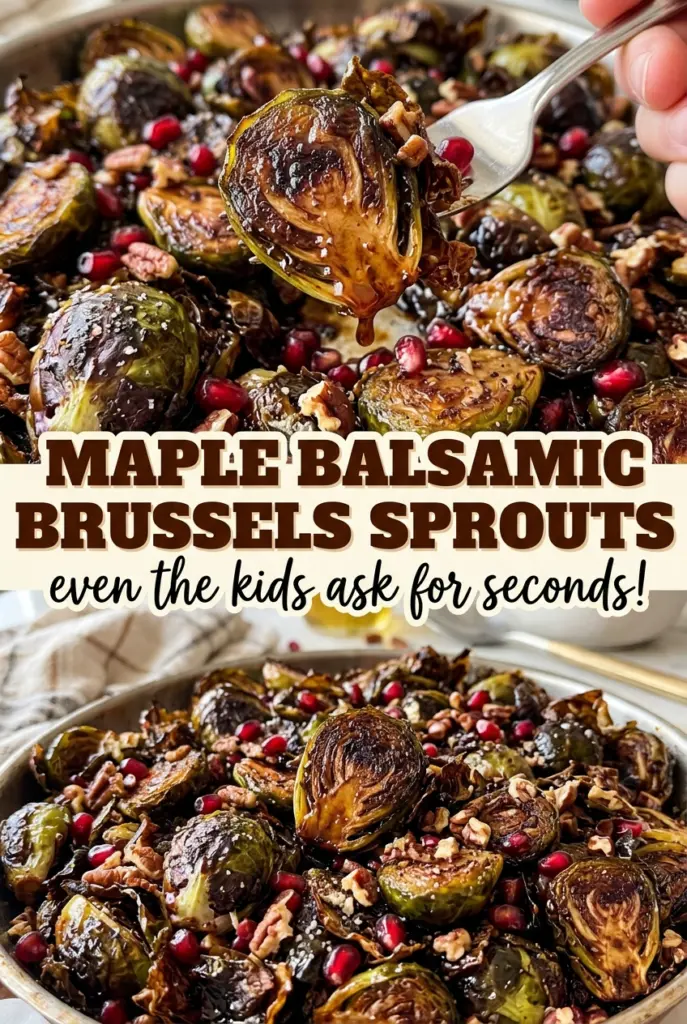
Maple Balsamic Brussels Sprouts
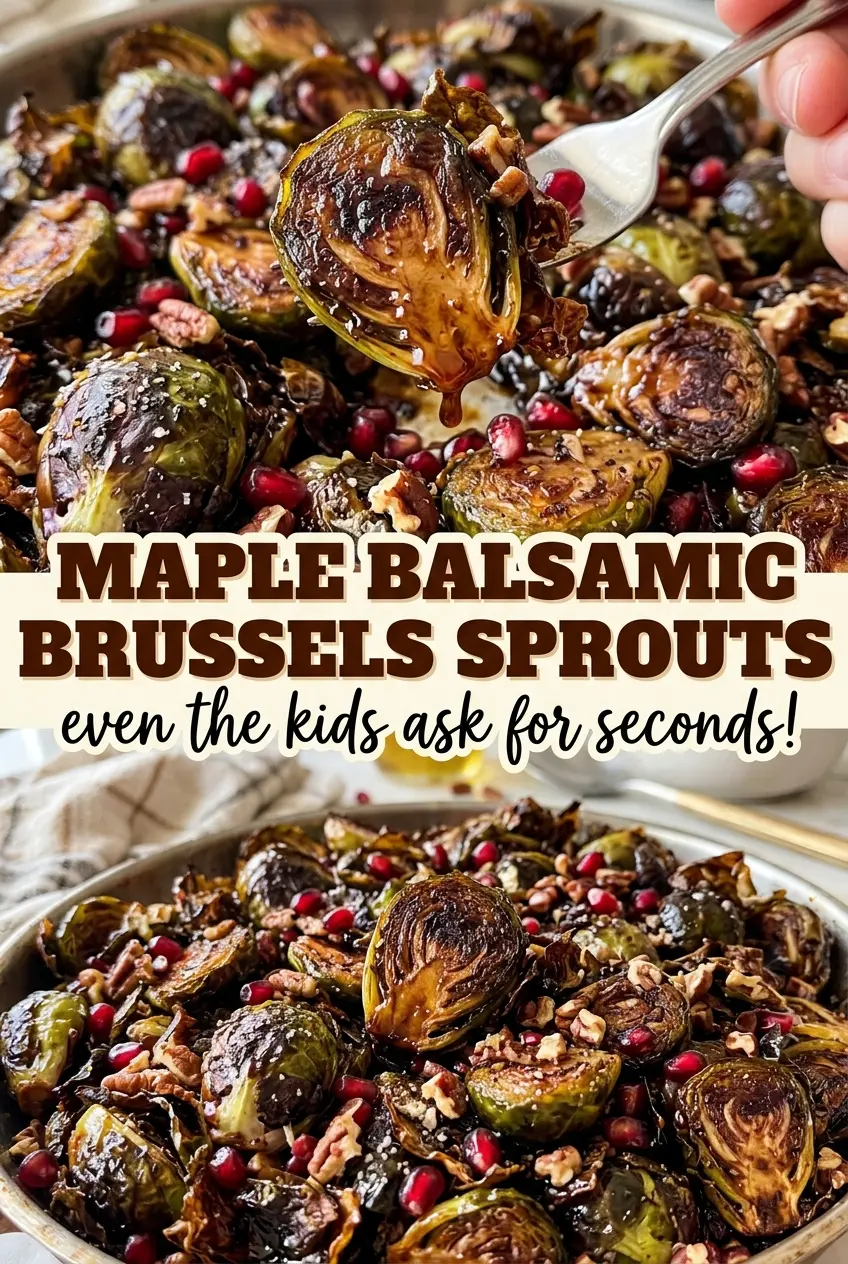
As Brussels sprouts roast, the flat cut faces deepen to a rich brown while the rounded leaves soften. That contrast is what I want: tender centers, caramelized edges, and no…
Tip: save now, cook later.As Brussels sprouts roast, the flat cut faces deepen to a rich brown while the rounded leaves soften. That contrast is what I want: tender centers, caramelized edges, and no soggy pile of little cabbages. These Maple Balsamic Brussels Sprouts get their savory-sweet finish from a quick glaze that takes only two ingredients.
I arrange the halved sprouts cut side down in one layer so the broad surfaces have a chance to brown instead of steaming against one another. The maple syrup rounds out the balsamic vinegar, and a short return to the oven turns the two into a glossy coating. The glaze goes on after the sprouts are tender, which keeps its sweet notes bright and lets the browned edges stay front and center.
They’re an easy side for a weeknight dinner, but the tangy glaze also gives a simple tray of roasted vegetables a little more presence. Serve them while the coating still shines and the edges are warm from the oven.
Kitchen Note
The glaze changes quickly once it’s back in the oven, so keep an eye on it during those last few minutes. Pull the pan when the coating looks glossy and lightly caramelized, before the maple takes on a dark, bitter edge.
Save these Maple Balsamic Brussels Sprouts for browned edges and a glossy, sweet-tart finish.
Why the Cut Side Goes Down Before the Glaze Goes On
Brussels sprouts have a natural tendency to soften as they cook. Their cut faces are also the best place to build deep, nutty browning, but that only happens when the surfaces get steady contact with the baking sheet. Setting the halves cut side down gives them that contact instead of leaving the broad, flat sides facing upward.
Spacing matters just as much as orientation. If the sprouts are crowded into a heap, the moisture they release has nowhere to escape, and the edges soften before they can brown. A large rimmed baking sheet and one uncrowded layer give the sprouts room to roast. When the tray looks packed, split the sprouts across two sheets rather than piling them up.
The glaze belongs at the end for a different reason: maple syrup browns quickly. Roasting the sprouts first lets them become tender and browned without the sweet coating getting in the way. A brief final bake is enough to warm the balsamic-maple mixture until it clings to the leaves, while the browned cut faces remain visible.
What Balsamic and Maple Each Bring to the Glaze
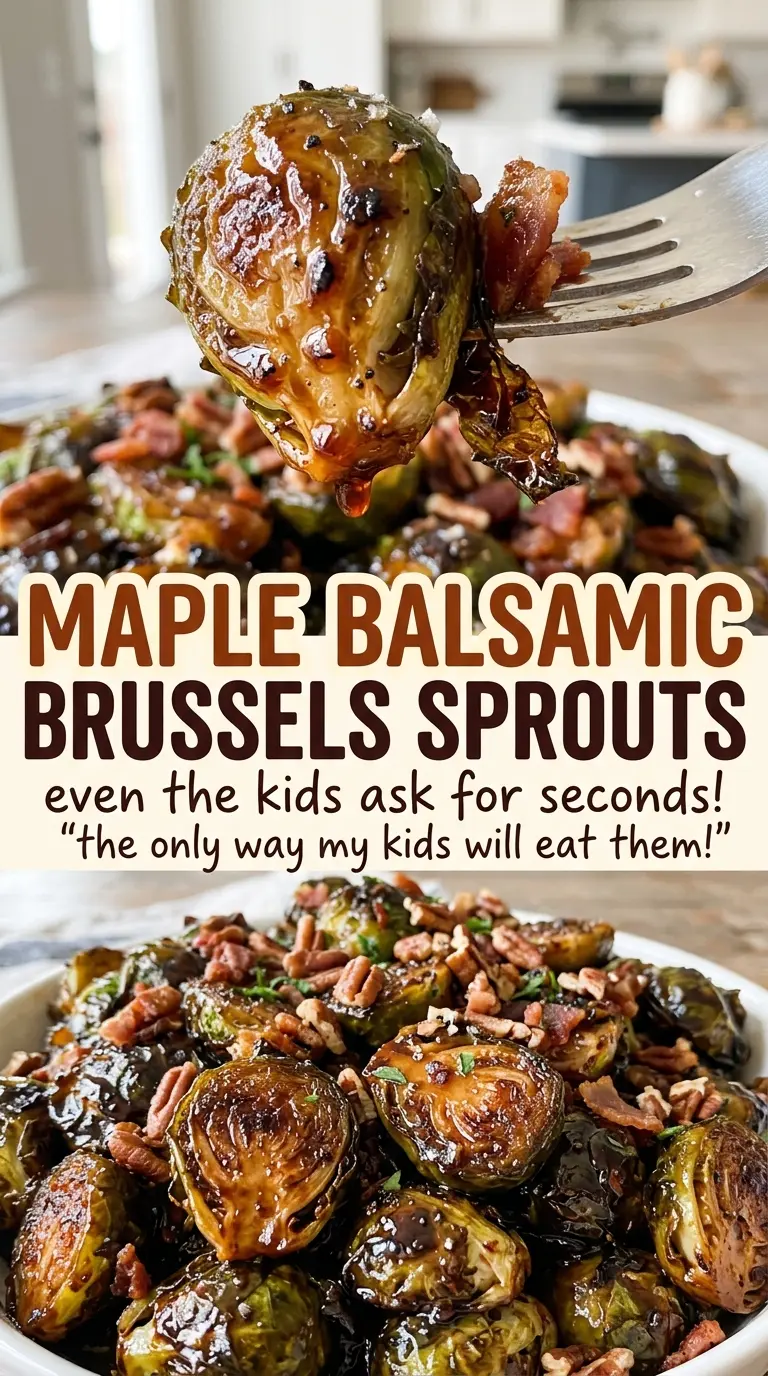
- Brussels sprouts — Look for firm sprouts with tightly packed leaves and no soft or yellowing spots. Similar-sized sprouts roast at a more even pace; trimming and halving them gives each piece a flat face for browning. Fresh sprouts are the right choice here because the recipe depends on that dry, direct contact with the sheet.
- Balsamic vinegar — Its tang keeps the glaze from tasting one-note sweet and gives the roasted sprouts a bright finish. Use a balsamic vinegar you enjoy tasting on its own; there’s no direct swap in this short glaze that keeps the same sweet-tart balance. A thick bottled balsamic glaze isn’t equivalent because it is already concentrated and sweetened.
- Pure maple syrup — Maple brings gentle sweetness and helps the thin vinegar coating turn glossy in the oven. Pure maple syrup has a more rounded taste than pancake syrup, which can be sweeter and more heavily flavored. Keep the amount in proportion to the vinegar so the sprouts stay tangy rather than candy-sweet.
- Olive oil — The oil coats the sprouts so their surfaces roast evenly and helps the salt and pepper cling. A standard olive oil is fine; a pricey finishing oil won’t have much chance to stand out after roasting. Toss until the cut faces have a light sheen, not a pool of oil at the bottom of the bowl.
How to Roast the Sprouts Before the Glaze Can Burn
Get the Halves Ready for the Oven
Heat the oven to 425°F and line a large rimmed baking sheet with parchment paper. Toss the trimmed, halved Brussels sprouts with olive oil, kosher salt, and black pepper until coated. Arrange them in a single layer with the cut sides against the pan. If some halves are stacked or turned on their rounded sides, reposition them so the flat faces can brown.
Roast Until Browned and Tender
Roast for 20 to 25 minutes, checking for browned surfaces and tender centers. The exact point depends on the size of the sprouts, so look for color and tenderness rather than relying only on the timer. The leaves should feel softened, and the cut faces should have visible browning. If they’re still firm, give them a little more time in the oven before adding the glaze.
Whisk, Coat, and Finish
While the sprouts roast, whisk the balsamic vinegar and pure maple syrup together in a small bowl. Drizzle the mixture over the roasted sprouts and toss until the coating reaches the leaves. Return the pan to the oven for 3 to 5 minutes, just until the glaze looks glossy and lightly caramelized. The coating should cling to the sprouts; if it looks dark rather than shiny, take the pan out instead of leaving it in longer.
Two Ways to Adapt the Sprouts Without Losing Their Character
Leave Off the Balsamic-Maple Glaze
For a more savory, straightforward roasted side, skip the vinegar and maple mixture and serve the sprouts after roasting. You’ll lose the glossy, sweet-tart finish, but the browned leaves and olive-oil coating still give the dish plenty of character. This is the simplest option when you want the sprouts themselves to take the lead.
Make a Half Batch
Divide every ingredient in half, including the glaze, to make a smaller amount while keeping the same balance of oil, seasoning, vinegar, and maple. Spread the sprouts out in a single layer on the baking sheet; don’t bunch them together just because there are fewer. Start checking for browning and tenderness within the stated roasting window, since smaller pieces can finish sooner.
Storage and Reheating
- Refrigerator: Store leftovers in an airtight container for 3 to 4 days. The sprouts will soften in the fridge, and the glaze won’t stay as glossy.
- Freezer: They can be frozen in an airtight container for up to 2 to 3 months, though thawed sprouts will be softer. Freeze in a single layer first if you want the pieces to stay separate, then transfer them to the container.
- Reheating: Reheat on a baking sheet at 400°F until hot throughout, about 8 to 10 minutes, checking that the center reaches 165°F. Avoid the microwave if you want browned edges; it heats quickly but leaves the sprouts softer.
Questions That Come Up With Maple Balsamic Brussels Sprouts
Maple Balsamic Brussels Sprouts
Ingredients
Equipment
Method
- Heat the oven to 425°F.
- Line a large rimmed baking sheet with parchment paper.
- Toss the Brussels sprouts with the olive oil, salt, and pepper.
- Arrange the sprouts cut side down in a single layer on the baking sheet.
- Roast for 20 to 25 minutes, until the sprouts are browned and tender.
- While the sprouts roast, whisk the balsamic vinegar and maple syrup together in a small bowl.
- Drizzle the glaze over the roasted sprouts and toss to coat.
- Return them to the oven for 3 to 5 minutes, until the glaze is glossy and lightly caramelized.