
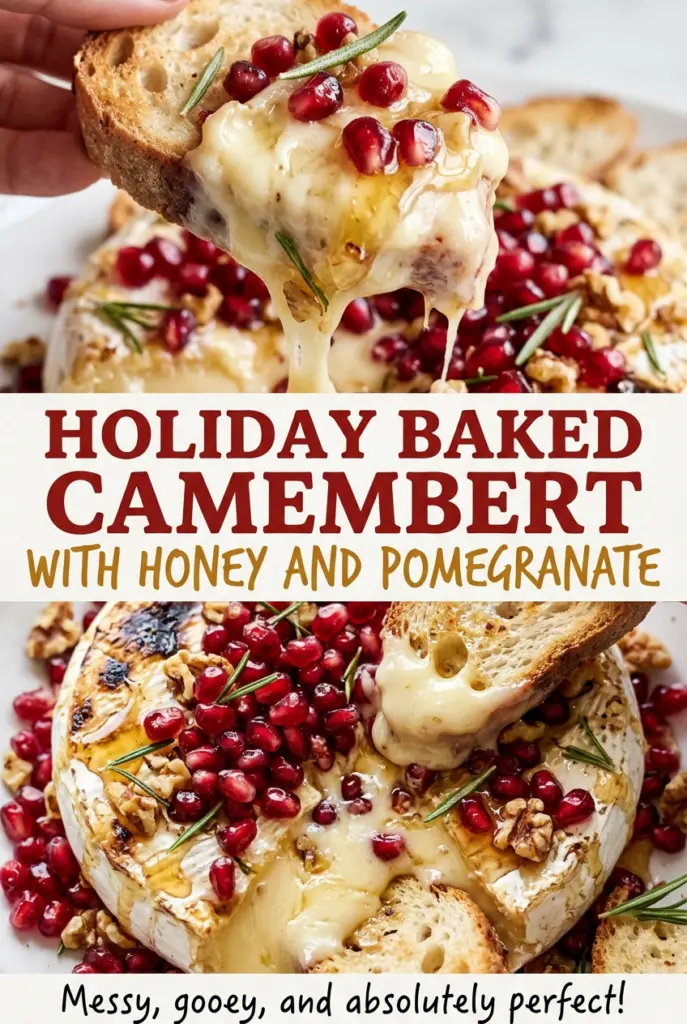
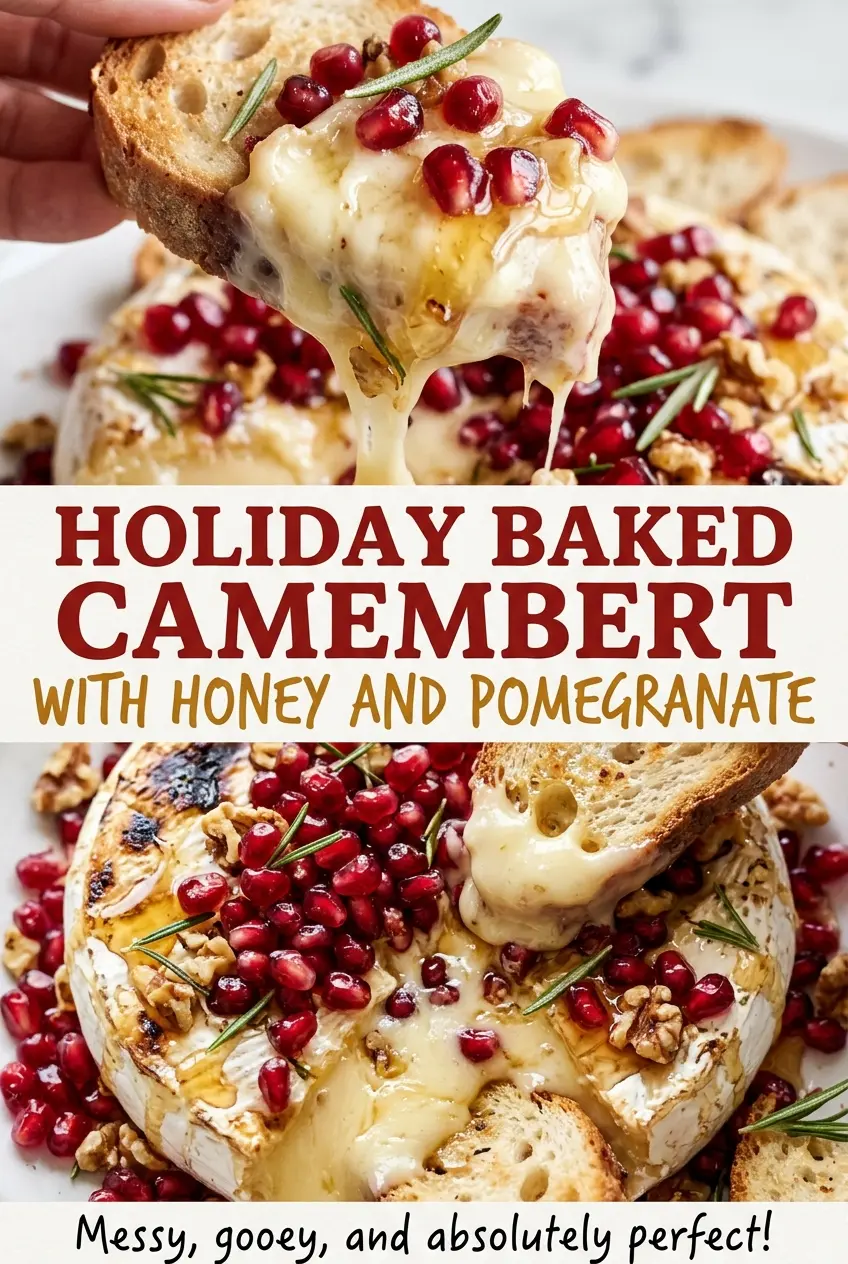
Holiday Baked Camembert with Honey and Pomegranate
The Camembert comes out of the oven looking much the same as it went in, so I don’t judge it by appearance. A gentle press in the center tells me…
Tip: save now, cook later.The Camembert comes out of the oven looking much the same as it went in, so I don’t judge it by appearance. A gentle press in the center tells me more: the cheese should feel soft and yielding, not firm. That small cue keeps Holiday Baked Camembert with Honey and Pomegranate warm and scoopable without baking it until it loses its shape.
The topping is intentionally simple. Honey brings a mellow sweetness, while the pomegranate arils add tartness and a little pop against the soft cheese. I add both after baking, so the arils stay bright instead of turning into a warm, jammy layer.
This is a quick dish, but it’s worth giving the cheese its full five-minute rest after topping. The pause makes serving easier, and the warm center still gives way under a knife or spoon. You get creamy Camembert with a glossy honey finish and jewel-like pomegranate on top.
Kitchen Note
Use a small oven-safe dish just larger than the Camembert, rather than a broad baking dish. A close fit keeps the softened cheese gathered in one easy-to-scoop pool.
Save this Holiday Baked Camembert with Honey and Pomegranate for a warm, creamy centerpiece with a tart, jewel-bright finish.
Why Camembert Should Be Soft, Not Fully Collapsed
Camembert is meant to soften into a creamy center while the wheel still holds its shape. Bake it too long and the cheese can spread into a thin layer that’s harder to scoop; take it out while the middle is still firm and it won’t have that soft, warm texture. The useful target is in between: yielding at the center, with enough structure around the outside to keep each serving together.
That’s why a gentle press matters more than waiting for a dramatic change on top. The cheese’s surface won’t give you a reliable signal that the middle has softened. Press lightly in the center so you can feel the texture without breaking the rind, and stop once it gives under your finger. The oven time is a guide; that tactile cue is what tells you this wheel is ready to meet its topping.
Camembert’s rind is edible, and it also helps the wheel hold together as the inside warms. Keeping the wheel whole gives you a tender center and a soft outer edge, rather than exposed cheese drying out in the oven. The result should be creamy and spoonable, not a puddle that’s lost its shape.
What the Honey and Pomegranate Bring to Warm Camembert

- Camembert — Choose a whole wheel with its rind intact; the rind helps contain the softened middle, and the wheel shape makes it easy to bake and serve. A Brie wheel of the same size is the closest swap and works in the same small dish, though its texture can be a little softer. Use the center’s yielding feel to judge it rather than relying on appearance.
- Honey — Honey gives the rich cheese a rounded sweetness and a glossy finish. A mild, inexpensive honey works well here; its flavor doesn’t need to compete with the Camembert. If you’re out, maple syrup can replace it measure for measure, bringing a deeper, woodsy sweetness and a thinner drizzle.
- Pomegranate arils — The arils add tartness and a juicy crunch that cuts through the creamy cheese. Choose plump arils without a sour, fermented smell. Frozen arils also work: thaw them completely and pat them dry before topping so excess moisture doesn’t collect on the warm cheese.
How to Bake Camembert Until the Center Turns Soft
Set Up the Wheel and Oven
Heat the oven to 350°F while you remove the Camembert from its packaging. Set the whole wheel in a small oven-safe dish just larger than the cheese. The dish should support the wheel without leaving a wide border around it. Don’t remove the rind; it stays with the cheese as it bakes.
Let the Center Guide the Bake
Bake for 12 to 15 minutes, then gently press the center to check it. You’re looking for a soft, yielding feel, not a hard middle or a wheel that has completely slumped. Start checking at the shorter end of the baking time, since the cheese’s starting temperature and your oven can affect how quickly it softens. If it still feels firm, give it the remaining time and check again.
Top the Warm Cheese and Rest
Drizzle the honey over the warm Camembert, then scatter the pomegranate arils across the top. Spread them over the surface rather than piling them all in one spot, so each portion gets both sweet and tart notes. Let the topped cheese rest for 5 minutes before serving. Keep the wheel in its baking dish while it rests, since the warm center is soft.
Small Changes That Shift the Honey-Pomegranate Finish
Keep the Arils Extra Crisp
Drizzle the honey over the warm cheese, let it rest for 5 minutes, then scatter on the pomegranate arils just before serving. The arils spend less time against the hot cheese, so their juicy crunch stays more distinct.
Make It More Tart Than Sweet
Leave off the honey and finish the warm Camembert with the pomegranate arils alone. The topping will taste sharper and less glossy, which puts the fruit’s tartness and the cheese’s creaminess front and center.
Storage and Reheating
- Refrigerator: Refrigerate leftovers within 2 hours in a covered container and use them within 3 to 4 days. The cheese firms as it cools, and the arils lose some of their fresh texture.
- Freezer: Freezing isn’t a good fit; thawed Camembert tends to lose its smooth, creamy texture.
- Reheating: Warm leftovers in an oven-safe dish at 300°F until they reach 165°F. Avoid repeated reheating, which can make the cheese oily and the arils soft.
Questions That Come Up When Baking Camembert
Holiday Baked Camembert with Honey and Pomegranate
Ingredients
Equipment
Method
- Heat the oven to 350°F.
- Place the Camembert, removed from packaging, in a small oven-safe dish just larger than the cheese.
- Bake for 12 to 15 minutes, until the center feels soft and yielding when gently pressed.
- Drizzle the honey over the warm cheese.
- Scatter the pomegranate arils on top.
- Rest for 5 minutes before serving.