

Hot Honey Glazed Turkey
A whole turkey can look beautifully browned on top and still need more time near the thigh, so I trust the thermometer instead of the skin color. For this hot…
Tip: save now, cook later.A whole turkey can look beautifully browned on top and still need more time near the thigh, so I trust the thermometer instead of the skin color. For this hot honey glazed turkey, I dry the bird well, tuck aromatics into the cavity, and rub softened butter under the breast skin. The oven does most of the work while the turkey roasts at 325°F, leaving just a few simple tasks before it reaches the carving board.
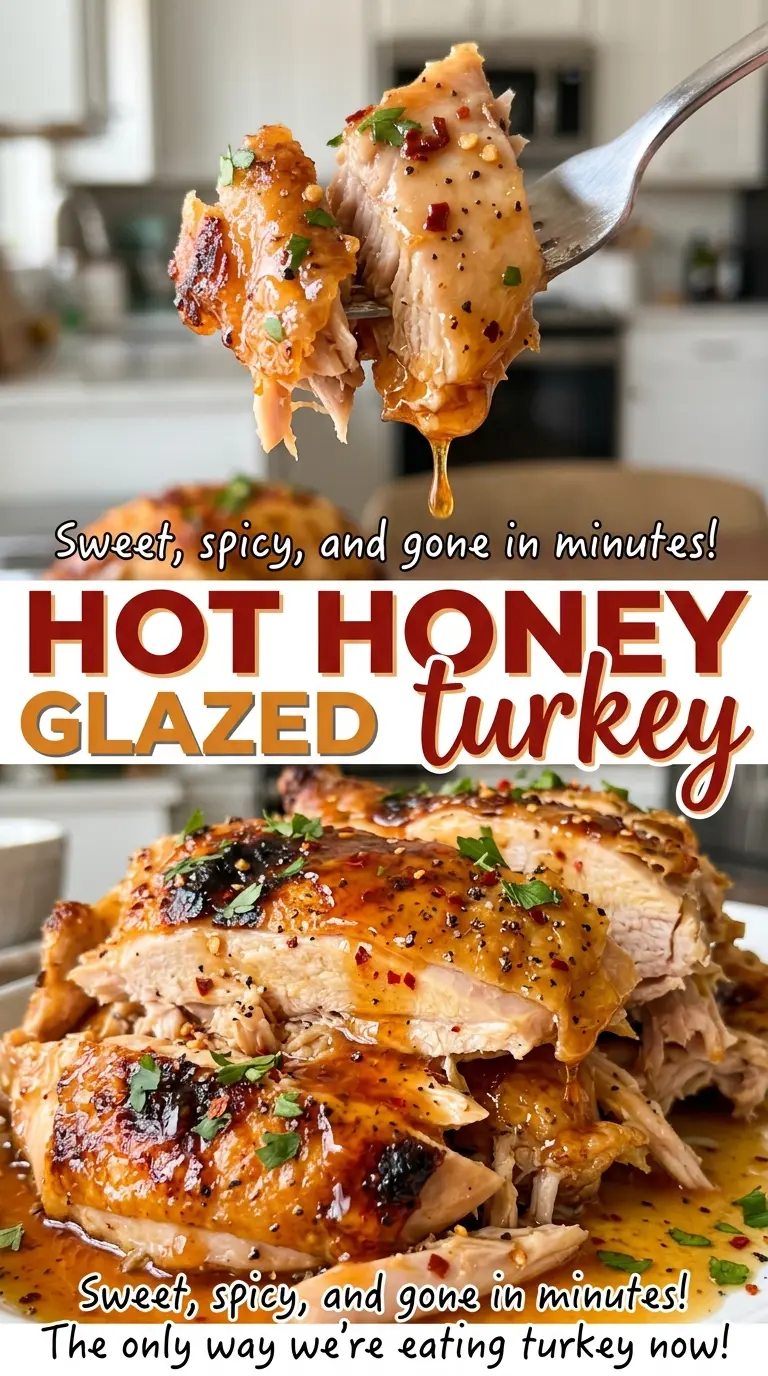
The glaze brings together honey, hot sauce, apple cider vinegar, and red pepper flakes. It turns glossy as it simmers, then gives the skin a sweet, tangy finish with a steady bit of heat. The turkey rests before carving, which gives the juices time to settle back into the meat. Every slice gets tender meat, crisp-edged skin, and a little sticky heat.

Kitchen Note
Keep the butter softened, not melted. It should spread easily beneath the breast skin without running off the turkey, so take it out of the refrigerator while you get the bird ready.
Save this hot honey glazed turkey for a centerpiece with sticky, peppery skin and tender slices.
Why the Honey Goes on After the Turkey Has Already Roasted
Honey brings plenty of sugar to the glaze, and sugar darkens quickly in a hot oven. If you coat the turkey at the start, that sweet layer spends the entire roast exposed to heat and can turn too dark before the meat is ready. Letting the turkey roast first gives the skin time to cook and the meat time to approach its final temperature without the glaze getting in the way.
After the first 2 1/2 hours, the glaze has a shorter window to cling to the skin and turn shiny. Brushing it on in intervals builds a light coating rather than leaving one thick, sticky layer in place. Keep an eye on the color as you work: if the glaze starts looking darker than you want, loosely tent the bird with foil and let it continue roasting. Color is a useful cue for the glaze, but the thermometer—not the color of the skin—tells you when the turkey is ready.
Why Honey, Vinegar, and Pepper Belong in the Same Glaze
- Turkey — A fully thawed bird in the listed size range gives the roasting schedule a dependable starting point. A standard grocery-store turkey works well; spend your attention on thawing it completely and drying the skin rather than seeking a specialty bird.
- Unsalted butter — Butter under the skin adds richness directly to the breast, while unsalted butter lets the kosher salt do the seasoning. Use a stick-style dairy-free butter in the same amount for a dairy-free version; it may have a slightly different buttery flavor, but it spreads and roasts well.
- Honey — Regular grocery-store honey is a good fit here; a strongly flavored or unusually dark honey will bring its own character to the glaze. Maple syrup can replace it measure for measure, but the glaze will taste more maple-forward and may be less sticky.
- Hot sauce — The sauce supplies both chile heat and a little tang. A familiar, inexpensive bottle is fine, and choosing a milder or hotter style is an easy way to adjust the heat without changing the method.
- Apple cider vinegar — Its gentle fruitiness keeps the honey from tasting flat. White wine vinegar works as a substitute, though it gives the glaze a cleaner, sharper edge; use the same amount.
- Red pepper flakes — These add a slower, lingering heat alongside the hot sauce. If you don’t have flakes, a smaller amount of ground cayenne works, but it blends in more evenly and can make the heat feel more immediate.
- Fresh thyme, onion, and lemon — These aromatics perfume the cavity as the turkey roasts without turning it into a stuffed bird. Use an ordinary onion and lemon; there is no need to buy premium produce. Orange can stand in for the lemon for a sweeter citrus note, and a small pinch of dried thyme can replace the fresh sprigs.
How to Roast the Turkey Before Brushing on the Hot Honey
Dry the Bird and Season Beneath the Skin
Heat the oven to 325°F and set a rack in the lower third. Pat the fully thawed turkey dry with paper towels, then place the quartered onion, lemon, and thyme in the cavity. Gently loosen the breast skin and spread the softened butter underneath it and over the outside. Season all over with kosher salt and black pepper; if the skin tears, stop pulling and work the butter into the opening you already have.
Simmer the Glaze Until Smooth
Combine the honey, hot sauce, apple cider vinegar, and red pepper flakes in a small saucepan. Simmer over low heat for 2 to 3 minutes, stirring until the mixture looks smooth and combined. Keep the heat low rather than letting the honey boil hard. Set the glaze aside until the first stretch of roasting is complete.
Roast the Turkey Before Adding Any Glaze
Set the turkey breast-side up on a rack in a roasting pan and roast at 325°F for 2 1/2 hours. The bird should be beginning to color, but it won’t have the finished glossy coating yet. Don’t judge doneness by the skin at this stage. The glaze goes on after this initial roast.
Brush, Finish Roasting, and Rest
Brush the glaze over the turkey, then continue roasting for 30 to 75 minutes more, brushing every 15 minutes. Check with a thermometer in the thickest part of the breast and the innermost part of the thigh, without touching bone; both spots need to read 165°F. If the glaze gets too dark, loosely tent the turkey with foil. Transfer it to a carving board, tent loosely, and rest for 30 minutes before carving.
Three Ways to Adjust the Heat or Make This Turkey Dairy-Free
A Milder, Sweeter Glaze
Leave out the red pepper flakes and choose a mild hot sauce. You’ll keep the honey-and-vinegar glaze, but the finish will be gentler and less lingering.
More Heat in Every Brush
Stir extra red pepper flakes into the glaze if you want a stronger chile bite. The flakes add heat without changing the honey’s sweetness, so the turkey still gets its sticky finish.
Dairy-Free Butter Under the Skin
Use an equal amount of softened stick-style dairy-free butter in place of the unsalted butter. It keeps the same spreadable coating technique, though the finished turkey may have a slightly less rich, buttery flavor.
Storage and Reheating
- Refrigerator: Refrigerate leftover turkey within 2 hours and use it within 3 to 4 days. The skin will lose its crispness once chilled.
- Freezer: Freeze carved turkey in airtight portions for up to 3 months for best quality. Thaw it in the refrigerator before reheating.
- Reheating: Reheat covered in a 325°F oven until steaming hot throughout. Keep the slices covered so they don’t dry out, and avoid reheating them uncovered.
Questions That Come Up Before the Turkey Goes in the Oven
Hot Honey Glazed Turkey
Ingredients
Equipment
Method
- Heat the oven to 325°F and set a rack in the lower third of the oven.
- Pat the turkey dry with paper towels, then place the onion, lemon, and thyme in the cavity.
- Gently loosen the breast skin and rub the softened butter under the skin and over the outside of the turkey, then season all over with the salt and pepper.
- Combine the honey, hot sauce, apple cider vinegar, and red pepper flakes in a small saucepan and simmer over low heat for 2 to 3 minutes, stirring until smooth.
- Set the turkey breast-side up on a rack in a roasting pan and roast at 325°F for 2 1/2 hours.
- Brush the turkey with the glaze and continue roasting at 325°F for 30 to 75 minutes more.
- Brush every 15 minutes until a thermometer reads 165°F in the thickest part of the breast and the innermost part of the thigh without touching bone; loosely tent with foil if the glaze gets too dark.
- Transfer the turkey to a carving board, tent loosely with foil, and rest for 30 minutes before carving.