
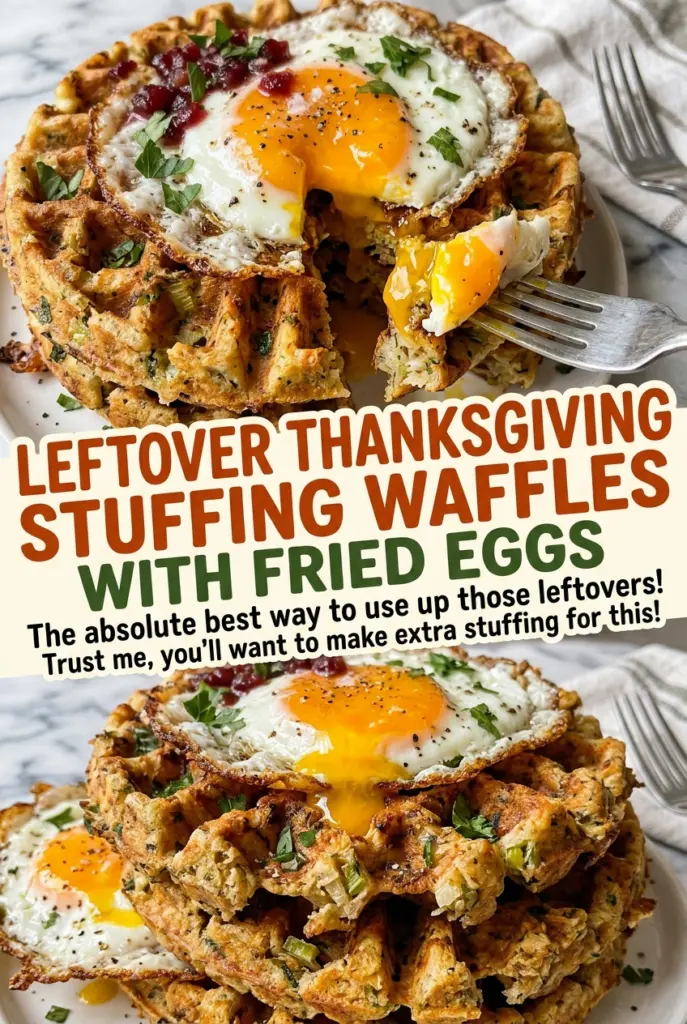
Leftover Thanksgiving Stuffing Waffles with Fried Eggs
The waffle iron gives you a clear signal when a stuffing waffle is ready to lift: the outside is deeply browned, and the waffle releases easily. Open it too soon…
Tip: save now, cook later.The waffle iron gives you a clear signal when a stuffing waffle is ready to lift: the outside is deeply browned, and the waffle releases easily. Open it too soon and the soft center can tug against the plates instead of holding its shape. That’s the small difference between a sturdy base for a fried egg and a pile of stuffing that needs rescuing.
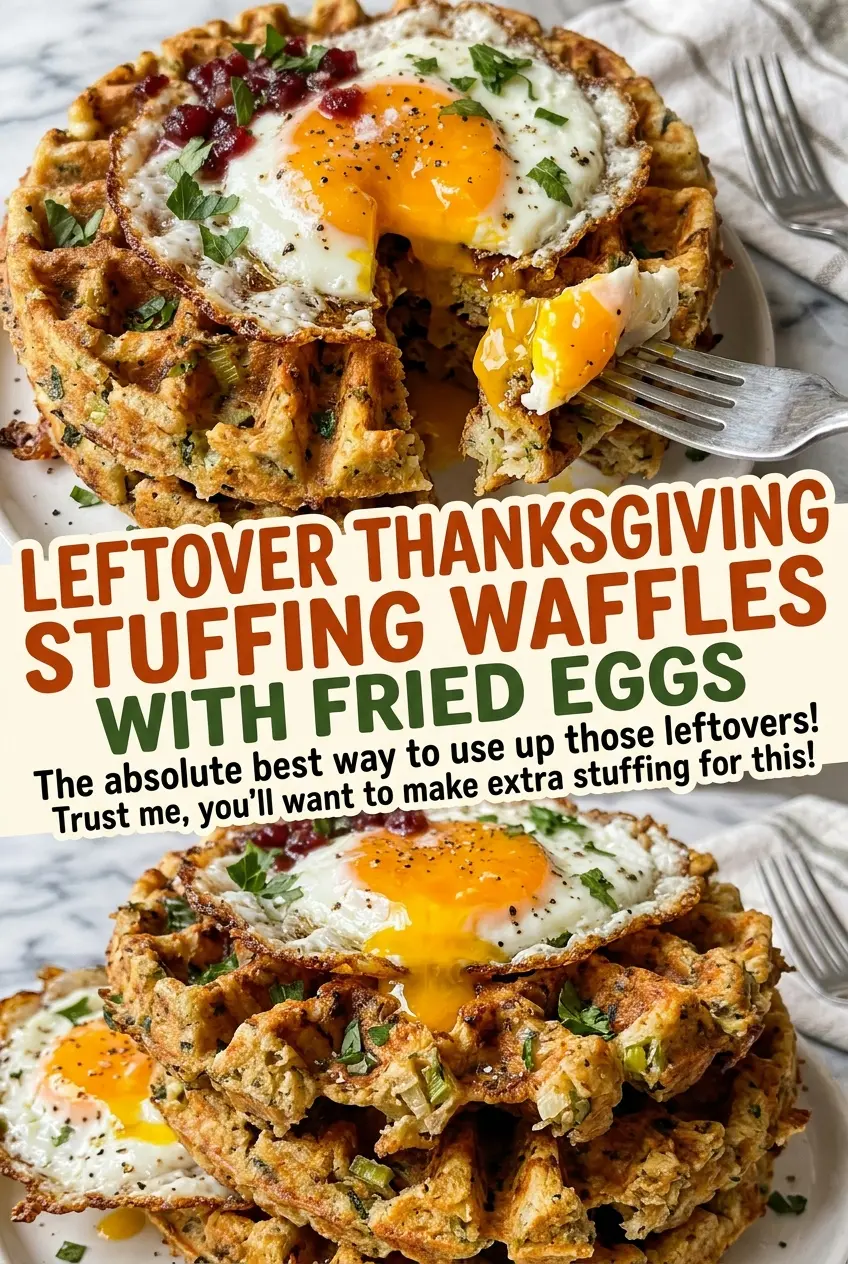
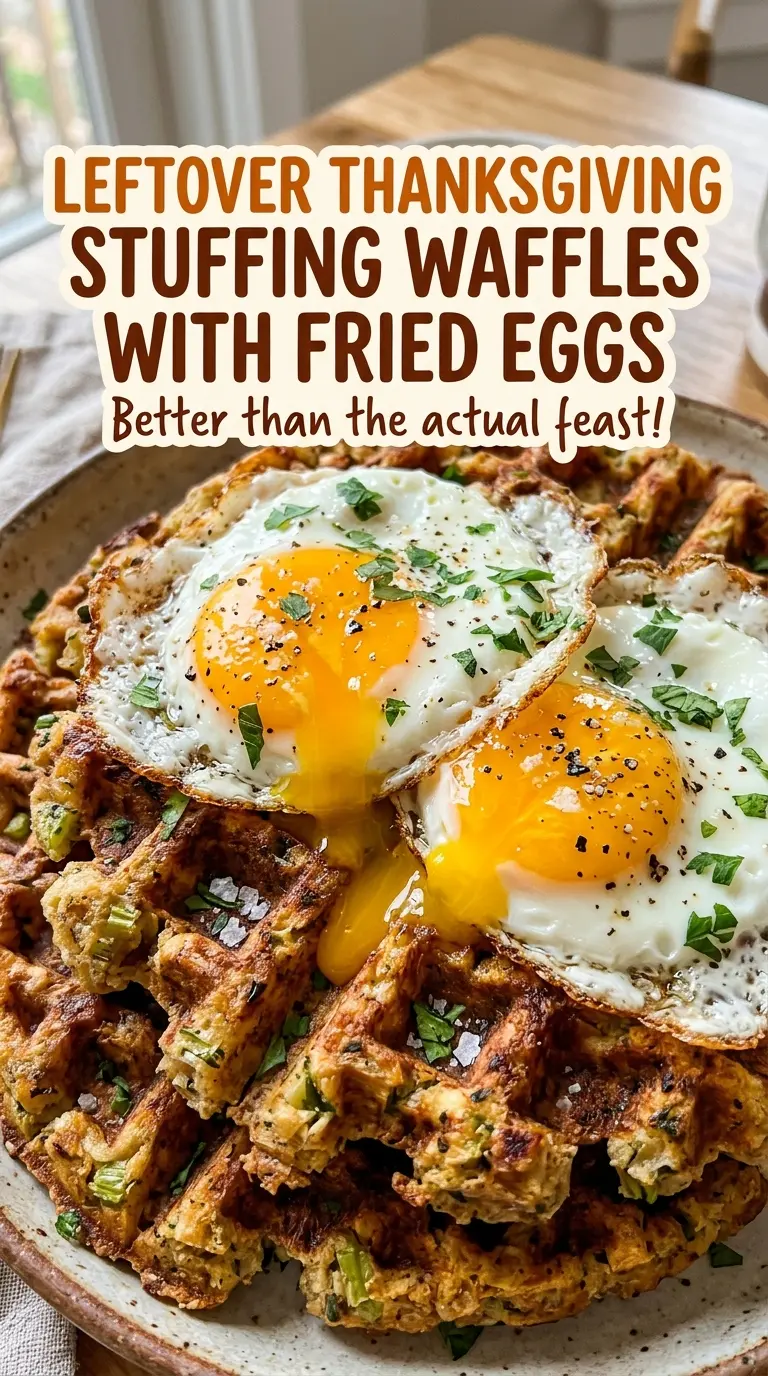
These leftover Thanksgiving stuffing waffles use cold stuffing, beaten eggs, and a little chicken broth to turn a familiar side dish into a crisp-edged breakfast. I break up the larger pieces before mixing so the binder can reach the bread throughout. Then each portion gets its own turn in the waffle iron, where the edges brown while the middle stays tender. A fried egg goes on top just before serving, with the yolk and whites cooked fully set.
Kitchen Note
Let the mixed stuffing stand for five minutes before it goes into the waffle iron. That short pause gives the beaten egg and broth time to spread through the bread, instead of leaving some pieces dry and others wet.
Save these leftover Thanksgiving stuffing waffles for a crisp, savory breakfast topped with a fully set fried egg.
Why These Stuffing Waffles Need a Deep Brown Crust
Stuffing isn’t a pourable waffle batter. It starts as separate pieces of bread, so the iron needs time to press them together and brown the surfaces that will hold the waffle in one piece. The beaten eggs help bind the mixture as it cooks; the crisp exterior gives that soft center some structure.
If the waffle is pale, it may still feel loose when you lift the iron. Let the color guide you rather than opening the lid early to check the middle. Once the outside is deeply browned, the waffle should release easily. That’s the texture cue I rely on, especially when the stuffing has uneven pieces or a mix of soft and firm bread.
Cooking one portion at a time also matters here. A standard waffle iron needs an even layer of stuffing to brown across the surface, and crowding it can leave the edges uneven. Give every waffle the full cooking window and spray the iron again between batches; you’ll get four portions with browned outsides and centers that stay tender enough for the egg on top.
What the Stuffing, Eggs, and Broth Each Bring to the Waffle Iron
- Cold leftover stuffing — This is the foundation, and its existing seasoning gives the waffles their savory character. Break up large pieces so the mixture holds together more evenly. Another cold bread stuffing with a similar texture is the closest swap; a loose, very wet stuffing may not form as sturdy a waffle.
- Eggs — The eggs mixed into the stuffing help bind the bread as it cooks, while the eggs fried for the topping make each waffle a complete serving. There isn’t a direct replacement for the eggs in the waffle mixture in this formula; leaving them out changes how well the stuffing holds together.
- Chicken broth — A little broth brings moisture to the stuffing without turning it into a loose batter. Use broth that tastes good on its own, since its savory flavor carries through the waffle. The amount is deliberately modest; adding a different liquid or more than the listed amount changes the mixture’s balance.
- Cooking spray — A light coating helps the bread release from the waffle iron as it browns. Keep it nearby to recoat between portions, when the iron has had another round of stuffing pressed against it.
- Butter — The butter melts into the nonstick skillet before the eggs go in, adding a little richness to the topping. Unsalted butter keeps the seasoning in your control, since the stuffing itself may already be seasoned.
- Kosher salt and freshly ground black pepper — These season the fried eggs, not the stuffing mixture. Taste the stuffing before cooking if you’re curious about its saltiness, but keep the egg seasoning separate so each topping is balanced.
From Cold Stuffing to Crisp Waffles and Set Eggs
Break Up the Stuffing and Bind It
Preheat a standard waffle iron to medium-high, or use the setting recommended by its manufacturer. Break up any large pieces of cold stuffing in a large bowl. Beat the eggs for the waffle mixture with the chicken broth, then stir them into the stuffing until everything is evenly combined. Let the mixture stand for five minutes before portioning it.
Brown Each Portion in the Waffle Iron
Lightly coat the hot iron with cooking spray and divide the stuffing mixture into four portions. Cook one portion at a time for five to seven minutes, until it’s deeply browned and releases easily. If it still clings when you open the iron, it needs more time to set and brown. Spray the iron between batches so the next waffle can release cleanly.
Fry the Eggs Until Fully Set
Melt the butter in a 12-inch nonstick skillet over medium-low heat. Crack in the remaining eggs and season them with kosher salt and freshly ground black pepper. Cover the skillet and cook for four to five minutes, until both the whites and yolks are fully set. Keep the heat at medium-low so the bottoms don’t overcook while the tops finish.
Top the Waffles and Serve Right Away
Place one fried egg on each stuffing waffle as soon as the eggs are cooked. Serve immediately, while the waffle edges are still crisp and the centers are warm. Set one waffle on each plate before adding its egg so the browned surface doesn’t soften from sitting under the topping.
Two Stuffing Swaps That Keep the Waffle Idea Intact
Use Gluten-Free Bread Stuffing
For a gluten-free version, use cold leftover gluten-free bread stuffing in place of the regular stuffing. Choose one with a texture similar to standard bread stuffing; the finished waffles may be a little more delicate, but the egg binder and waffle-iron method stay the same.
Try Cornbread Stuffing for a Different Crumb
Cold leftover cornbread stuffing gives the waffles a more corn-forward taste and a crumbly texture. Use stuffing that holds together when stirred with the egg and broth; a very loose version won’t make as cohesive a waffle.
Storage and Reheating
- Refrigerator: Refrigerate leftover waffles and fried eggs in separate airtight containers within two hours. They’ll keep for three to four days; the waffles soften in the fridge.
- Freezer: Freeze the waffles without the fried eggs in a freezer-safe container for up to two months. Fried eggs don’t freeze as well, since their texture turns rubbery after thawing.
- Reheating: Warm waffles in a 350°F oven until hot and crisp, and heat the eggs separately in a covered nonstick skillet over low heat to 165°F. Don’t reheat them stacked together, or the waffle will turn soft before the egg is warm.
Questions I Get About Stuffing Waffles and Fried Eggs
Leftover Thanksgiving Stuffing Waffles with Fried Eggs
Ingredients
Equipment
Method
- Preheat a standard waffle iron to medium-high, or to the setting recommended by its manufacturer.
- Break up any large pieces of stuffing in a large bowl, then stir in 2 eggs beaten with the chicken broth until evenly combined; let the mixture stand for 5 minutes.
- Lightly coat the waffle iron with cooking spray, divide the stuffing mixture into 4 portions, and cook one portion at a time for 5–7 minutes, spraying the iron between batches, until each waffle is deeply browned and releases easily.
- Melt the butter in a 12-inch nonstick skillet over medium-low heat, then crack the remaining 4 eggs into the skillet and season with the salt and pepper.
- Cover and cook for 4–5 minutes, until the whites and yolks are fully set.
- Place a fried egg on each stuffing waffle and serve immediately.