

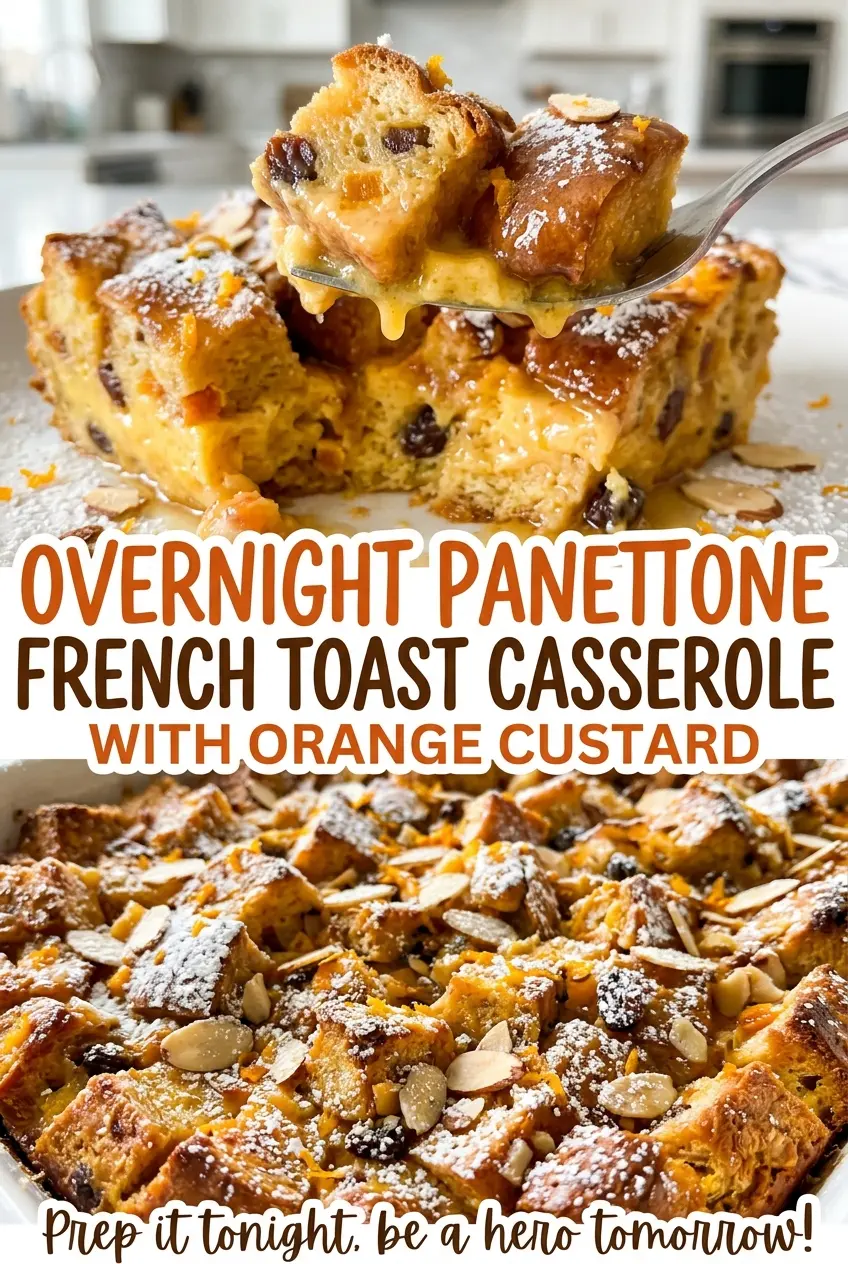
Overnight Panettone French Toast Casserole with Orange Custard
When the panettone cubes first settle into the baking dish, they look more like a pile of bread than breakfast. After the orange custard has time to soak in, those…
Tip: save now, cook later.When the panettone cubes first settle into the baking dish, they look more like a pile of bread than breakfast. After the orange custard has time to soak in, those same pieces bake into a soft center with toasted edges. I like this overnight panettone French toast casserole because the prep happens before bed, and the bright orange custard gives the rich bread a fresher, less heavy feel.
Panettone is airy and tender, so it needs a gentler soak than a dense loaf. I cut it into even cubes and let the custard rest with it overnight rather than rushing the bread through a quick dip. The orange zest brings fragrant citrus oils, while the juice adds a little tartness to the creamy egg mixture. Once baked, the center is tender and set, with pieces of panettone still distinct in every serving.
Kitchen Note
Press the panettone down gently after pouring in the custard, just enough to help the cubes make contact. If you mash them, you lose the airy texture that makes the finished casserole tender.
Save this overnight panettone French toast casserole for a relaxed breakfast, with orange custard soaked right through the soft bread.
Why Panettone Needs an Overnight Soak, Not a Quick Dip
Panettone doesn’t behave quite like firm sandwich bread. Its crumb is light and rich, and the loaf is already sweet, so a quick dip can leave the outside soaked while the middle stays dry. Giving the cubes time in the orange custard lets moisture move through the bread before it goes into the oven. The goal isn’t to turn every piece into a uniform sponge; it’s to soften the crumb while keeping the cubes recognizable.
That’s also why the cube size matters. One-inch pieces have enough surface area to absorb custard but enough structure to hold their shape through baking. A very tight pile can make it harder for the mixture to move between the pieces, while unevenly large chunks may stay firmer at their centers. Spread the cubes evenly across the dish, then give them the full chill so the custard has time to settle in. You’ll get a casserole with a creamy middle rather than a dry patch beneath a custard-heavy bottom.
How the Orange Custard Balances Panettone’s Sweetness

- Panettone — Its soft, enriched crumb is the reason this casserole feels tender without needing a separate topping. Choose a loaf that feels fresh and springy, not dried out; a standard packaged loaf is fine. Cut it into even cubes so it soaks and bakes consistently.
- Eggs — The eggs give the custard its structure as it bakes. Use large eggs and whisk until the whites and yolks are completely blended; streaks of egg white can set in patches rather than making a smooth custard.
- Whole milk and heavy cream — Whole milk keeps the custard fluid enough to soak into the bread, while cream adds richness. Both are doing useful work here, so swapping in a low-fat milk changes the result to a lighter, less lush casserole.
- Orange zest and juice — Zest carries the fragrant orange aroma, and juice brings a brighter, lightly tart note. Finely grate only the colored outer peel; the white pith beneath it tastes bitter. Freshly grated zest has the clearest aroma, while bottled orange juice is adequate for the liquid portion.
- Vanilla and sugar — Vanilla rounds out the citrus and egg, and the measured sugar sweetens the custard without trying to make the panettone taste like plain bread. The loaf already contributes sweetness, so taste expectations should be closer to a gently sweet breakfast bake than a dessert custard.
From Custard Pour to a Set Center: The Casserole’s Four Stages
Cut and Arrange the Panettone
Butter a 9×13-inch baking dish, then cut the panettone into 1-inch cubes and arrange them evenly in the dish. Try to keep the pieces close in size so small bits don’t dry out before larger ones are ready. In a large bowl, whisk together the eggs, milk, cream, sugar, orange zest, orange juice, vanilla, and salt until the mixture looks uniform. Pour it evenly over the bread.
Give the Custard Time to Soak In
After pouring, gently press the cubes down so they absorb the liquid without crushing their soft crumb. Cover the baking dish and refrigerate it for at least 8 hours or overnight. The long rest lets the custard travel into the middle of the cubes instead of collecting mostly around their edges. Don’t shorten this stage if you want the center to bake as tenderly as the top.
Take the Chill Off While the Oven Heats
Remove the covered casserole from the refrigerator and let it stand for 30 minutes. During that time, heat the oven to 350°F. This pause gives the cold dish a chance to lose some of its chill before baking, and it keeps the oven-preheating time useful. Keep the casserole covered while it stands.
Bake Covered, Then Uncover for the Finish
Keep the dish covered with foil for the first 30 minutes in the oven. Remove the foil and bake for another 20 to 30 minutes, until the center is set and reaches 160°F. The top will be more exposed during this final stretch, while the custard in the middle finishes setting. Let the casserole rest for 10 minutes before serving so the custard can settle and portions are easier to lift.
Three Thoughtful Ways to Change the Panettone and Citrus
Swap in Brioche for a Less Fruity Bread Base
Use 1 pound of brioche cut into 1-inch cubes in place of the panettone, keeping the rest of the ingredients and method the same. Brioche makes a buttery, soft casserole, but you’ll lose the panettone’s distinctive flavor and any inclusions in the loaf.
Make a Dairy-Free Orange Custard
Replace the butter with dairy-free butter, use unsweetened oat milk instead of whole milk, and use full-fat canned coconut milk instead of heavy cream. The eggs still set the custard, but the coconut milk gives the casserole a subtle coconut note and a slightly different richness.
Trade the Orange for Lemon
Replace the orange zest with finely grated lemon zest and the orange juice with lemon juice, keeping the same amounts. The custard will taste sharper and more citrus-forward, which contrasts nicely with the sweet bread.
Storage and Reheating
- Refrigerator: Refrigerate leftovers within 2 hours and keep them covered for 3 to 4 days. The bread softens further as it sits, so the edges won’t stay as distinct as they are on the first day.
- Freezer: Freeze individual portions in airtight containers for up to 2 to 3 months for best quality. Thaw portions overnight in the refrigerator before reheating.
- Reheating: Reheat a portion in the microwave in short bursts, or cover a larger portion and warm it in a 325°F oven until the center reaches 165°F. Avoid reheating uncovered for too long; that dries the bread before the middle is hot.
Questions That Come Up Before Baking This Panettone Casserole
Overnight Panettone French Toast Casserole with Orange Custard
Ingredients
Equipment
Method
- Grease a 9x13-inch baking dish with the softened unsalted butter and arrange the panettone cubes evenly in it.
- Whisk the large eggs, whole milk, heavy cream, granulated sugar, finely grated orange zest, orange juice, vanilla extract, and kosher salt in a large bowl until well combined.
- Pour the orange custard evenly over the panettone and gently press the cubes down so they absorb the custard.
- Cover the dish and refrigerate for at least 8 hours or overnight.
- Remove the casserole from the refrigerator and let it stand for 30 minutes while the oven heats to 350°F.
- Cover the dish with foil and bake for 30 minutes, then uncover and bake for 20 to 30 minutes, until the center is set and reaches 160°F.
- Rest the casserole for 10 minutes before serving.