
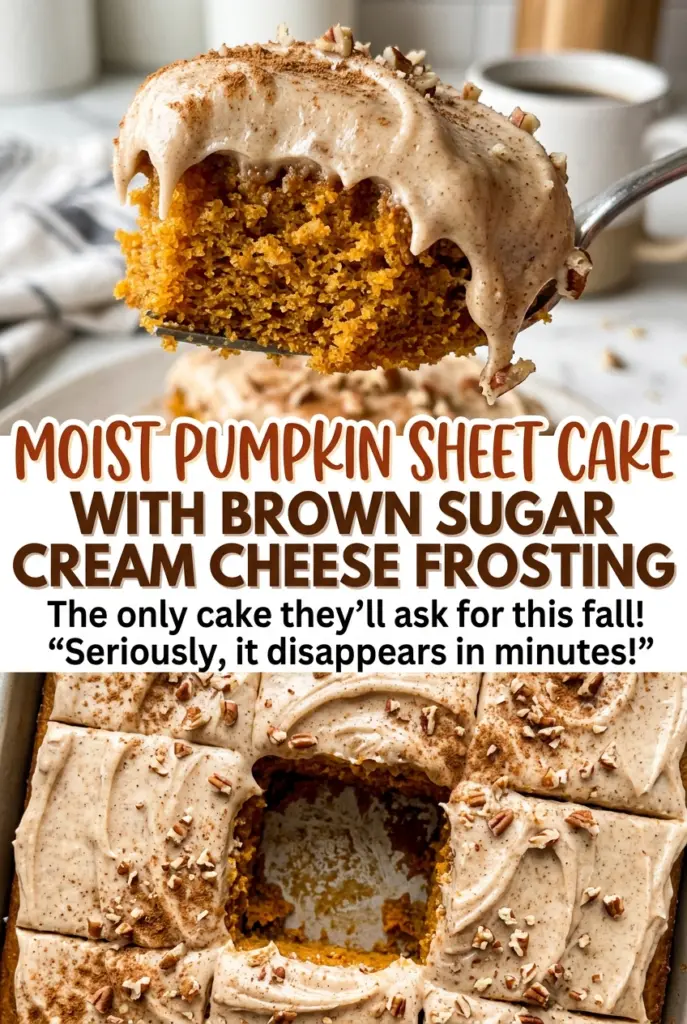
Moist Pumpkin Sheet Cake with Brown Sugar Cream Cheese Frosting
When the pan comes out of the oven, the edges of this pumpkin cake look set while the center still has a little softness. That’s the cue I look for:…
Tip: save now, cook later.When the pan comes out of the oven, the edges of this pumpkin cake look set while the center still has a little softness. That’s the cue I look for: a light spring when I touch the middle, not a dry, firm surface. A toothpick should come out with a few moist crumbs, and the cake will finish cooling gently in the pan.
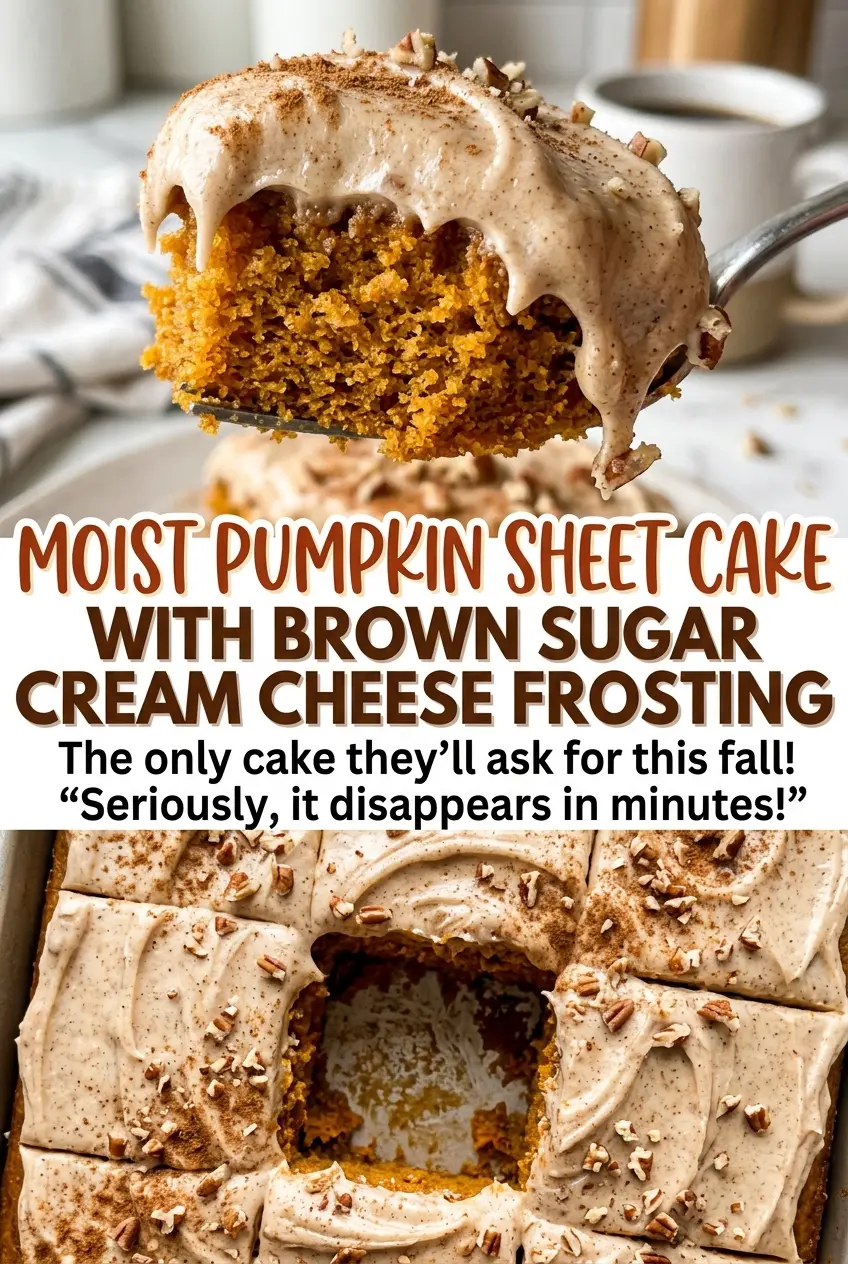
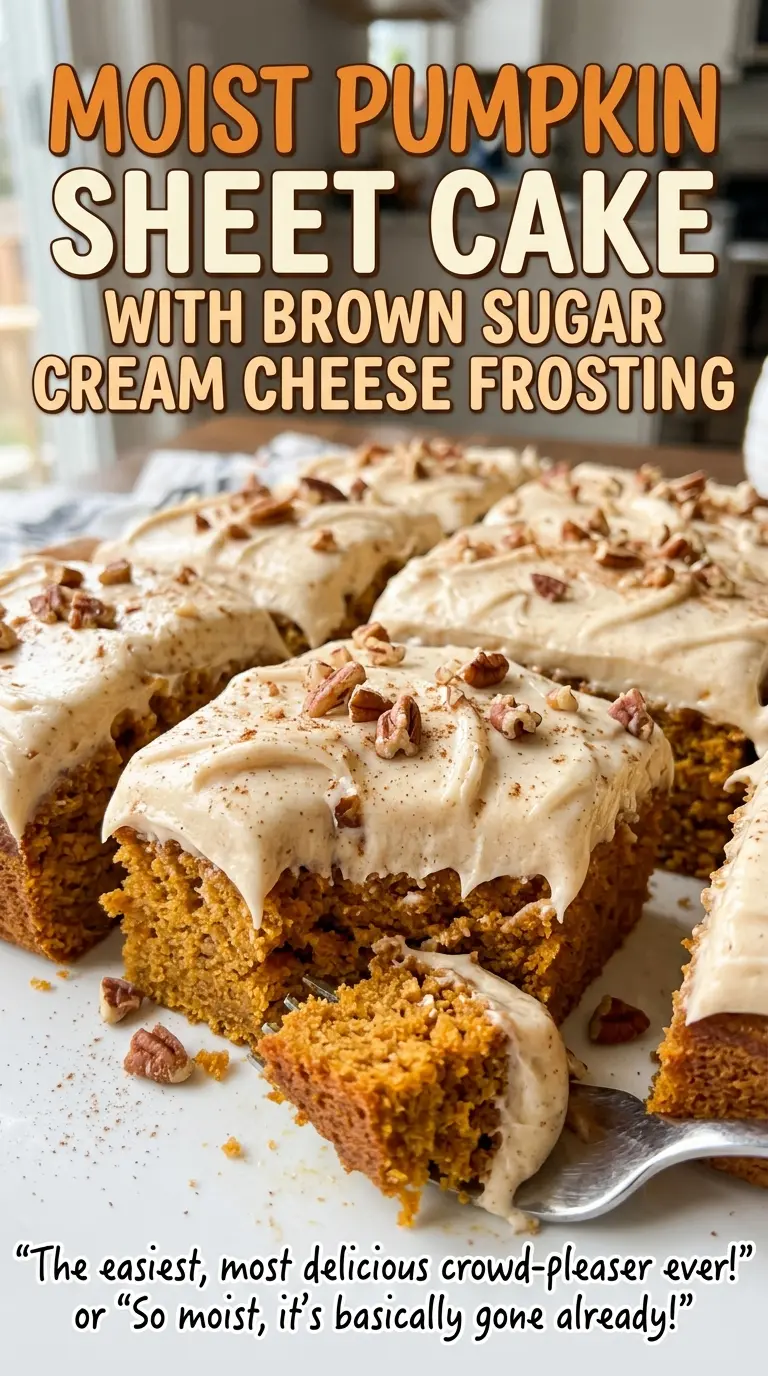
I whisk the pumpkin and oil into the eggs and sugar before adding the dry ingredients. That gives me a smooth base and keeps the flour from getting worked more than it needs to. The result is a moist pumpkin sheet cake with warm cinnamon and ginger, topped with cream cheese frosting that has a mellow brown-sugar note. It’s a generous 9×13-inch cake, and each square has a soft crumb under a creamy, lightly tangy layer of frosting.
Kitchen Note
Give the brown-sugar mixture time to cool to room temperature before it goes into the cream cheese. If it’s still warm, it can soften the frosting before the powdered sugar has a chance to give it body.
Save this moist pumpkin sheet cake with brown sugar cream cheese frosting for a bake that stays soft beneath a tangy, caramel-sweet topping.
Why This Pumpkin Batter Needs a Light Hand After the Flour Goes In
Pumpkin batter can look forgiving because it’s moist and thick, but that’s exactly why I don’t keep whisking once the flour is added. The flour’s gluten starts developing as soon as it meets the wet ingredients. Work it too long and the cake can lose its tender crumb, turning dense or slightly gummy instead of soft.
Whisk the eggs and sugar together first, then blend in the oil and pumpkin until the mixture looks even. Once the dry ingredients go in, whisk only until the last dry streak disappears. A few small lumps are less of a problem than an overworked batter; the important visual cue is that there’s no loose flour hiding at the bottom or around the sides of the bowl. Spread the batter into an even layer so the center and edges bake at a similar pace. That restrained mixing gives the pumpkin cake room to rise without making it chewy.
The Ingredients That Keep This Pumpkin Cake Moist Without Making It Heavy
- Pumpkin puree — Plain canned puree gives the cake a dependable pumpkin flavor and moisture level; store-brand cans work well. Skip pumpkin pie filling, which is already sweetened and spiced. Homemade puree varies in thickness, so a watery batch may give you a heavier cake.
- Neutral oil — Oil keeps the crumb soft after the cake cools and lets the pumpkin and spices come through without a buttery flavor. Canola or vegetable oil are easy choices. A strongly flavored oil would distract from the warm spices.
- All-purpose flour and leaveners — All-purpose flour gives the cake enough structure to hold its shape in a sheet pan, while baking powder and baking soda help it rise. Measure flour without packing it tightly into the cup; too much can make the crumb dry. For a gluten-free version, use a cup-for-cup baking blend made to replace all-purpose flour.
- Cinnamon, ginger, and nutmeg — Together they make the pumpkin taste rounded rather than sharply cinnamon-forward. Freshly purchased spices have a clearer aroma, but ordinary pantry jars are fine if they still smell fragrant when you open them.
- Brown sugar and cream cheese — Light brown sugar brings a mellow molasses note to the frosting, and cream cheese balances that sweetness with a gentle tang. Use softened butter and cream cheese so they beat smoothly; a standard block of cream cheese gives the frosting more body than a whipped, spreadable tub.
From Smooth Pumpkin Batter to a Soft-Springing Center
Whisk the Spices Through the Flour
Heat the oven to 350°F and grease a 9×13-inch baking pan. In a medium bowl, whisk the flour with the baking powder, baking soda, cinnamon, ginger, nutmeg, and salt. Keep whisking until the spices look evenly distributed, since a pocket of baking soda or cinnamon makes an uneven bite. Set the bowl aside while you mix the wet ingredients.
Build the Pumpkin Base
In a large bowl, whisk the granulated sugar and eggs until combined. Whisk in the oil and pumpkin puree until the mixture looks smooth and evenly colored. Add the dry ingredients and whisk just until no dry streaks remain. Scrape the batter into the prepared pan and spread it to the corners in an even layer.
Bake, Then Let the Cake Cool in the Pan
Bake for 30–35 minutes. The center should spring back lightly when touched, and a toothpick inserted there should come out with a few moist crumbs rather than wet batter. Let the cake cool completely in the pan on a wire rack, about 1 1/2 hours. If the middle still feels warm, give it more time before frosting so the topping stays in an even layer.
Cook the Brown Sugar and Beat the Frosting
Put the brown sugar, 1/4 cup of the butter, and heavy cream in a small saucepan over medium-low heat. Stir until the sugar dissolves and the mixture bubbles gently, about 2–3 minutes, then transfer it to a bowl and cool to room temperature, about 20–30 minutes, stirring occasionally. Beat the cream cheese with the remaining 1/4 cup butter until smooth, then beat in the cooled brown-sugar mixture and vanilla. Add the powdered sugar gradually and beat until smooth and fluffy, about 1–2 minutes, then spread the frosting over the completely cooled cake.
Two Swaps That Change the Cake Without Fighting Its Texture
Make It Gluten-Free With a Cup-for-Cup Blend
Replace the all-purpose flour with the same amount of a gluten-free baking blend labeled for cup-for-cup substitution. The cake keeps its pumpkin and spice character, though the crumb may be a little more delicate. Let it cool fully in the pan before cutting so the slices hold together.
Use Dark Brown Sugar for a Deeper Frosting
Swap dark brown sugar for the light brown sugar in the frosting, keeping the amount the same. Its stronger molasses flavor makes the topping taste darker and more caramel-like, with a little less of the delicate sweetness of the light-brown-sugar version.
Storage and Reheating
- Refrigerator: Cover the frosted cake and refrigerate for 3–4 days. The cake will feel firmer when cold, then soften a little as it stands.
- Freezer: Freeze individual slices until firm, then wrap them tightly and store in an airtight container for up to 2 months. Thaw in the refrigerator; the frosting may be a little less silky after freezing.
- Reheating: This cake is best served chilled or allowed to soften briefly at room temperature. Don’t microwave a frosted slice; the cream cheese topping can melt before the cake warms evenly.
Questions That Come Up Before You Frost or Slice
Moist Pumpkin Sheet Cake with Brown Sugar Cream Cheese Frosting
Ingredients
Equipment
Method
- Heat the oven to 350°F.
- Grease a 9x13-inch baking pan.
- Whisk the flour, baking powder, baking soda, cinnamon, ginger, nutmeg, and salt in a medium bowl.
- Whisk the granulated sugar and eggs in a large bowl until combined.
- Whisk in the oil and pumpkin puree until smooth.
- Add the dry ingredients to the pumpkin mixture and whisk just until no dry streaks remain.
- Spread the batter in the prepared pan.
- Bake for 30-35 minutes, until the center springs back lightly and a toothpick comes out with a few moist crumbs.
- Cool the cake completely in the pan on a wire rack, about 1 1/2 hours.
- Combine the brown sugar, 1/4 cup of the butter, and heavy cream in a small saucepan.
- Cook over medium-low heat, stirring, until the sugar dissolves and the mixture bubbles gently, 2-3 minutes.
- Transfer the mixture to a bowl and cool to room temperature, about 20-30 minutes, stirring occasionally.
- Beat the cream cheese and remaining 1/4 cup butter in a large bowl until smooth.
- Beat in the cooled brown sugar mixture and vanilla.
- Add the powdered sugar gradually and beat until smooth and fluffy, about 1-2 minutes.
- Spread the frosting over the completely cooled cake.