
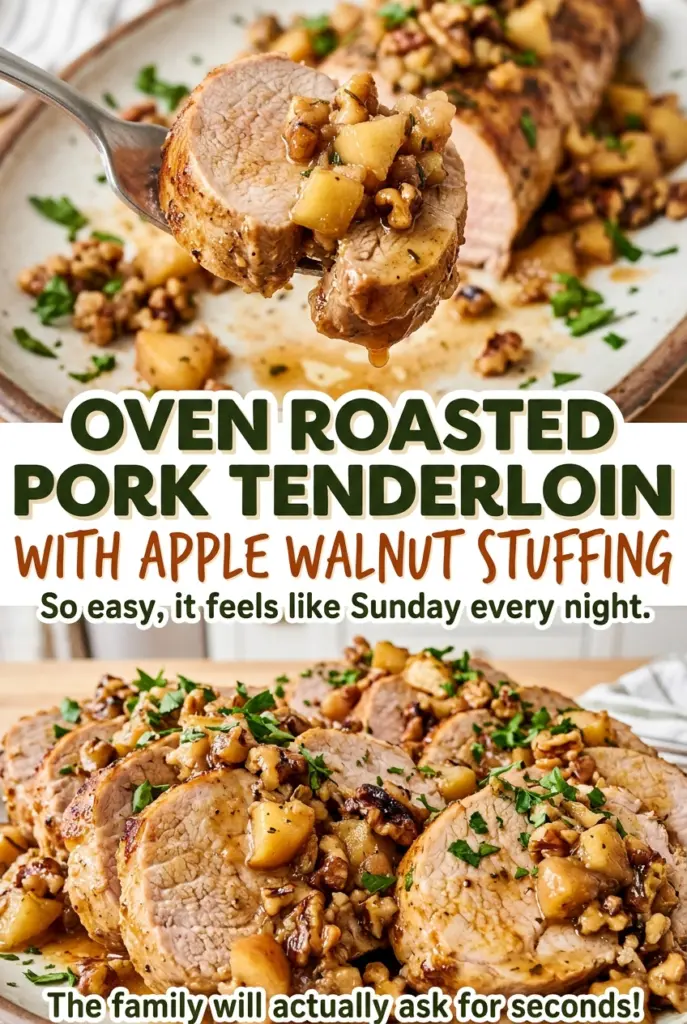
Oven Roasted Pork Tenderloin with Apple Walnut Stuffing
When the broth hits the bread cubes, they should soak it up without turning into paste. I learned to pay attention to the bread here: dried, unseasoned cubes hold their…
Tip: save now, cook later.When the broth hits the bread cubes, they should soak it up without turning into paste. I learned to pay attention to the bread here: dried, unseasoned cubes hold their shape, so the apple and walnuts stay tucked between soft, savory bites. That balance makes this oven roasted pork tenderloin with apple walnut stuffing feel like a proper meal, not a pan of soggy bread beside a roast.
The stuffing bakes in its own dish while the tenderloins roast on a separate rack. That gives each one room to reach the right finish without asking the pork to sit in a hot pan while the center of the stuffing catches up. The apple softens in the broth with onion, celery, and sage, and the walnuts bring a little crunch to the golden top.
Kitchen Note
Let the broth-soaked bread cool for the full five minutes before you stir in the beaten egg. Add it while the mixture is piping hot, and the egg can start setting in little strands instead of coating the cubes evenly.
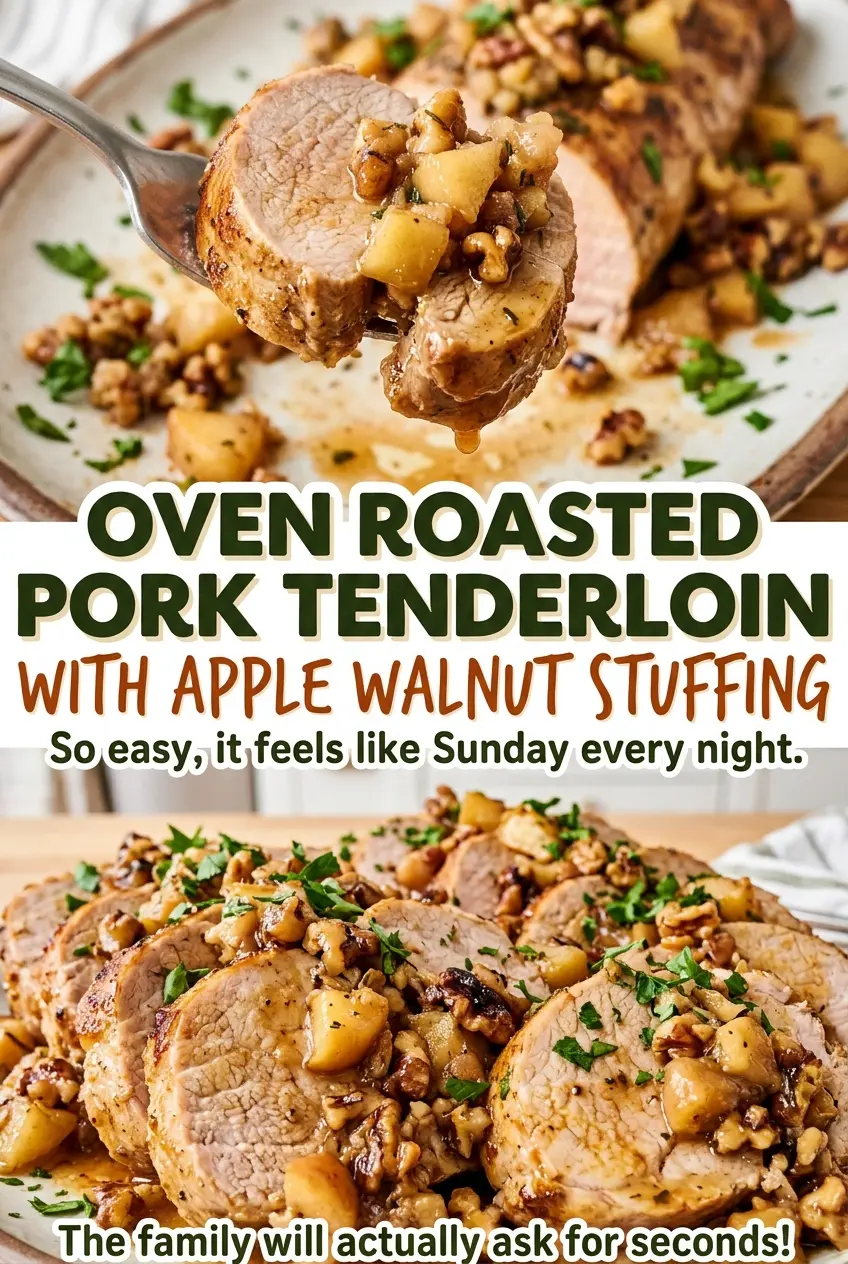
Save this oven roasted pork tenderloin with apple walnut stuffing for a hearty dinner with tender pork and a crisp, savory stuffing top.
Why the Pork and Stuffing Need Different Finish Lines
These two parts share an oven, but they aren’t one roast. The stuffing needs its center to reach 160°F, while the pork is ready at 145°F in its thickest part. Baking the stuffing in a separate dish lets you take each one out when it reaches its own target, rather than leaving the tenderloins in the oven until the stuffing is finished.
The rack positions help the timing work: the uncovered stuffing goes on the lower rack, and the pork sits above it on a rimmed baking sheet. The stuffing’s top gets a chance to turn golden while its middle heats through. Once the stuffing is ready, tent it and let the pork finish if it needs more time. The tenderloins rest before slicing, so the serving board doesn’t end up full of lost juices.
What Dried Bread, Apple, and Walnuts Each Bring
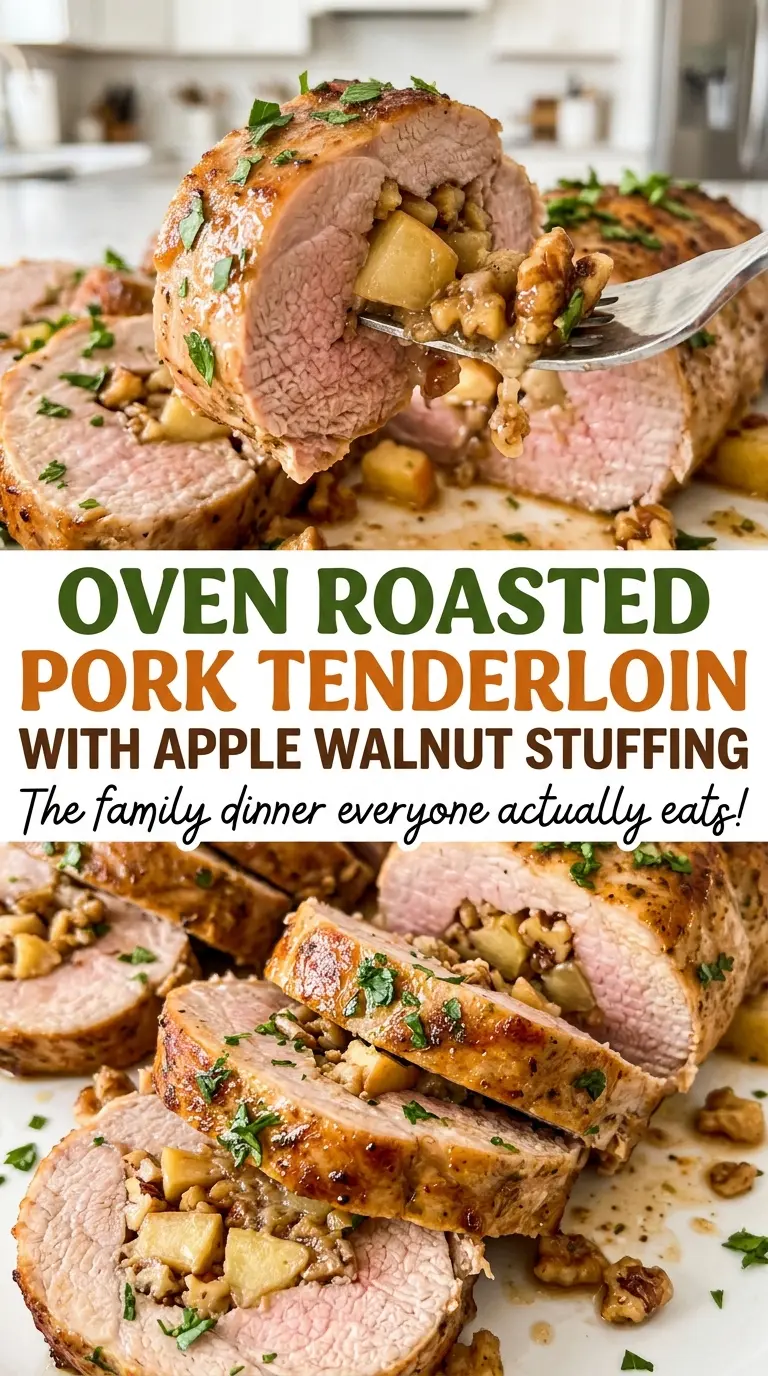
- Dried unseasoned bread cubes — These are the stuffing’s structure. They take in the chicken broth yet stay distinct, while soft fresh bread can collapse into a dense, wet mixture. Unseasoned cubes also let the sage and the dish’s salt level stay balanced.
- Chicken broth — It carries savory flavor into the bread and softens the onion, celery, and apple. A familiar boxed broth works well; the bread absorbs its flavor, so choose one you enjoy tasting on its own.
- Apple — A firm apple holds its shape as it softens, adding a little sweetness and a tender bite. A firm pear, cut into the same small dice, is a useful swap; expect a softer, sweeter fruit note.
- Walnuts — Chopped walnuts give the soft stuffing a distinct crunch. They don’t need to be an expensive specialty variety; use fresh-tasting nuts, since stale walnuts can bring a bitter edge.
- Onion, celery, and dried sage — Cooking them together in butter softens the vegetables and gives the stuffing its familiar savory base. Finely chopping the onion and celery helps them cook through in the short skillet time.
- Egg — The beaten egg helps the moistened bread set into spoonable portions instead of staying loose. Stir it in after the mixture has cooled briefly so it blends through the bread.
- Pork tenderloin — Tenderloin is a relatively lean, narrow cut, which is why it roasts in less time than a larger pork loin. Buy two tenderloins in the listed size range and trim them before seasoning; don’t treat the two cuts as interchangeable.
How to Time the Stuffing and Tenderloins in One Oven
Soften the apple and vegetables
Heat the oven to 400°F and coat an 8×8-inch baking dish with nonstick cooking spray. Melt the salted butter in a 10-inch skillet over medium heat, then add the finely chopped onion and celery, diced apple, and dried sage. Cook for 5–7 minutes, until the vegetables and apple have softened. If the mixture still looks firm, give it the full cooking window rather than moving on early.
Moisten the bread and let it settle
Add the chicken broth to the skillet, bring it to a simmer, and take the pan off the heat. Put the dried bread cubes and walnuts in a large bowl, pour the broth mixture over them, and toss until the cubes are evenly moistened. Let the mixture cool for five minutes, then stir in the beaten egg and transfer everything to the prepared dish. Cover with foil and bake for 20 minutes.
Season the pork while the stuffing bakes
While the covered stuffing is in the oven, pat both trimmed tenderloins dry. Rub them with olive oil, kosher salt, and black pepper, then set them on a rimmed baking sheet. Drying the surface first helps the oil and seasoning cling instead of sliding across damp pork. Have the sheet ready so you can move the pork into the oven as soon as the stuffing is uncovered.
Uncover, roast, and check each center
Uncover the stuffing and return it to the lower oven rack, placing the pork on the upper rack. Roast both for 10 minutes, then continue baking the stuffing in 5-minute increments until its center reaches 160°F and its top is golden; this usually takes about 10–20 minutes uncovered. Remove the stuffing and tent it while the pork continues roasting until its thickest parts reach 145°F, about 18–28 minutes total. Transfer the pork to a cutting board and let it rest for at least three minutes before slicing.
Three Practical Ways to Adapt This Apple Walnut Stuffing
Make the stuffing gluten-free
Use dried unseasoned gluten-free bread cubes and gluten-free chicken broth in place of their standard versions. The stuffing may be a little more delicate, so toss gently when you moisten the cubes and transfer them to the baking dish.
Leave out the walnuts
For a nut-free version, omit the walnuts. The bread, apple, and vegetables still make a cohesive stuffing, though you’ll lose the crunchy contrast; no replacement is needed.
Trade sage for thyme
Use dried thyme in place of the dried sage in the same amount for a more gently herbal stuffing. The apple and walnuts still fit, but the finished dish will taste less like classic sage-seasoned stuffing.
Storage and Reheating
- Refrigerator: Refrigerate the pork and stuffing in separate airtight containers within two hours. They’ll keep for 3–4 days; the pork firms up as it chills.
- Freezer: Freeze the pork and stuffing separately in airtight containers for up to 2–3 months for best quality. Thaw them in the refrigerator before reheating.
- Reheating: Reheat portions in the microwave, loosely covered, until they reach 165°F; stir the stuffing partway through so it heats evenly. Avoid reheating the pork for longer than needed, which can dry out this lean cut.
Questions That Come Up While Making This Pork Dinner
Oven Roasted Pork Tenderloin with Apple Walnut Stuffing
Ingredients
Equipment
Method
- Heat the oven to 400°F.
- Coat an 8x8-inch baking dish with nonstick cooking spray.
- Melt the salted butter in a 10-inch skillet over medium heat.
- Add the yellow onion, celery, apple, and dried sage and cook for 5-7 minutes, until softened.
- Add the chicken broth, bring to a simmer, and remove the skillet from the heat.
- Put the bread cubes and walnuts in a large bowl and pour the broth mixture over them; toss to combine.
- Cool for 5 minutes, then stir in the egg.
- Transfer the mixture to the prepared dish, cover with foil, and bake for 20 minutes.
- While the stuffing bakes, pat the pork tenderloins dry, rub them with the olive oil, kosher salt, and black pepper, and place them on a rimmed baking sheet.
- Uncover the stuffing and return it to the lower oven rack, placing the pork on the upper rack; roast both for 10 minutes.
- Continue baking the stuffing in 5-minute increments until its center reaches 160°F and the top is golden, about 10-20 minutes uncovered.
- Remove the stuffing and tent it while the pork continues roasting until its thickest parts reach 145°F, about 18-28 minutes total.
- Transfer the pork to a cutting board and let it rest for at least 3 minutes before slicing and serving with the stuffing.