

Cranberry Orange Upside Down Cake with Vanilla Glaze
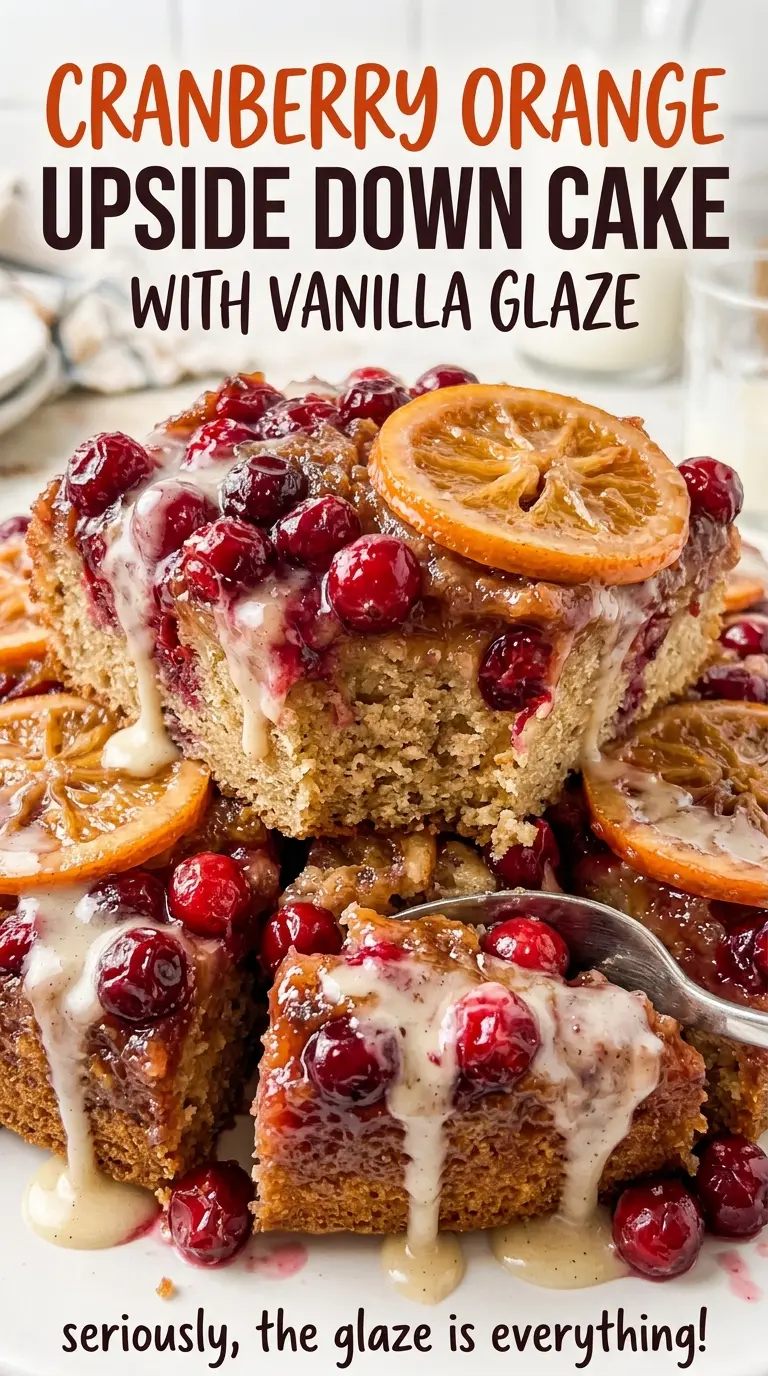
When the cake is turned onto its plate, the cranberries make a glossy red crown with little pockets of brown sugar between them. I like how the first forkful gives…
Tip: save now, cook later.When the cake is turned onto its plate, the cranberries make a glossy red crown with little pockets of brown sugar between them. I like how the first forkful gives you tart fruit and tender cake together, instead of a separate sauce on the side. This cranberry orange upside down cake has a soft crumb, a bright citrus smell, and a thin vanilla glaze that slips into the spaces between the berries. It looks special on the table, but the batter comes together in bowls with a whisk.
I use finely grated orange zest for aroma and orange juice for a lighter citrus tang; the two bring different kinds of orange flavor to the cake. The zest gets whisked into the egg mixture, while the juice goes into the sour cream, so the citrus is spread through the crumb rather than sitting in one sharp spot. That gives the cake a clear orange note beneath the tart cranberry layer, with vanilla glaze adding a gentle finish.

Kitchen Note
I turn the cake out after its 10-minute rest, while the brown-sugar topping is still warm enough to release cleanly. Waiting until the pan is fully cold can let that sticky layer set against the parchment.
Save this cranberry orange upside down cake for a dessert table—the tart cranberry layer, orange-scented crumb, and vanilla drizzle make every slice feel finished.
Why Whole Cranberries Work Better Than a Pre-Cooked Sauce Here
Whole cranberries behave differently from a sauce. They soften as the cake bakes and release some juice into the melted butter and brown sugar beneath them, but they still give you distinct tart bites instead of a uniform layer of jam. That contrast matters: the cake is gently sweet and orange-scented, so the berries bring brightness without needing to be simmered with extra sugar first.
Keep the berries whole and arrange them in one layer before adding the batter. Chopping or cooking them first changes the texture of the topping and brings more moisture into the pan. Fresh cranberries also vary in size, so an even layer matters more than a perfectly arranged pattern. After the cake is inverted, a few berries may shift around; the topping is meant to look generous and a little rustic, not like a sheet of candy.
How Oil and Sour Cream Keep the Orange Crumb Soft
- Neutral oil — Canola or vegetable oil keeps the cake moist and lets you whisk the batter rather than cream softened butter. Avoid strongly flavored oils that would compete with the orange.
- Sour cream — It adds moisture and a gentle tang to the crumb. Thick, plain, full-fat Greek yogurt works in its place in the same amount, though the cake will taste a little tangier.
- All-purpose flour — Spoon it into the measuring cup and level the top; scooping straight from the bag can pack in too much and make the crumb heavy. A cup-for-cup gluten-free baking blend that includes xanthan gum is the most practical alternative, with a slightly different crumb.
- Baking powder and baking soda — Both contribute lift, and the soda works with the acidity in the sour cream and orange juice. Keep both rather than replacing one with more of the other.
- Orange zest and juice — Finely grate the zest and stop before the bitter white pith. Fresh juice is best, but bottled orange juice can provide the liquid if needed; it won’t replace the aroma of fresh zest.
- Fresh cranberries, butter, and brown sugar — Choose firm berries and discard any that are soft or shriveled. Unsalted butter keeps the topping balanced, while dark brown sugar can replace light brown sugar for a deeper molasses note.
- Powdered sugar and vanilla — Powdered sugar gives the glaze its smooth, drizzleable texture. Use vanilla extract you enjoy the taste of, since its flavor comes through clearly in this simple finish.
From Brown-Sugar Base to Clean Cake Release
Set up the pan and cranberry topping
Heat the oven to 350°F. Lightly coat the sides of a 9-inch round, 2-inch-deep cake pan with nonstick cooking spray, then line the bottom with a parchment round. Melt the butter in a small saucepan over low heat and stir in the brown sugar until it’s evenly moistened. Spread that mixture over the parchment, then arrange the cranberries in an even layer.
Whisk the wet and dry mixtures
In a medium bowl, whisk together the flour, baking powder, baking soda, and salt. In a large bowl, whisk the granulated sugar and oil until combined, then whisk in the eggs one at a time and add the orange zest. In a small bowl, whisk the sour cream and orange juice together. Keeping these mixtures separate makes it easier to combine the batter without overworking it.
Alternate the mixtures without overmixing
Add the flour mixture to the egg mixture in three additions, alternating with the sour cream mixture in two additions. Start and finish with the flour mixture. Mix just until no dry flour remains; a few streaks disappearing as you fold are better than beating the batter smooth for too long. Spread the finished batter evenly over the cranberries.
Bake until the center tests clean
Bake at 350°F for 45 to 55 minutes. The cake is ready when a toothpick inserted in the center comes out clean, so test the middle rather than judging doneness by the exposed edges. If the pick comes out with wet batter, give the cake more time and test again. The surface should look set before you take it from the oven.
Invert the cake and add the glaze
Let the cake cool in the pan, then carefully invert it onto a serving plate and remove the pan and parchment. Leave it to cool completely before finishing; glaze on a warm cake can run off or soak into the crumb. Whisk the powdered sugar, milk, and vanilla in a small bowl until smooth. Drizzle the glaze over the cooled cake.
Two Flavorful Ways to Adapt This Cranberry Orange Cake
Make the cake dairy-free
Use plant-based butter in the cranberry topping, thick unsweetened dairy-free sour cream in the cake, and unsweetened plant milk in the glaze. Choose a sour-cream-style product rather than a thin dairy-free drink, so the batter keeps its body. The cake will be a little less rich, but the orange and cranberry still come through.
Trade the orange for lemon
Replace the orange zest and orange juice with finely grated lemon zest and lemon juice in the same amounts. The citrus will taste sharper and more tart, which makes a bright counterpoint to the brown-sugar cranberry topping.
Storage and Reheating
- Refrigerator: Cover the cake and refrigerate it for up to 4 days. The crumb firms up when chilled, and the cranberry topping may soften a little as it sits.
- Freezer: Freeze the cake without glaze, wrapped tightly, for up to 2 months. Thaw it covered in the refrigerator, then add the glaze after it’s fully thawed.
- Reheating: Warm individual slices in the microwave for about 10 seconds if you’d like them less chilled. Longer heating can melt the glaze and make the cranberries very hot.
Questions About Getting This Cake Right
Cranberry Orange Upside Down Cake with Vanilla Glaze
Ingredients
Equipment
Method
- Heat the oven to 350°F.
- Lightly coat the sides of a 9-inch round, 2-inch-deep cake pan with nonstick cooking spray.
- Line the bottom with a parchment round.
- Melt the butter in a small saucepan over low heat.
- Stir in the brown sugar until evenly moistened.
- Spread the mixture over the parchment in the pan.
- Arrange the cranberries in an even layer over the brown sugar mixture.
- In a medium bowl, whisk together the flour, baking powder, baking soda, and salt.
- In a large bowl, whisk the granulated sugar and oil until combined.
- Whisk in the eggs one at a time.
- Whisk in the orange zest.
- In a small bowl, whisk together the sour cream and orange juice.
- Add the flour mixture to the egg mixture in three additions, alternating with the sour cream mixture in two additions and beginning and ending with the flour.
- Mix just until no dry flour remains.
- Spread the batter evenly over the cranberries.
- Bake for 45 to 55 minutes, until a toothpick inserted in the center of the cake comes out clean.
- Cool the cake in the pan for 10 minutes.
- Carefully invert it onto a serving plate and remove the pan and parchment.
- Let the cake cool completely.
- Whisk the powdered sugar, milk, and vanilla extract in a small bowl until smooth.
- Drizzle the glaze over the cooled cake.