

Pecan Praline Sweet Potato Pound Cake with Cream Cheese Glaze
The first thing you notice is the smell of cinnamon and toasted pecans, but the real test comes when the cake releases from the Bundt pan in one piece. A…
Tip: save now, cook later.The first thing you notice is the smell of cinnamon and toasted pecans, but the real test comes when the cake releases from the Bundt pan in one piece. A sweet potato cake can be tender enough to stick if the pan isn’t coated well or the praline filling gets too close to the edges. I keep the pecan mixture tucked inside the batter, where it makes a sweet, nutty ribbon through each slice.
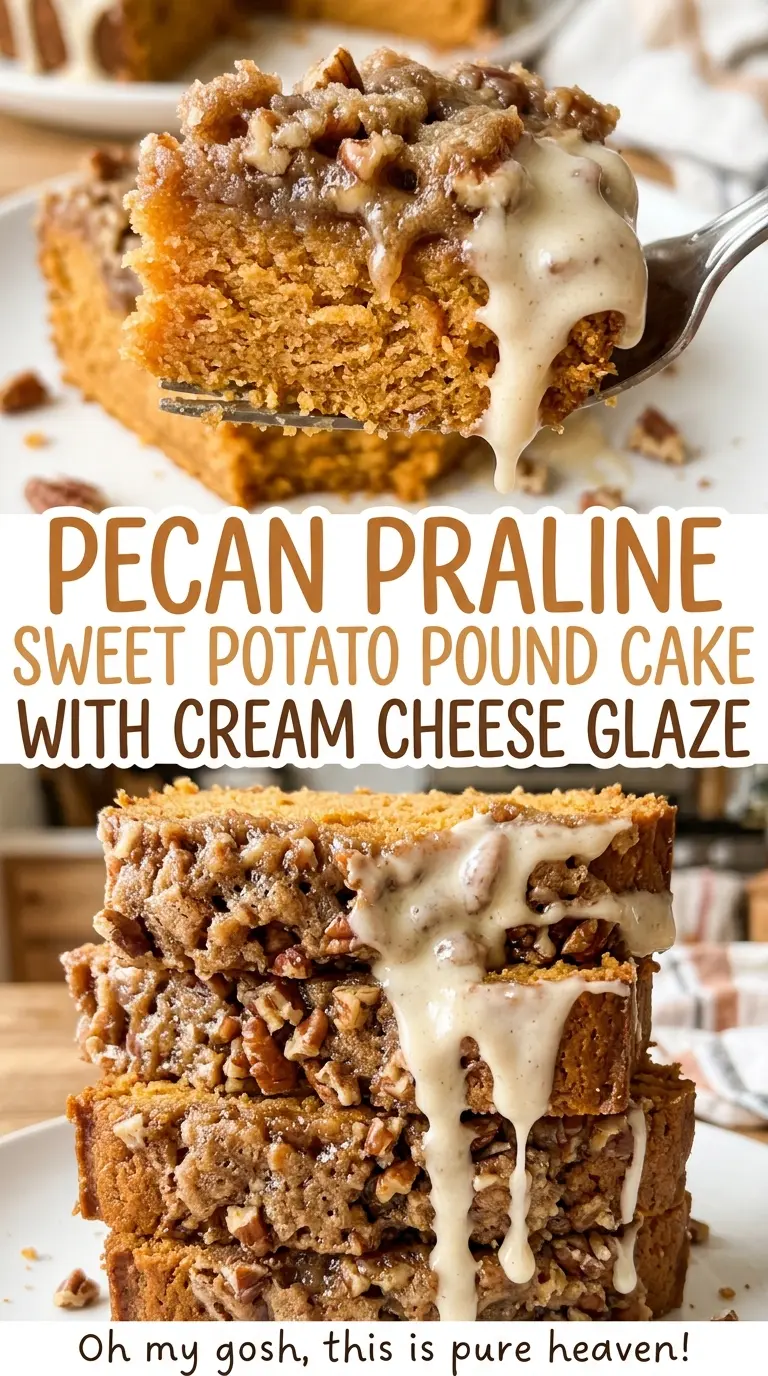
This Pecan Praline Sweet Potato Pound Cake with Cream Cheese Glaze has a close, buttery crumb that stays soft from the mashed sweet potato and sour cream. The sweet potato needs to be cooled and smooth before it goes into the bowl; that way, it blends into the batter instead of leaving dense streaks. A tangy cream cheese glaze finishes the cake without hiding the cinnamon and pecans underneath.

Kitchen Note
Room-temperature eggs and sour cream blend into the butter mixture more smoothly than cold ones. I set them out while I prepare the pan and dry ingredients, so the batter stays cohesive when they go in.
Save this pecan praline sweet potato pound cake for a bake with a buttery crumb, a nutty brown-sugar ribbon, and a tangy cream cheese glaze.
Why the Praline Swirl Can’t Touch the Bundt Pan
The brown sugar in the pecan filling melts as the cake bakes. If that sugary mixture touches the pan’s sides or center tube, it can stick there instead of staying in the middle of the cake. Keeping the filling surrounded by batter gives you a cleaner release and a distinct ribbon in the slices.
One gentle pass with a knife is enough to marble the pecans through the batter. More swirling can spread the filling thinly through the cake, so you lose those pockets of brown sugar and chopped pecans. I aim for a single turn through the middle, not a thorough mix. The layers should still be visible before the pan goes into the oven.
That tucked-in filling also makes the skewer test more reliable: test the cake away from the swirl, where melted sugar could cling to the skewer. A few moist crumbs are fine; wet batter isn’t. Once you know where the filling sits, it’s easier to check the cake without mistaking a sticky pecan for an underbaked center.
What the Sweet Potato and Sour Cream Bring to This Pound Cake
- Sweet potato — Use cooked mash that’s cooled and smooth. Its moisture gives the cake a tender crumb, while lumps can leave uneven patches. The texture matters more than whether the sweet potato was cooked ahead or just before baking.
- Sour cream — It adds moisture and a mild tang that balances the sweet potato and praline. A plain grocery-store sour cream works well here; keep it at room temperature so it blends evenly with the other wet ingredients.
- Unsalted butter — Softened butter creams properly with the granulated sugar and also binds the pecan mixture. Unsalted butter lets the measured salt stay in control. I wouldn’t swap in a spread, which won’t behave the same way when creamed.
- Pecans and light brown sugar — Chopped pecans give the filling its crunch, and packed brown sugar forms the caramel-like pockets. Fresh-tasting pecans matter because the filling is concentrated in the cake; whole or chopped pecans are both fine as long as they’re chopped before mixing.
- Cream cheese and powdered sugar — Softened cream cheese is what makes the glaze tangy and smooth. Powdered sugar gives it a pourable finish without the graininess granulated sugar would bring. Whole milk thins the glaze gradually, so it’s easy to stop when it drizzles cleanly.
The Mixing Order That Keeps This Bundt Tender
Whisk the Flour and Spices Evenly
Whisk the flour, baking powder, baking soda, salt, cinnamon, and nutmeg in a medium bowl. Break up any clumps so the leaveners and spices are spread through the flour before they meet the wet ingredients. This quick mix helps avoid a bite with too much baking soda or a streak of spice.
Cream the Butter and Sugar Until Fluffy
Beat the softened butter and granulated sugar on medium speed for 3 to 4 minutes, until the mixture looks pale and fluffy. This is the main chance to build air into a pound cake, so don’t stop while it still looks dense and yellow. Add the eggs one at a time, then mix in the sweet potato, sour cream, and vanilla until combined.
Add the Flour in Three Passes
Mix in the flour mixture in three additions on low speed. Stop as soon as no dry streaks remain; prolonged mixing after the flour goes in can make the crumb firm rather than tender. Scrape the bowl if flour is clinging to the sides, then mix only until it disappears into the batter.
Layer the Batter Around the Praline
Spread half the batter evenly in the prepared Bundt pan, including the area around the center tube. Sprinkle the pecan mixture over the batter, keeping it clear of both the pan sides and the tube, then cover it with the remaining batter. Draw a knife through the batter once for a loose swirl; repeated passes blur the filling into the cake.
Bake, Release, and Finish with Glaze
Bake at 325°F for 70 to 85 minutes. A long skewer inserted away from the swirl should come out clean or with a few moist crumbs. Cool the cake in the pan for 15 minutes before inverting it onto a wire rack, then let it cool completely. Beat the softened cream cheese smooth, add the powdered sugar and 2 tablespoons milk, and add more milk a teaspoon at a time until pourable; drizzle over the cooled cake and let the glaze set for 15 minutes.
Two Simple Ways to Adapt the Cake
Make a nut-free version without the praline filling
For a nut-free adaptation, leave out the pecans, brown sugar, and the butter reserved for the swirl. The sweet potato cake still bakes as a Bundt, but you’ll miss the crunchy, caramel-like center. Anyone managing a serious nut allergy should also account for cross-contact in ingredients and kitchen equipment.
Skip the cream cheese glaze for a simpler finish
Leave off the cream cheese, powdered sugar, and milk glaze, and serve the cake plain once it has cooled. The warm spices and pecan filling come through more directly, with less sweetness and no tangy finish. The cake’s texture stays the same.
Storage and Reheating
- Refrigerator: Cover and refrigerate the cream-cheese-glazed cake for up to 4 days. The crumb firms up when chilled, so let the serving sit briefly before eating; don’t leave the cake at room temperature for more than 2 hours.
- Freezer: Freeze the fully cooled, unglazed cake tightly wrapped for up to 2 months. Thaw it in the refrigerator while still wrapped, then add the glaze after it has thawed.
- Reheating: This cake doesn’t need reheating. Let a chilled slice lose its refrigerator chill before serving; microwaving can melt the glaze and soften the pecan filling.
Questions That Come Up Before This Bundt Goes in the Oven
Pecan Praline Sweet Potato Pound Cake with Cream Cheese Glaze
Ingredients
Equipment
Method
- Heat the oven to 325°F.
- Generously coat a 12-cup Bundt pan with nonstick baking spray with flour.
- Whisk the flour, baking powder, baking soda, salt, cinnamon, and nutmeg together in a medium bowl.
- Beat 1 cup of the softened butter and the granulated sugar in a large bowl with an electric mixer on medium speed until pale and fluffy, 3 to 4 minutes.
- Beat in the eggs one at a time.
- Mix in the sweet potato, sour cream, and vanilla until combined.
- Add the flour mixture in three additions, mixing on low speed just until no dry streaks remain.
- Mix the pecans and brown sugar in a small bowl.
- Work the remaining 2 tablespoons softened butter into the pecan mixture with a fork until evenly moistened and crumbly.
- Spread half of the batter in the prepared pan, keeping it even around the center tube.
- Sprinkle the pecan mixture over the batter without letting it touch the pan’s sides or tube.
- Cover with the remaining batter.
- Gently swirl once with a knife.
- Bake at 325°F for 70 to 85 minutes, until a long skewer inserted into the cake away from the swirl comes out clean or with a few moist crumbs.
- Cool the cake in the pan for 15 minutes.
- Invert the cake onto a wire rack and let it cool completely.
- Beat the cream cheese until smooth.
- Beat in the powdered sugar and 2 tablespoons milk.
- Add more milk a teaspoon at a time until the glaze is pourable.
- Drizzle the glaze over the cooled cake.
- Let the glaze set for 15 minutes before serving.