
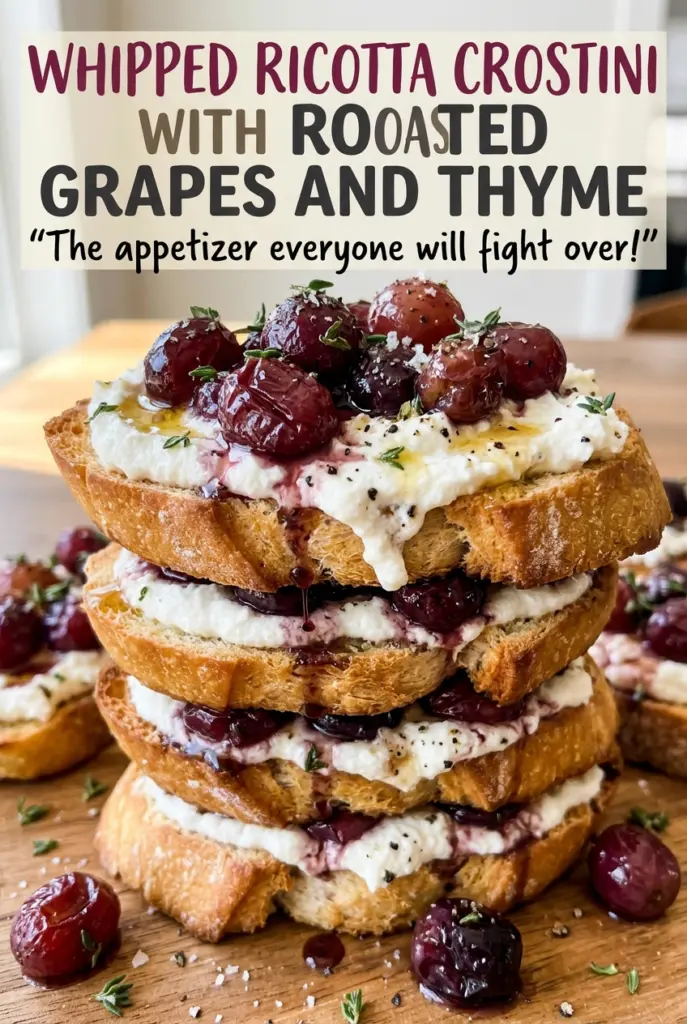
Whipped Ricotta Crostini with Roasted Grapes and Thyme
As grapes roast, their skins start to pucker and a few split, releasing just enough juice to turn the thyme and olive oil glossy. That’s the moment these whipped ricotta…
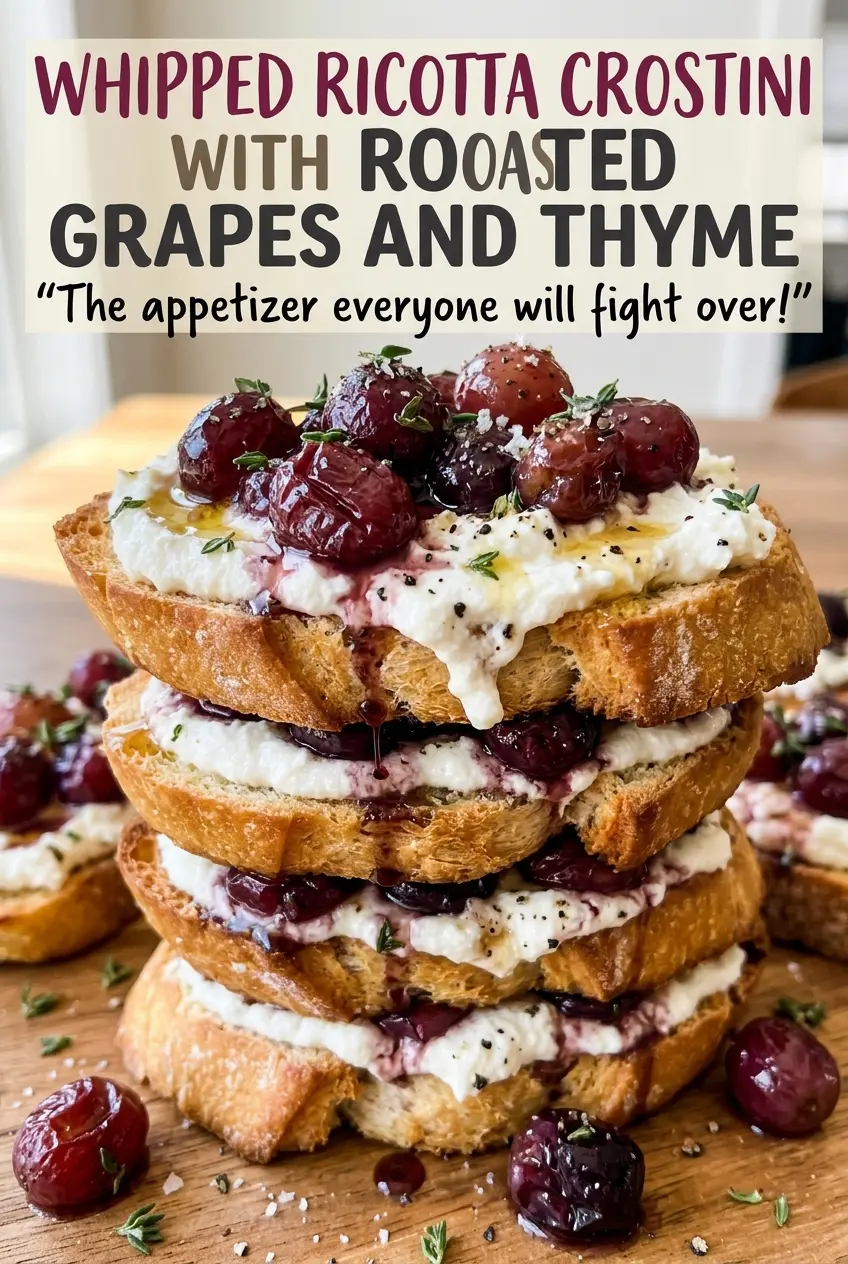
Tip: save now, cook later.As grapes roast, their skins start to pucker and a few split, releasing just enough juice to turn the thyme and olive oil glossy. That’s the moment these whipped ricotta crostini become more than toast with cheese on it: the warm, sweet-tart fruit sits against cool, lemony ricotta, with a crisp slice of baguette underneath.
I make these when I want an appetizer that feels special but doesn’t need a complicated assembly line. The grapes and crostini share the same baking sheet at different stages, and the ricotta takes only a few minutes in the food processor. The recipe serves eight, and the pieces look especially pretty arranged on a platter with the grapes spooned over the white ricotta. Each bite has a crunchy edge, a soft center, and a little honey at the finish.
Kitchen Note
Give the ricotta the full 1 to 2 minutes in the food processor, and scrape down the bowl when it clings to the sides. It should look smooth and creamy, not just stirred together; that texture makes the spread easy to swipe across each crostini.
Save these whipped ricotta crostini with roasted grapes and thyme for an appetizer with crisp bread, creamy ricotta, and glossy fruit.
Why the Grapes Need Their Own Turn on the Baking Sheet
The grapes release moisture as they roast. If they went onto the baguette before that liquid had a chance to collect, it would soak into the toast and soften the part you want crisp. Roasting them first gives the fruit time to blister and split while the bread stays out of the way.
That order also lets you control the texture of both parts. The grape topping can be juicy without turning into a sauce, and the crostini can toast on fresh parchment rather than sitting in the grapes’ oily, thyme-scented juices. It’s a small detail, but it’s what gives you distinct layers instead of a damp piece of bread.
Keep the grapes spread in one layer while they roast so the heat reaches their skins evenly. A few split grapes are a good sign; you don’t need every grape to burst or collapse. They’ll soften further once spooned over the ricotta, and their concentrated sweetness balances the salty, tangy cheese.
Why Whole-Milk Ricotta and a Crisp Baguette Matter
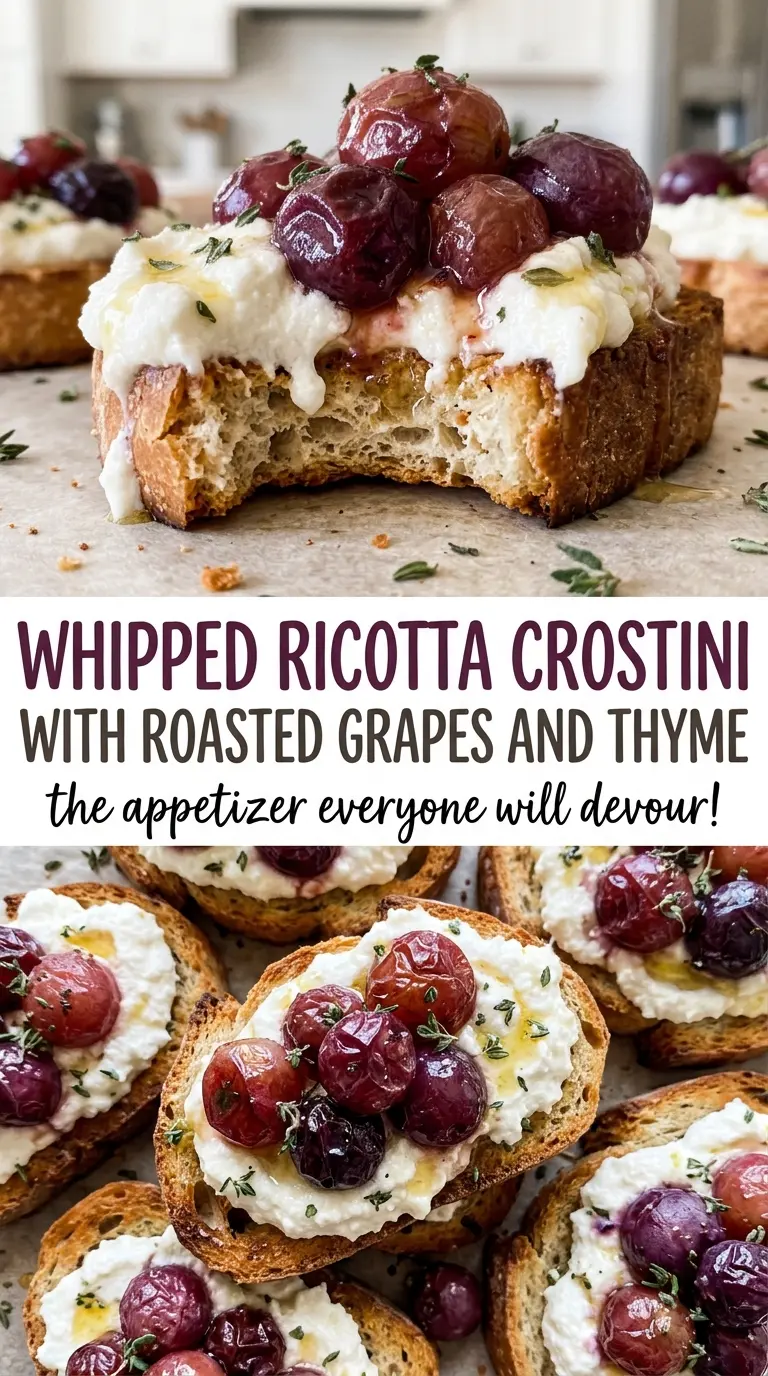
- Whole-milk ricotta — Its fuller, creamier texture gives the whipped spread body without needing another ingredient. A good everyday container works well here; check that it’s fresh and not watery. Part-skim ricotta is usable, but the finished spread will be less rich.
- Seedless grapes — Seedless grapes keep the topping easy to eat on a small slice of bread. Choose firm fruit without wrinkled skins; roasting softens it, so grapes that are already very soft can turn mushy before they blister.
- Fresh thyme leaves — Fresh thyme brings a gentle herbal note that sits behind the roasted fruit rather than taking over. If you don’t have fresh thyme, leaving it out makes a fruitier topping; dried thyme won’t give the same fresh, delicate character.
- Baguette — A baguette’s narrow shape makes tidy, sturdy crostini, and a crisp crust holds the ricotta and grapes. Slice it evenly so the pieces toast at about the same rate. A very soft loaf won’t have the same crisp edge.
- Olive oil — The oil helps the grapes roast and gives the baguette slices an even golden surface. A basic olive oil is fine; there’s no need to use an expensive finishing oil because honey and the roasted fruit bring plenty of character.
- Honey and lemon zest — Honey sweetens the ricotta and adds a final drizzle, while finely grated zest keeps the cheese from tasting flat. A mild honey lets the citrus and thyme come through. Zest only the yellow peel, since the white pith tastes bitter.
Roasting, Toasting, and Whipping Without Losing Texture
Blister the grapes before the bread goes in
Heat the oven to 400°F and line a rimmed baking sheet with parchment. Toss the grapes with 1 tablespoon of olive oil and the thyme right on the sheet, then spread them in a single layer. Roast for 20 to 25 minutes, until the skins blister and some grapes begin to split. If they’re still firm and smooth at the earlier end of that range, give them the remaining time rather than expecting them to soften on the crostini.
Toast on a clean, freshly lined sheet
Transfer the grapes to a bowl and set them aside, then discard the parchment and line the baking sheet with fresh parchment. Arrange the baguette slices on the sheet and brush both sides with the remaining olive oil. Bake for 8 to 10 minutes, turning once halfway through, until the edges are golden. If you skip the turn, one side can stay pale while the other gets too dark.
Let the crostini cool before topping
Leave the toasted slices on the baking sheet for 5 minutes. They’ll firm up as they cool, which makes them easier to spread without bending or breaking. Don’t rush to add ricotta while they’re hot; a warm slice can loosen the cheese and make the topping harder to keep in place.
Whip, spread, and finish with honey
Process the ricotta with 2 tablespoons of honey, the lemon zest, and kosher salt for 1 to 2 minutes, scraping down the sides as needed, until smooth and creamy. Spread the ricotta over each crostini and top with the roasted grapes. Drizzle with the remaining honey just before serving so it lands on the fruit and cheese rather than pooling on the platter.
Small Changes That Shift the Bite
Make the crostini gluten-free
Use a sturdy gluten-free baguette in place of the regular baguette, and brush and toast the slices the same way. Gluten-free breads vary in density, so watch for golden edges within the 8-to-10-minute bake and take them out when they’re crisp without getting brittle.
Let the grapes take the lead
Leave the thyme out of the grape topping for a simpler, more fruit-forward version. The grapes still roast with olive oil, and the honeyed ricotta keeps the bites balanced; you’ll just lose the subtle herbal note.
Set it up as a shared platter
For a more relaxed presentation, arrange the crostini beside a bowl of whipped ricotta and a bowl of roasted grapes, with the honey ready to drizzle. Guests can build each bite themselves, and the bread stays crisp until it’s topped.
Storage and Reheating
- Refrigerator: Store the ricotta and grapes separately in covered containers for up to 3 days. Keep the crostini in an airtight container at room temperature for up to 2 days; they’ll lose some crispness over time.
- Freezer: I don’t recommend freezing assembled crostini. The ricotta can turn grainy as it thaws, and the bread won’t keep its crisp texture.
- Reheating: Re-crisp plain crostini briefly in the oven, then add the cold ricotta and grapes. Don’t reheat the assembled bites, since the topping can soften and slide off the bread.
Questions That Come Up Before You Assemble the Crostini
Whipped Ricotta Crostini with Roasted Grapes and Thyme
Ingredients
Equipment
Method
- Heat the oven to 400°F and line a rimmed baking sheet with parchment paper.
- Toss the grapes with 1 tablespoon of the olive oil and the thyme on the baking sheet, then spread them in a single layer. Roast for 20 to 25 minutes, until the skins blister and some grapes begin to split.
- Transfer the grapes to a bowl and set aside; discard the parchment and line the baking sheet with fresh parchment.
- Arrange the baguette slices on the baking sheet and brush both sides with the remaining 2 tablespoons olive oil. Bake for 8 to 10 minutes, turning once halfway through, until golden at the edges.
- Let the crostini cool on the baking sheet for 5 minutes.
- Process the ricotta, 2 tablespoons of the honey, lemon zest, and salt in a food processor for 1 to 2 minutes, scraping down the sides as needed, until smooth and creamy.
- Spread the whipped ricotta on the crostini.
- Top with the roasted grapes.
- Drizzle with the remaining 1 tablespoon honey and serve.