
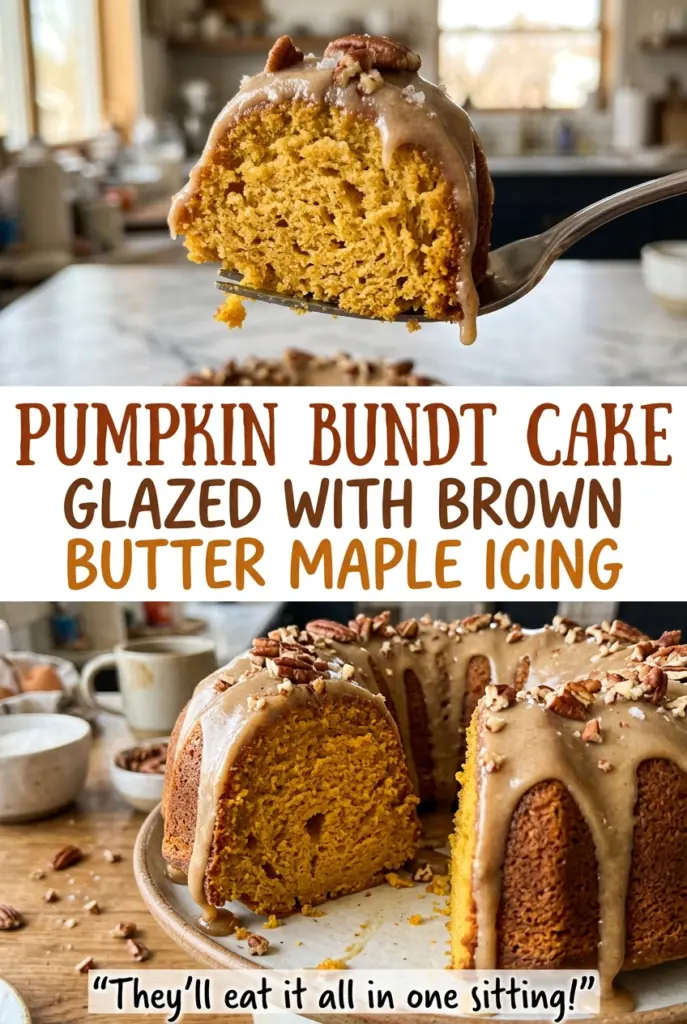
Pumpkin Bundt Cake Glazed with Brown Butter Maple Icing
A Bundt cake can look set around the edges while the center still leaves wet batter on the tester. For this pumpkin cake, a few moist crumbs are the cue…
Tip: save now, cook later.A Bundt cake can look set around the edges while the center still leaves wet batter on the tester. For this pumpkin cake, a few moist crumbs are the cue to pull it from the oven; waiting for a completely clean toothpick can push the crumb toward dry. I check the center carefully, where the deep curve of the pan holds the thickest part of the batter.
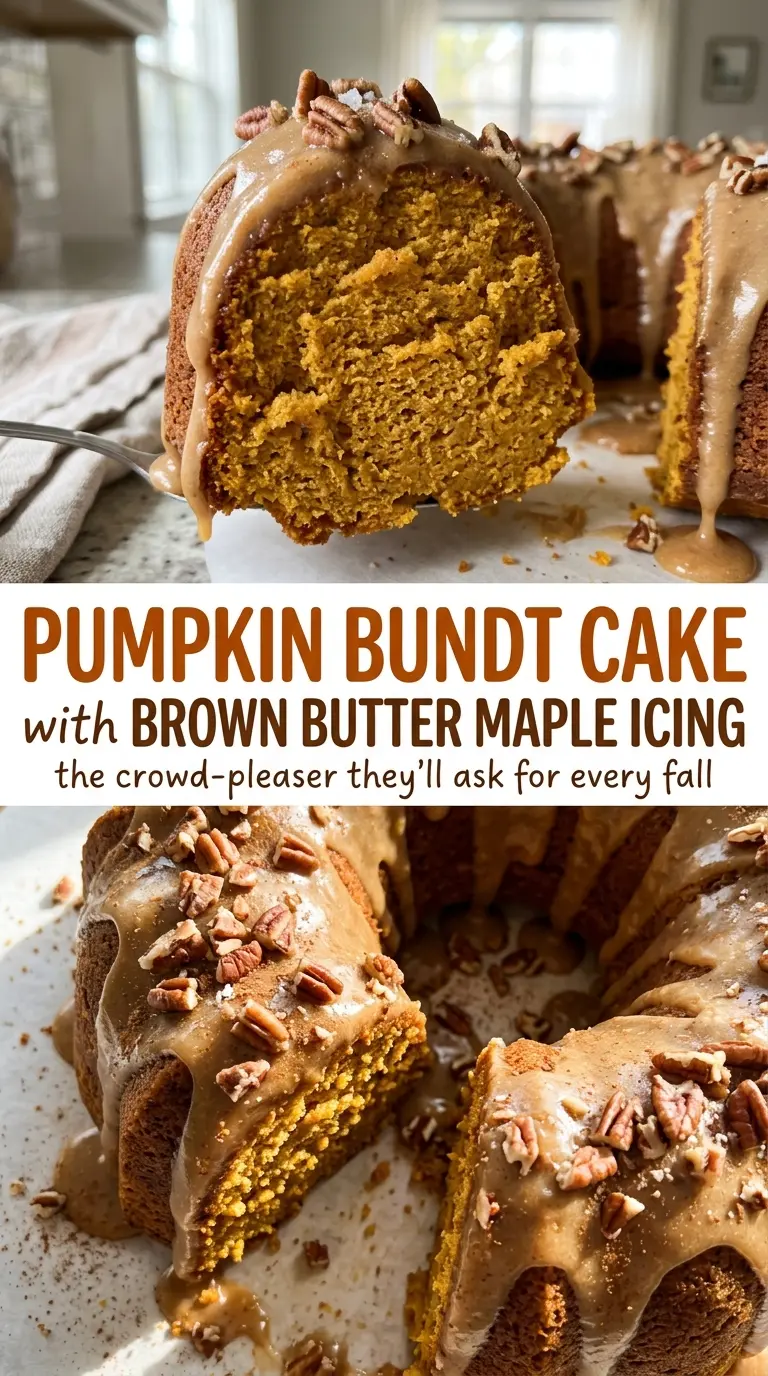
The batter comes together with oil and pumpkin puree, so there’s no butter to soften or cream. I whisk the wet ingredients until smooth, then stir in the spiced flour only until the dry streaks disappear. That gentle finish keeps the cake tender, while the brown butter maple icing brings a toasty edge to each slice. It’s a warmly spiced cake with a soft, close crumb and a glossy ribbon of icing.
Kitchen Note
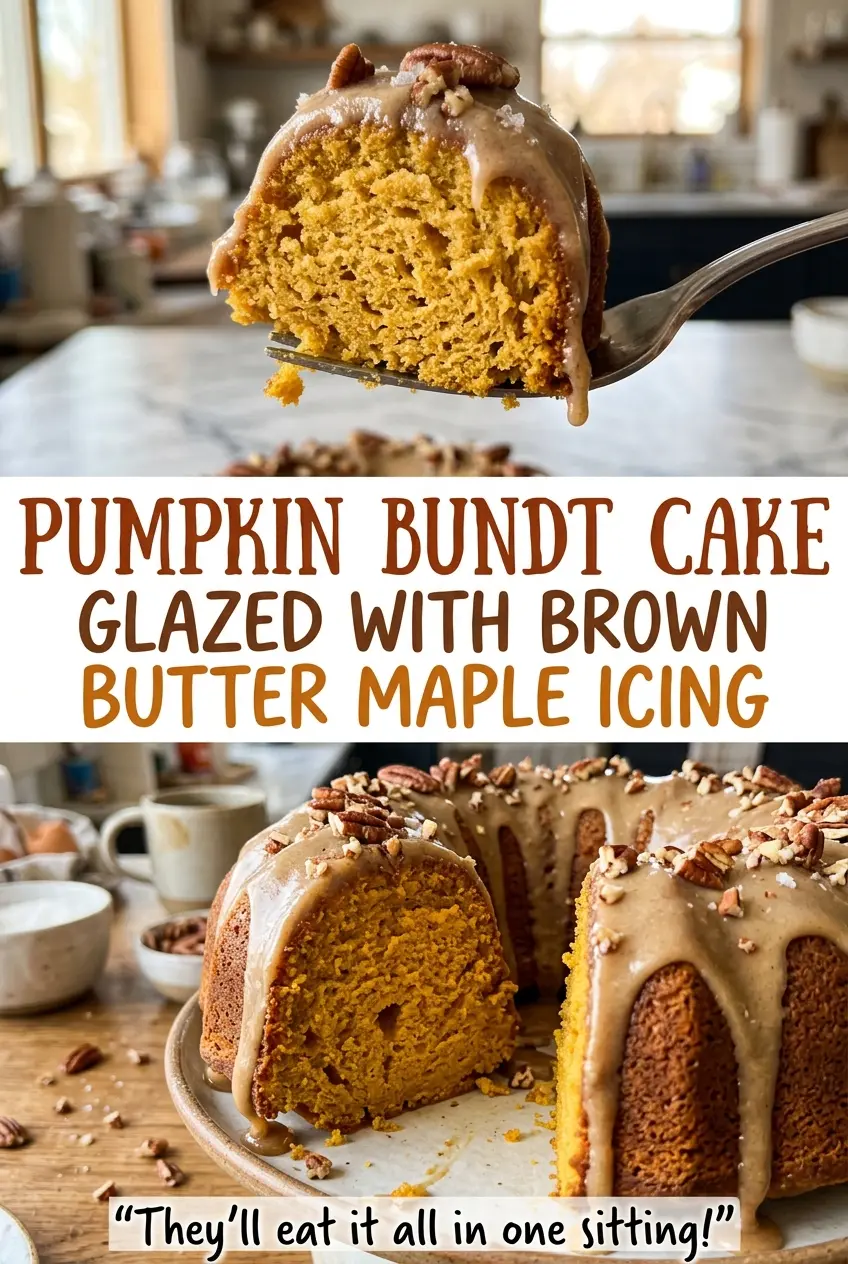
Give the cake 15 minutes in the pan before you invert it. Turn it out too soon and it’s more likely to break; leave it much longer and the sugary edges can cling to the pan.
Save this pumpkin Bundt cake for its tender spiced crumb and brown butter maple icing—the glaze sets into a lovely finish once the cake is cool.
Pumpkin Pie Filling Can Throw Off This Bundt’s Balance
Plain pumpkin puree is doing more than adding pumpkin flavor here. The batter already has granulated sugar and a measured blend of cinnamon, ginger, nutmeg, and cloves. Pumpkin pie filling is sweetened and seasoned, so using it in place of puree changes both the sweetness and spice balance before the cake even reaches the oven.
That swap can also make the result harder to predict because pie filling is formulated for a different purpose. Look for a can labeled pumpkin puree, not pumpkin pie filling. The puree should be thick and spoonable, not watery; if you see liquid pooled in an opened can, stir it back in before measuring so the batter stays consistent. Keeping the pumpkin choice simple lets the separate spices come through without competing with an already-seasoned filling.
What Gives This Cake Its Tender Crumb and Toasty Icing
- All-purpose flour — It gives the cake enough structure to hold the tall Bundt shape without making the crumb heavy. A measure-for-measure gluten-free baking blend is the most practical swap; see the variation below for the detail that matters.
- Baking soda and baking powder — They work together to lift this pumpkin-rich batter. Use both, and replace any container that has been open long enough to lose its lift; one leavener isn’t a like-for-like substitute for the other.
- Ground spices — Cinnamon leads, while ginger, nutmeg, and cloves round it out. Fresh, fragrant spices make a noticeable difference; if yours smell faint in the jar, the cake will taste less warmly spiced.
- Neutral oil — Canola is a good choice because it keeps the pumpkin and spices in front. Another neutral oil works in the same amount, but a strongly flavored oil will announce itself in the finished cake.
- Pumpkin puree — Canned puree is dependable and gives the batter its moisture and color. Homemade puree can vary in water content, so canned is the steadier choice when you want the same soft crumb each time.
- Unsalted butter and pure maple syrup — The butter develops the icing’s nutty aroma, and real maple syrup adds a rounded maple note. If salted butter is all you have, leave the added salt out of the icing; pancake syrup won’t bring the same maple flavor.
- Powdered sugar and milk — Powdered sugar creates a smooth, opaque glaze, while milk lets you control how easily it pours. Add the milk gradually rather than thinning the whole bowl at once.
Mixing, Baking, and Glazing Without Losing the Tender Texture
Whisk the Spices Through the Flour
Heat the oven to 350°F and generously coat a 12-cup Bundt pan with baking spray with flour. Whisk the flour, baking soda, baking powder, cinnamon, ginger, nutmeg, cloves, and salt in a medium bowl until the spices are evenly distributed. If the darker spices sit in little pockets, the baked cake can have unevenly seasoned bites. Mixing them through the flour first spreads them across the whole batter.
Bring the Wet Batter Together Gently
In a large bowl, whisk the eggs and granulated sugar until smooth, then whisk in the oil, pumpkin puree, and vanilla. Add the flour mixture and stir just until no dry streaks remain. A few final turns are better than vigorous mixing once the flour is in; overworking the batter can make the cake less tender. Scrape the batter into the prepared pan and smooth it into the curved channels.
Use the Tester, Then Let the Cake Set
Bake for 50 to 60 minutes, checking the center with a toothpick. It should come out with a few moist crumbs, not wet batter and not completely clean. If the tester is coated in liquid batter, give the cake more time and check again; the center needs to finish baking before you turn it out. Cool in the pan for 15 minutes, then invert onto a wire rack and let it cool completely.
Brown the Butter Before You Build the Icing
Melt the butter in a small saucepan over medium heat, swirling often for 3 to 5 minutes. Watch for golden-brown butter with brown flecks and a nutty aroma; take it off the heat and pour it into a medium bowl as soon as it reaches that point, since it can darken quickly. Whisk in the powdered sugar, maple syrup, salt, and 1 tablespoon of milk until smooth. Add the remaining milk a little at a time until the icing is thick but pourable, then drizzle it over the completely cooled cake and let it set for 15 minutes.
Two Useful Swaps for Different Kitchens
Make the Bundt Gluten-Free
Replace the all-purpose flour with a measure-for-measure gluten-free baking blend that includes xanthan gum, using the same amount. The cake may have a slightly more delicate crumb, so let it cool in the pan for the full 15 minutes before inverting.
Make the Icing Dairy-Free
Use a dairy-free butter alternative and unsweetened plant milk in the icing. Melt the alternative just until liquid rather than waiting for brown flecks, since most dairy-free butter won’t brown like regular butter; the glaze will still carry the maple, but it won’t have the same toasted-butter aroma.
Storage and Reheating
- Refrigerator: Cover the glazed cake and refrigerate it for up to 4 days. The cake will feel firmer when cold; let slices sit at room temperature briefly before serving.
- Freezer: Freeze the unglazed, completely cooled cake, wrapped tightly, for up to 2 months. Thaw it in the refrigerator while wrapped, then add the icing once it’s fully thawed.
- Reheating: No reheating is needed. Let a chilled slice come closer to room temperature; microwaving can melt the icing unevenly and soften the cake too much.
Questions That Come Up Before the First Slice
Pumpkin Bundt Cake Glazed with Brown Butter Maple Icing
Ingredients
Equipment
Method
- Heat the oven to 350°F.
- Generously coat a 12-cup Bundt pan with baking spray with flour.
- Whisk the flour, baking soda, baking powder, cinnamon, ginger, nutmeg, cloves, and salt in a medium bowl.
- Whisk the eggs and granulated sugar in a large bowl until smooth.
- Whisk in the oil, pumpkin puree, and vanilla.
- Add the flour mixture to the pumpkin mixture and stir just until no dry streaks remain.
- Scrape the batter into the prepared pan.
- Bake for 50 to 60 minutes, until a toothpick inserted in the center comes out with a few moist crumbs.
- Cool the cake in the pan for 15 minutes.
- Invert it onto a wire rack and cool completely.
- Melt the butter in a small saucepan over medium heat, swirling often, for 3 to 5 minutes, until golden brown with brown flecks and a nutty aroma.
- Pour the browned butter into a medium bowl.
- Whisk in the powdered sugar, maple syrup, salt, and 1 tablespoon milk until smooth.
- Add the remaining milk a little at a time until the icing is thick but pourable.
- Drizzle the icing over the completely cooled cake.
- Let it set for 15 minutes before serving.