
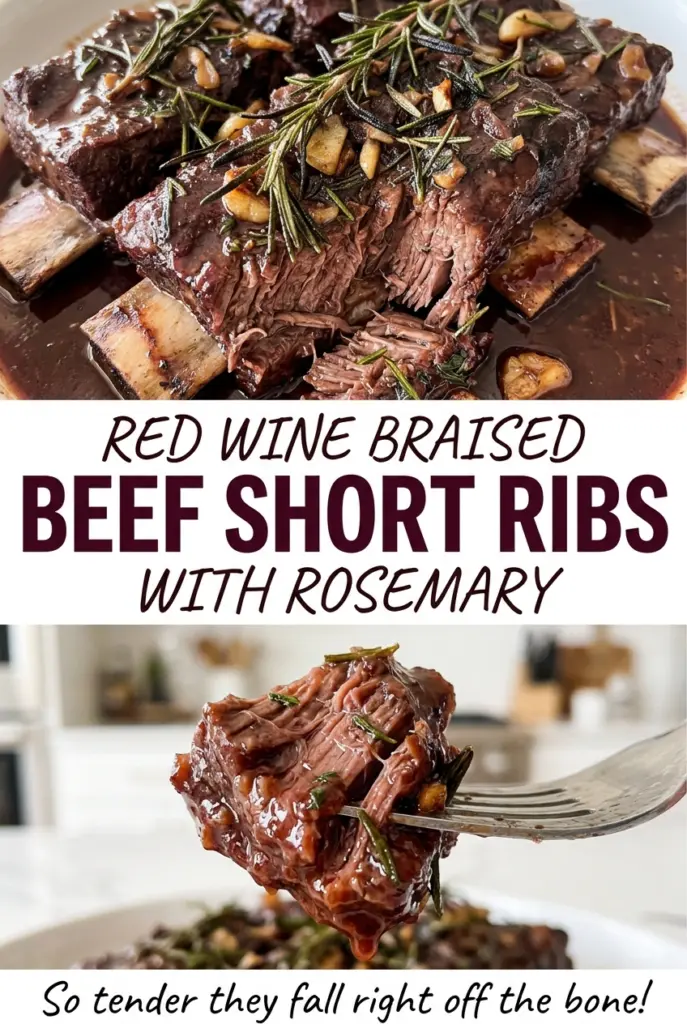
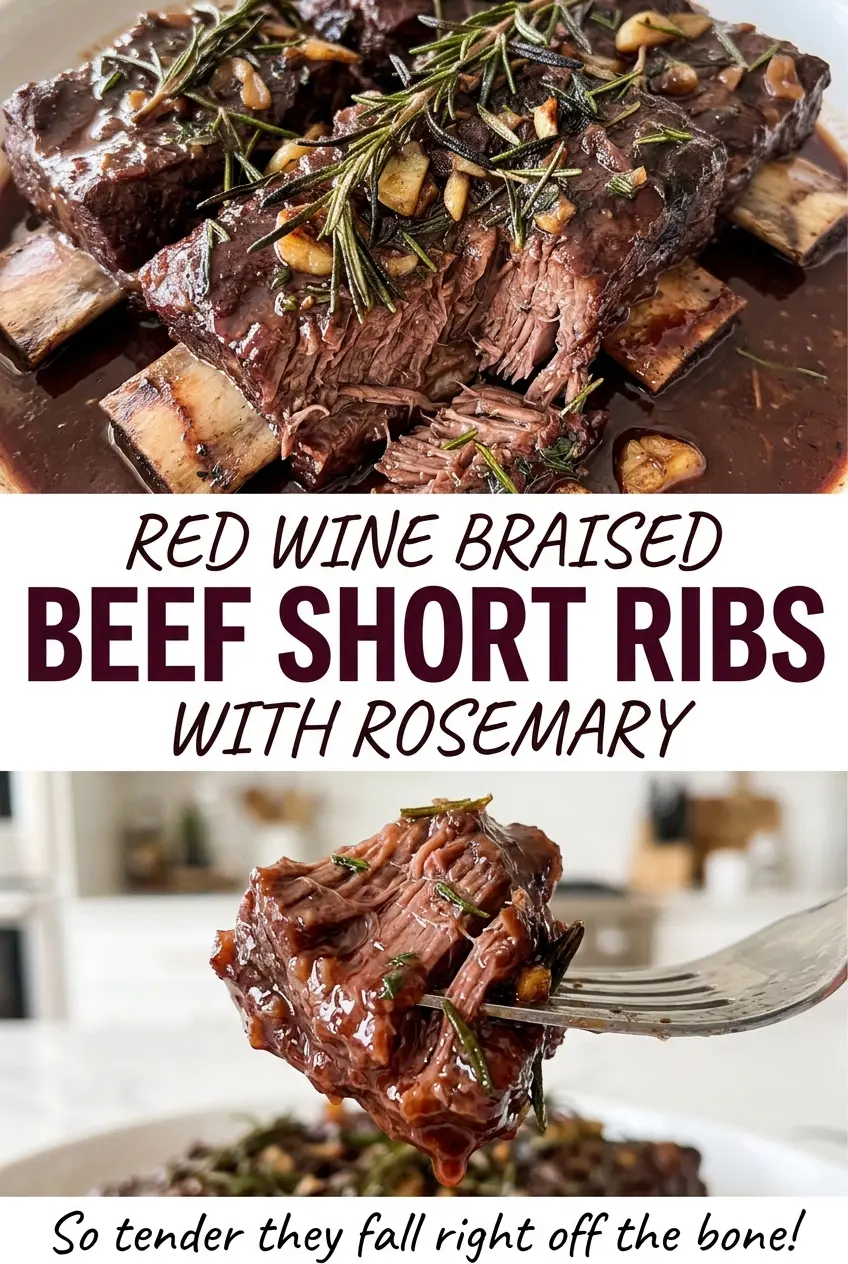
Red Wine Braised Beef Short Ribs with Rosemary
When the red wine hits the hot Dutch oven, it loosens the browned bits left behind by the short ribs and fills the kitchen with a deep, savory smell. That’s…
Tip: save now, cook later.When the red wine hits the hot Dutch oven, it loosens the browned bits left behind by the short ribs and fills the kitchen with a deep, savory smell. That’s the beginning of the sauce for these red wine braised beef short ribs with rosemary, not just a splash of liquid before the pot goes in the oven.
I brown the ribs in batches, then let the vegetables soften in the same pot. After a long, covered braise, the meat turns fork-tender and pulls easily from the bones. The rosemary stays in sprigs, so it lends a woodsy note without leaving little needles in the finished sauce. A final simmer concentrates the cooking liquid into something glossy to spoon over each rib.
Kitchen Note
Pat the ribs dry before they go into the pot. A damp surface sputters in the hot oil and takes longer to brown, so a quick blot with paper towels gives you a better start.
Save these red wine braised short ribs for a slow, cozy dinner—the rosemary-scented sauce is worth every minute in the oven.
Why the Wine Goes in Before the Broth
Pouring in the wine while the pot is still hot gives you a chance to scrape up the browned bits from the bottom. Those bits come from searing the ribs and cooking the vegetables; they dissolve into the liquid and give the sauce a roasted, meaty backbone. If they stay stuck to the pot, that flavor stays out of the braise.
Reducing the wine before adding broth also gives the sauce a better balance. The wine has time to simmer down and lose some of its sharp, raw edge, while the broth brings savory depth without turning the finished sauce into a cup of wine. I use a dry red rather than a sweet one, since the carrots and onion already add a gentle sweetness. The result is a sauce that tastes rounded and rich, not sugary or overly wine-forward.
What the Ribs, Wine, and Rosemary Bring to the Pot
- Bone-in English-cut short ribs — The thick pieces hold together through a long braise, and the bone gives each portion a substantial shape. Look for ribs with meat distributed across the bone rather than mostly exposed bone. Boneless short ribs can work, but their size and shape vary enough that tenderness matters more than following the clock exactly.
- Dry red wine — Choose an affordable bottle that tastes pleasant to drink; there’s no need to spend much. A sweet wine pushes the sauce in a sugary direction, while a dry red keeps the braise savory. For a no-wine version, replace the wine with beef broth; the sauce will be gentler and less complex.
- Low-sodium beef broth — The sauce reduces after the ribs cook, so low-sodium broth gives you more control over how salty it tastes at the end. Unsalted beef broth is a useful substitute if that’s what you have, though you may want to taste the sauce before serving.
- Fresh rosemary and bay leaf — Whole sprigs and a leaf perfume the liquid without making the sauce gritty. Fresh rosemary has a brighter, more resinous scent than dried; if you only have dried rosemary, use a small pinch instead of the sprigs, since dried leaves are more concentrated and disperse through the sauce.
- Tomato paste and the diced vegetables — Tomato paste gives the sauce a deeper, more rounded base, while onion, carrot, and celery build sweetness and savory flavor as they soften. If you’re out of tomato paste, leave it out rather than swapping in a sweet condiment; the sauce will be a little less full-bodied.
The Four Stages That Turn Short Ribs Tender
Brown the Ribs in Batches
Heat the oven to 325°F, season the dried ribs all over with kosher salt and black pepper, and heat vegetable oil in a 7-quart Dutch oven over medium-high heat. Brown the ribs in batches for about 3 to 4 minutes per side, turning to color all sides. Transfer each batch to a plate once it has a deep brown crust. The ribs don’t need to cook through at this stage; the oven braise finishes them.
Soften the Vegetables and Tomato Paste
Add the diced onion, carrots, and celery to the pot, then cook over medium heat, stirring occasionally, until softened, about 5 minutes. Scrape and stir as they cook so the vegetables pick up the browned flavor from the pot. Stir in the minced garlic and tomato paste and cook for 1 minute. The garlic should smell fragrant, not toasted or dark.
Build the Wine-Based Braising Liquid
Pour in the dry red wine and scrape the bottom of the pot to release the browned bits. Simmer for 8 to 10 minutes, until the wine has reduced by about half. Add the beef broth, rosemary sprigs, and bay leaf, then return the ribs and any juices from the plate. Arrange them so they’re partially submerged, rather than covered completely.
Braise Until the Meat Gives Easily
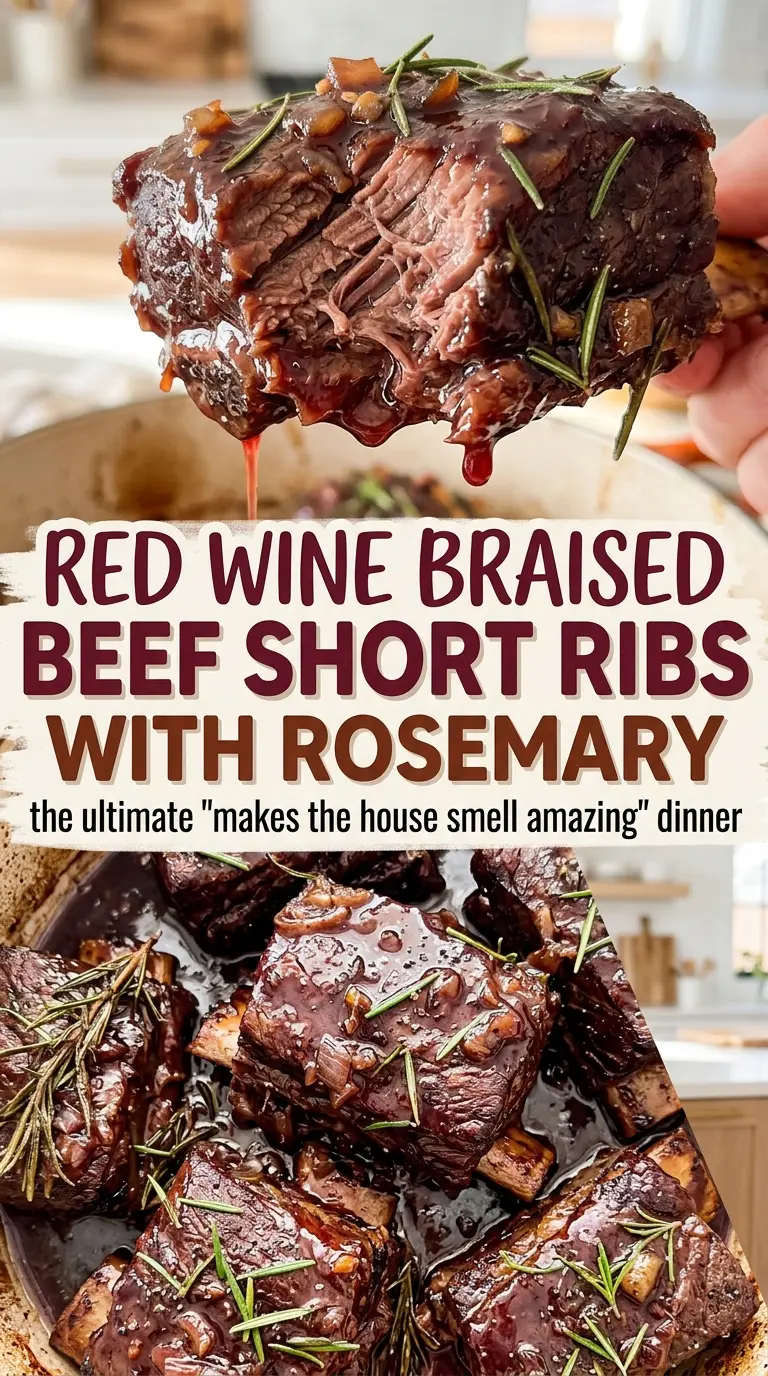
Cover the Dutch oven and braise in the 325°F oven for 3 to 3 1/2 hours. The ribs are ready when a fork slides into the meat easily and the meat pulls away from the bones. Transfer them to a serving platter and tent loosely with foil while you finish the sauce. Discard the rosemary stems and bay leaf, skim the fat from the liquid, then simmer it uncovered over medium heat for 10 to 15 minutes, until slightly thickened; spoon it over the ribs to serve.
Two Easy Ways to Adapt the Braise
A lower-carbohydrate version
Use less of the diced carrots and onion while keeping the ribs, celery, broth, and seasonings in place. The braise still works, but the sauce will have less natural sweetness and a slightly lighter vegetable base.
A softer rosemary note
Use fewer rosemary sprigs if you prefer the wine and beef to lead. The sauce will still have an herbal aroma, just without as much of rosemary’s piney character.
Storage and Reheating
- Refrigerator: Refrigerate within 2 hours and store in an airtight container for 3 to 4 days. The sauce may look firm after chilling as the fat sets.
- Freezer: Freeze the ribs with the sauce in an airtight freezer-safe container for up to 3 months. Thaw overnight in the refrigerator for more even reheating.
- Reheating: Warm gently, covered, in the oven or in a saucepan with the sauce until the center reaches 165°F. Avoid a hard boil, which can break the meat into pieces before it’s warmed through.
Questions That Come Up With Red Wine Short Ribs
Red Wine Braised Beef Short Ribs with Rosemary
Ingredients
Equipment
Method
- Heat the oven to 325°F and pat the short ribs dry; season them all over with the salt and pepper.
- Heat the oil in a 7-quart Dutch oven over medium-high heat, then brown the ribs in batches on all sides, about 3 to 4 minutes per side; transfer them to a plate.
- Add the onion, carrots, and celery to the pot and cook over medium heat, stirring occasionally, until softened, about 5 minutes; stir in the garlic and tomato paste and cook for 1 minute.
- Pour in the red wine, scraping up the browned bits, and simmer until reduced by about half, 8 to 10 minutes; add the beef broth, rosemary, and bay leaf.
- Return the ribs and any accumulated juices to the pot, arranging them so they are partially submerged; cover and braise in the oven for 3 to 3 1/2 hours, until fork-tender and the meat pulls easily from the bones.
- Transfer the ribs to a serving platter and tent loosely with foil; discard the rosemary stems and bay leaf, skim the fat from the sauce, and simmer the sauce uncovered over medium heat for 10 to 15 minutes, until slightly thickened.
- Spoon the sauce over the ribs and serve.