
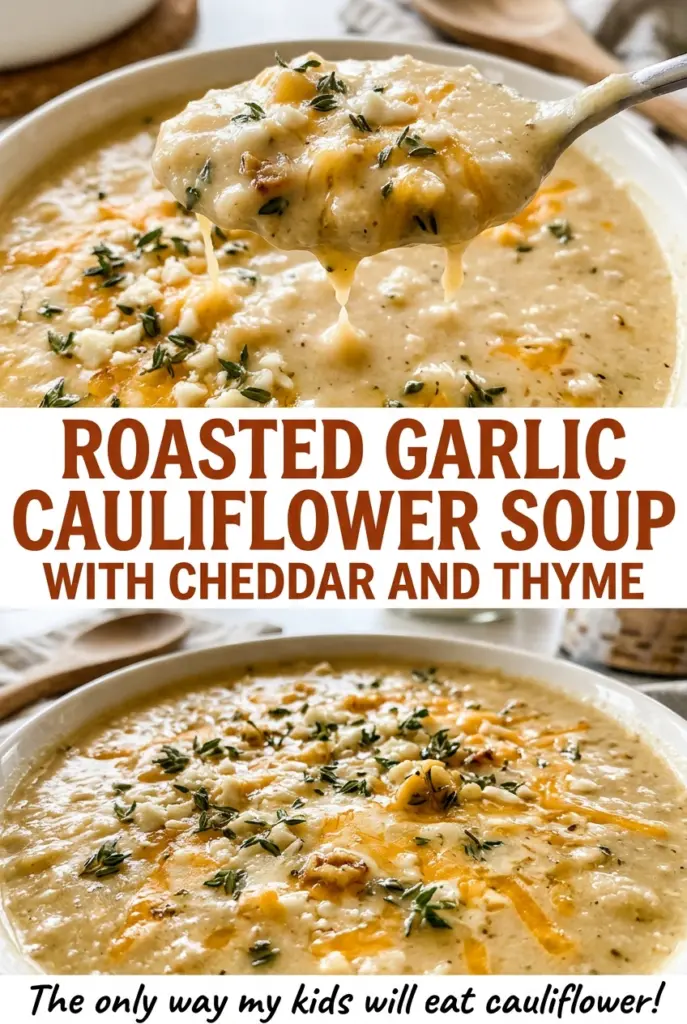
Roasted Garlic Cauliflower Soup with Cheddar and Thyme
When cauliflower comes out of the oven with browned edges, the whole kitchen smells nutty and warm. I roast a whole head of garlic right beside it, so the cloves…
Tip: save now, cook later.When cauliflower comes out of the oven with browned edges, the whole kitchen smells nutty and warm. I roast a whole head of garlic right beside it, so the cloves turn soft enough to squeeze straight into the soup pot. That’s what gives this roasted garlic cauliflower soup with cheddar and thyme its deep, rounded flavor instead of tasting like plain puréed vegetables.
The timing matters: cauliflower needs room on the sheet pan to brown, while the garlic stays wrapped in foil so its cloves soften without scorching. Once both are tender, they simmer with onion, thyme, and vegetable broth before everything gets blended smooth. I stir in the cream and sharp cheddar only after taking the pot off the heat; the cheese melts into a silky soup without boiling. Each spoonful is creamy, savory, and full of roasted garlic.
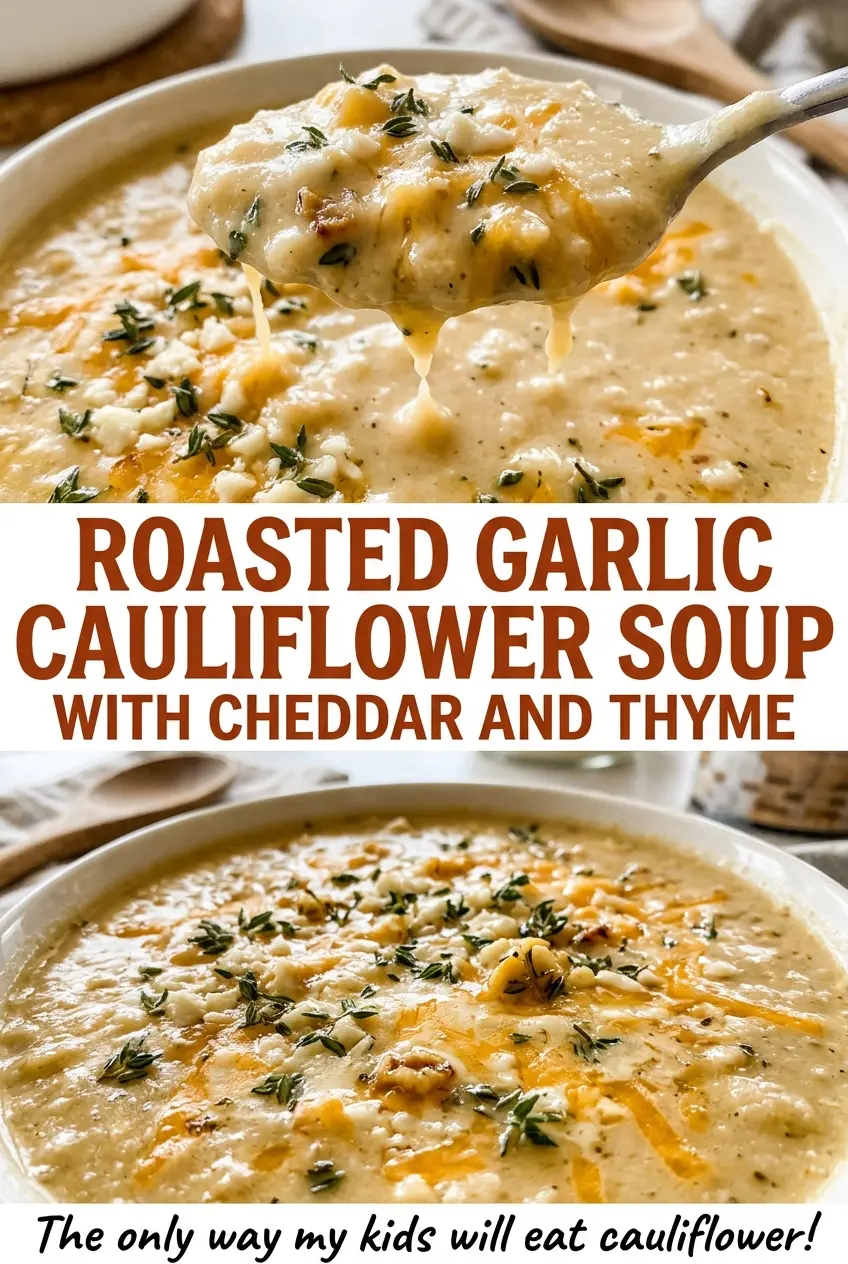
Kitchen Note
Once the soup is blended, take the pot completely off the heat before adding the cream and cheddar. The residual warmth is enough to melt the cheese, and keeping the soup from boiling helps it stay smooth.
Save this roasted garlic cauliflower soup for a cozy bowl of silky cheddar and thyme, with the garlic roasted right alongside the cauliflower.
Why the Garlic Roasts Wrapped While the Cauliflower Browns
These two ingredients need different conditions, even though they share the same oven. Cauliflower is exposed to the hot air so its cut surfaces can turn golden and develop a toasted, nutty taste. The garlic is wrapped in foil, which protects the cloves as they soften. Keeping the garlic covered also means you can roast it alongside the florets without worrying that the exposed cloves will dry out before the cauliflower is ready.
That contrast is what makes the soup taste layered rather than simply creamy. The browned cauliflower brings savory depth, while roasted garlic becomes mellow and soft enough to blend into the broth. Stirring the florets halfway through gives more of their surfaces a chance to meet the pan. Look for tender pieces with browned spots, not pale florets that have only softened. The garlic is ready when the cloves feel soft inside their skins; if either component needs a little more time, use the texture and color cues rather than relying on the clock alone.
What the Cheddar, Cream, and Thyme Each Bring to the Pot

- Cauliflower — The florets provide the body of the soup, so a large fresh head with firm, compact florets is a good choice. Cut them into even 1-inch pieces so they roast at roughly the same pace. Frozen cauliflower tends to release more moisture and won’t brown in quite the same way.
- Garlic — A whole head gives the soup its roasted, mellow backbone. Choose a firm head, trim the top to expose the cloves, and keep it wrapped in foil as it roasts. The soft cloves squeeze easily from their skins once they’re done.
- Sharp cheddar — Sharpness gives the creamy soup enough tang to balance the sweet, roasted vegetables. For the smoothest melt, shred a block yourself; pre-shredded cheese often has a coating that can make the finished soup less silky. Mild cheddar works in the same amount, though the result tastes gentler.
- Heavy cream — Cream rounds out the broth and gives the soup a fuller texture. Half-and-half can stand in at the same amount for a lighter finish, though the soup won’t feel quite as rich.
- Fresh thyme — Its woodsy, herbal flavor works especially well with roasted garlic and cheddar. Strip the leaves from the stems before measuring. If you only have dried thyme, use one teaspoon in place of the tablespoon of fresh leaves.
- Low-sodium vegetable broth — A lower-sodium broth leaves room to season the vegetables without making the finished soup taste too salty. Choose one you like the flavor of on its own; it forms the soup’s savory base.
From Golden Florets to a Smooth, Cheesy Soup
Roast the Cauliflower and Garlic Together
Heat the oven to 425°F. Toss the cauliflower on a rimmed 18×13-inch sheet pan with 1 1/2 tablespoons olive oil, 1/2 teaspoon kosher salt, and 1/4 teaspoon black pepper. Trim 1/4 inch from the top of the garlic head, drizzle the exposed cloves with the remaining 1 1/2 teaspoons olive oil, wrap it in foil, and set it on the pan. Roast for 35–40 minutes, stirring the cauliflower halfway through, until the florets are tender and browned and the garlic is soft.
Soften the Onion with Thyme
While the vegetables roast, melt the butter in a 5-quart pot over medium heat. Add the diced onion, thyme leaves, and the remaining 1/2 teaspoon salt and 1/4 teaspoon pepper. Cook for 6–8 minutes, stirring occasionally, until the onion has softened. Keep the heat at medium and stir now and then so the onion softens without catching on the bottom of the pot.
Simmer the Roasted Vegetables in Broth
Add the vegetable broth and roasted cauliflower to the pot. Unwrap the garlic carefully, then squeeze the softened cloves from their skins into the broth; discard the skins. Bring the soup to a gentle simmer and cook for 10 minutes. A gentle simmer is enough to bring the roasted flavors together, so there’s no need for a hard boil.
Blend Smooth, Then Melt in the Cheese
Remove the pot from the heat and blend the soup with an immersion blender until smooth. Keep the blender head under the surface as you work to limit splashing, especially when you first switch it on. Stir in the heavy cream and shredded cheddar until the cheese melts. Leave the pot off the heat rather than bringing it back to a boil.
Simple Ways to Adjust the Cheddar and Texture
A Less Cheddar-Forward Bowl
Use 4 ounces of sharp cheddar instead of 8 ounces for a lighter cheese presence. The soup will still have a creamy finish, but the roasted cauliflower and garlic will come through more clearly.
A Chunkier Cauliflower Soup
For more texture, set aside some roasted cauliflower before adding it to the pot, blend the soup smooth, then stir the reserved florets back in. You’ll get the same roasted flavor with tender pieces in each spoonful.
A Dairy-Free Adaptation
Replace the heavy cream with unsweetened oat creamer and use plant-based cheddar shreds in place of the dairy cheddar. Choose a cheddar-style product made to melt; the soup will still be creamy, though the cheese flavor and smoothness will depend on the brand.
Storage and Reheating
- Refrigerator: Cool and refrigerate within 2 hours, then store in an airtight container for 3–4 days. The soup may thicken as it chills.
- Freezer: Freeze in airtight, freezer-safe containers for up to 2 months. Cream and cheddar soups can separate or turn slightly grainy after thawing, so the texture may be less smooth.
- Reheating: Thaw frozen soup overnight in the refrigerator, then warm it slowly in a pot over low heat, stirring often. Avoid boiling; high heat can make the cheese and cream separate.
Questions That Come Up While Making This Cauliflower Soup
Roasted Garlic Cauliflower Soup with Cheddar and Thyme
Ingredients
Equipment
Method
- Heat the oven to 425°F.
- Toss the cauliflower on a rimmed 18x13-inch sheet pan with 1 1/2 tablespoons olive oil, 1/2 teaspoon salt, and 1/4 teaspoon pepper.
- Cut 1/4 inch off the top of the garlic head, drizzle the exposed cloves with the remaining 1 1/2 teaspoons olive oil, wrap the garlic in foil, and place it on the pan.
- Roast for 35–40 minutes, stirring the cauliflower halfway through, until the florets are tender and browned and the garlic cloves are soft.
- Meanwhile, melt the butter in a 5-quart pot over medium heat.
- Add the onion, thyme, and remaining 1/2 teaspoon salt and 1/4 teaspoon pepper; cook for 6–8 minutes, stirring occasionally, until the onion is softened.
- Add the vegetable broth and roasted cauliflower to the pot.
- Squeeze the roasted garlic cloves from their skins into the pot, bring to a gentle simmer, and cook for 10 minutes.
- Remove the pot from the heat and blend the soup with an immersion blender until smooth.
- Stir in the heavy cream and cheddar until the cheese is melted; keep the soup off the heat so it does not boil.