
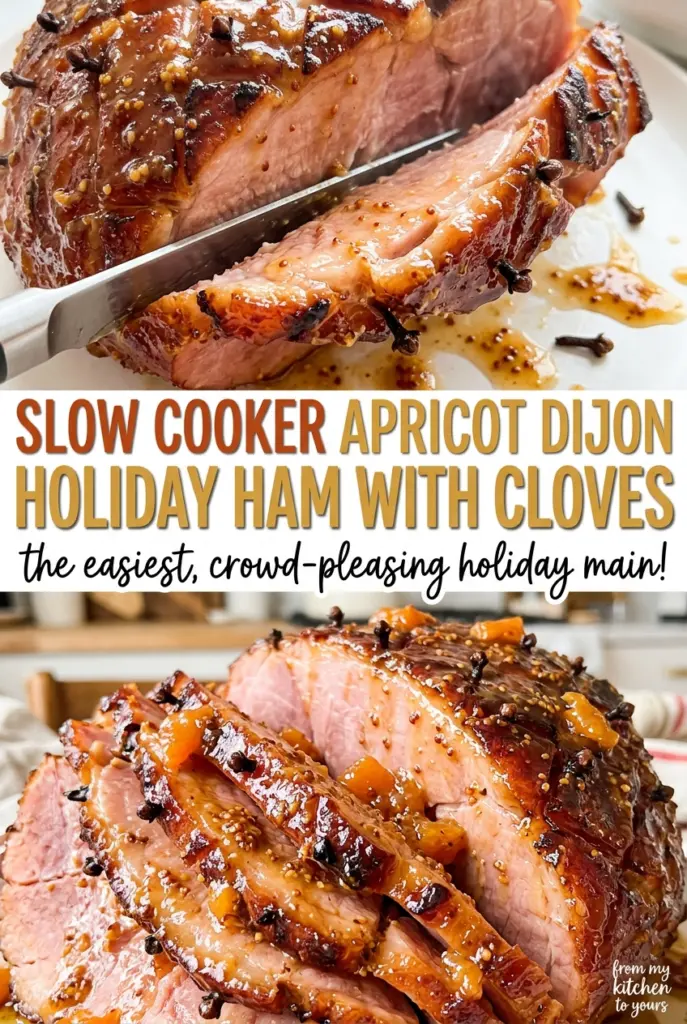
Slow Cooker Apricot Dijon Holiday Ham with Cloves
When I lift the slow-cooker lid, the cider has softened the ham’s edges and the apricot glaze has settled into the scored top. The smell is gently spiced from the…
Tip: save now, cook later.When I lift the slow-cooker lid, the cider has softened the ham’s edges and the apricot glaze has settled into the scored top. The smell is gently spiced from the cloves, with a bright mustard note underneath the fruit. This slow cooker apricot Dijon holiday ham is a good fit when oven space is tight and you want the ham warming while you handle the rest of the meal.
I use a fully cooked, thawed boneless ham, so the slow cooker’s job is to warm it gently rather than cook it from raw. The cider goes around the ham, while the apricot-Dijon glaze stays on top; that gives the ham moisture in the cooker and keeps the glaze’s sweet-tangy flavor front and center. A final spoonful of warm glaze after slicing brings that glossy finish to the table.
Kitchen Note
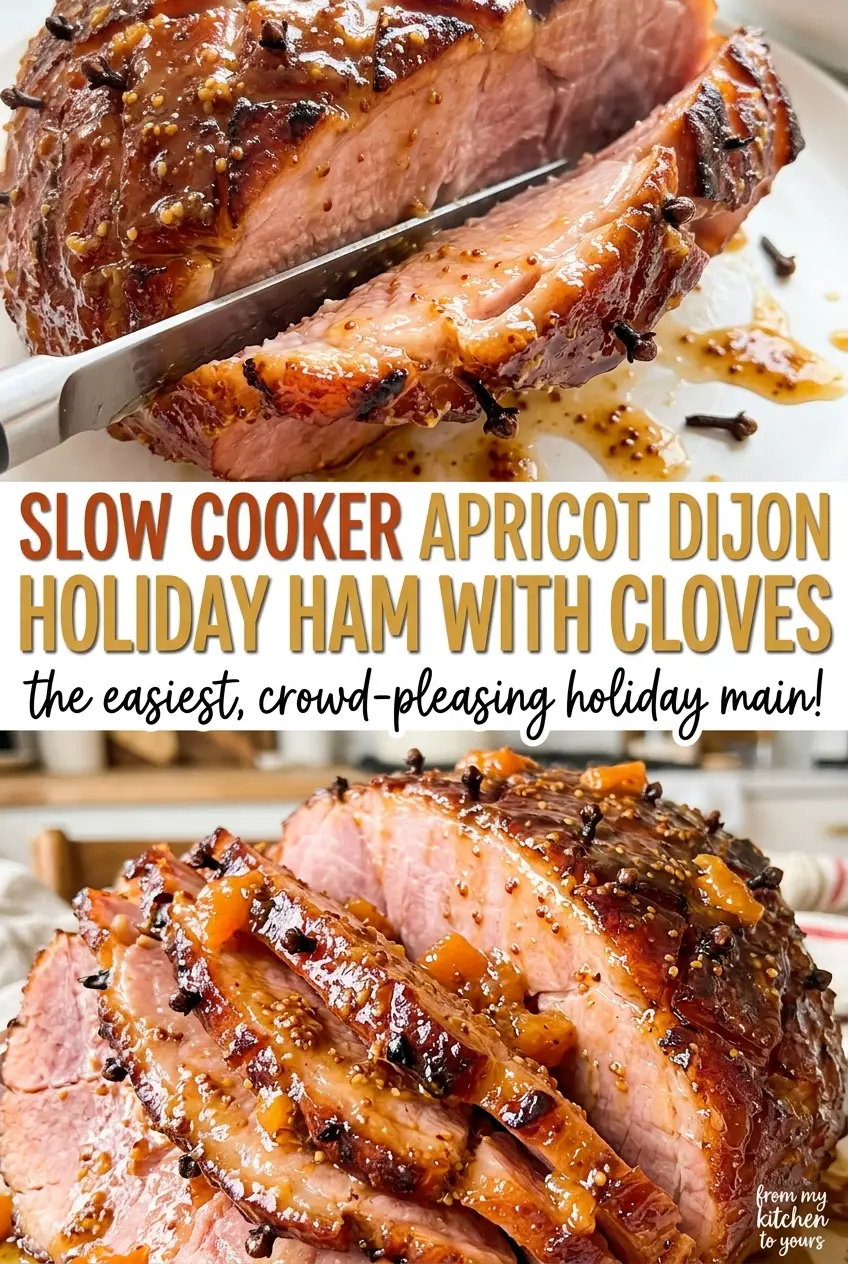
Keep the glaze you’ll serve at the end separate from the portion that goes on the ham. I spoon half over the top before cooking, then warm the reserved half just before slicing for a fresh, pourable finish.
Save this slow cooker apricot Dijon holiday ham for an oven-space-saving centerpiece with warm cloves and a glossy fruit-mustard glaze.
Why Slow-Cooker Ham Needs a Thermometer, Not Just a Timer
A fully cooked ham is already cooked before it goes into the slow cooker. Here, you’re bringing it up to serving temperature without drying it out, and that distinction matters: the clock gives you a useful window, but it can’t tell you the temperature at the center of your particular ham. Shape, starting temperature, and how your slow cooker runs all affect how quickly it warms.
The cider poured around the ham provides moisture in the cooker, while the glaze coats the scored top rather than being diluted into the liquid. Follow the LOW or HIGH time range, then check the center with an instant-read thermometer. Take the ham out when it reaches 140°F. Cooking beyond that point won’t improve a fully cooked ham; it can leave the slices drier, especially toward the edges. That temperature check is the clearest way to get tender slices instead of relying on appearance alone.
How Apricot, Dijon, and Cider Keep This Ham Balanced
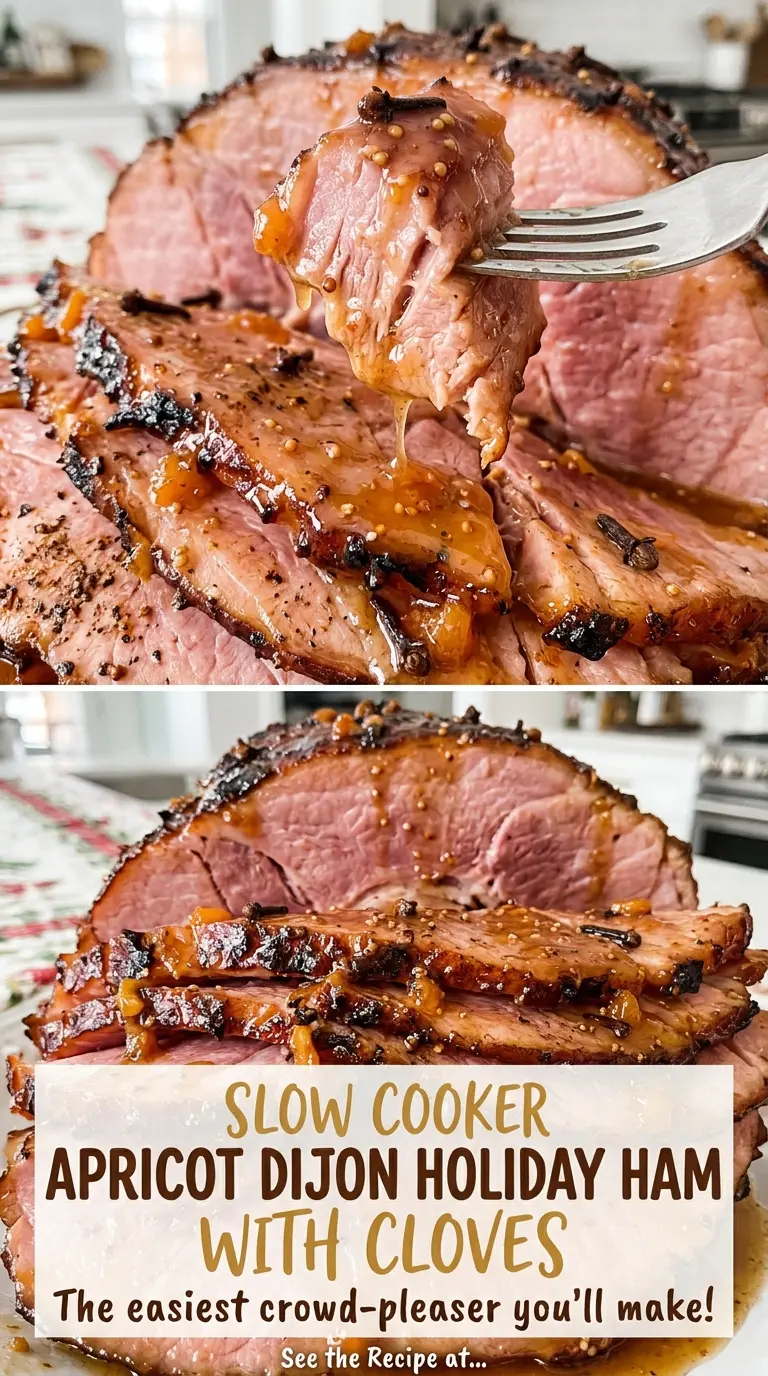
- Boneless ham — Use a fully cooked, thawed ham in the listed size range so it fits the 6-quart slow cooker and warms within the recipe’s time window. A plain ham is a sensible buy here; the glaze supplies the fruit and seasoning.
- Whole cloves — Pressing whole cloves into the scored cuts gives the ham a warm, aromatic note and makes them easy to remove before slicing. Whole cloves are worth using rather than ground cloves, which would disperse through the glaze and be difficult to pick out; if you don’t have them, omit them.
- Apple cider — Cider adds a soft apple note to the liquid around the ham. Apple juice works as a one-for-one replacement, though the result will taste a little sweeter and less complex; either option can come from an everyday grocery-store carton.
- Apricot preserves — The fruit gives the glaze body and a mellow sweetness. A standard jar works well; preserves with fruit pieces will still melt into the glaze as it heats, though the finished texture may be less perfectly smooth.
- Dijon mustard — Dijon brings a sharp, savory edge that keeps the preserves from tasting flatly sweet. Whole-grain mustard can replace it in the same amount for a seedier texture and a slightly gentler mustard flavor.
- Brown sugar and cider vinegar — Packed light brown sugar rounds out the fruit, while cider vinegar brings the acidity that keeps the glaze lively. Dark brown sugar works in the same amount for a more molasses-forward taste; white wine vinegar can stand in for cider vinegar without changing the method.
The Five Stages to Glazed, Tender Slow-Cooker Ham
Score the top and settle the ham in the cooker
Take the ham out of its packaging and cut a shallow diamond pattern across the top. Press the whole cloves into those cuts, then set the ham flat-side down in a 6-quart slow cooker. Pour the apple cider around the ham rather than over its scored surface. Keep the cuts shallow so the top stays intact while the cloves have a place to sit.
Stir the apricot-Dijon glaze until pourable
Combine the preserves, Dijon, packed light brown sugar, and cider vinegar in a small saucepan. Cook over medium-low heat for 3–5 minutes, stirring until the mixture is smooth and pourable. Don’t turn the heat up to hurry it along; gentle heat helps the preserves loosen without scorching at the bottom. Once the mixture moves easily from the spoon, it’s ready for the ham.
Coat the ham and chill the serving glaze
Spoon half of the warm glaze over the top and spread it across the scored surface. Put the other half in a covered container and refrigerate it until serving. Keeping the two portions separate gives you a fresh glaze to spoon over the slices, rather than serving only the coating that has been in the cooker.
Warm the ham to 140°F
Cover the slow cooker and cook on LOW for 4–5 hours or HIGH for 2–3 hours. Check the center with an instant-read thermometer near the end of the time range; the ham is ready when it reaches 140°F. If the center hasn’t reached that temperature, keep cooking and check again rather than slicing early. The thermometer reading matters more than whether the top looks glossy.
Rest, warm the glaze, and slice
Transfer the ham to a cutting board and let it rest for 10 minutes. While it rests, warm the refrigerated glaze in a small saucepan over low heat for 2–3 minutes, stirring until it’s pourable. Remove the cloves before slicing so no one bites into one unexpectedly. Serve the slices with the warm glaze.
Easy Ways to Shift the Apricot-Dijon Glaze
Peach preserves for a softer fruit note
Replace the apricot preserves with the same amount of peach preserves. The glaze stays fruity and spoonable, but the flavor is rounder and less tangy; keep the Dijon and vinegar to retain the savory contrast.
Cranberry preserves for a sharper holiday glaze
Use cranberry preserves in place of the apricot preserves for a more tart, berry-forward finish. The glaze will have a deeper color and a livelier edge against the ham; stir it well as it warms so the preserves blend evenly with the mustard.
A gluten-free version with suitable packaged ingredients
Choose a gluten-free Dijon mustard and gluten-free labeled ham and preserves. The other listed ingredients—apple cider, cloves, brown sugar, and cider vinegar—are naturally gluten-free, so this swap keeps the same sweet-tangy glaze and cooking method.
Storage and Reheating
- Refrigerator: Refrigerate leftover ham within 2 hours in a covered container and use it within 3–4 days. The glaze will firm up when cold, and the ham may be a little less tender after chilling.
- Freezer: Freeze sliced ham in an airtight freezer-safe container or bag for up to 1–2 months for best quality. Freeze extra glaze separately so it’s easy to thaw only what you need.
- Reheating: Warm slices covered in a microwave-safe dish with a spoonful of water or cider, checking that leftovers reach 165°F. Heat only until hot; leaving thin slices in the microwave too long can make them tough.
Questions That Come Up Before the Ham Goes in the Cooker
Slow Cooker Apricot Dijon Holiday Ham with Cloves
Ingredients
Equipment
Method
- Remove the ham from its packaging.
- Score the top in a shallow diamond pattern.
- Press the cloves into the cuts.
- Place the ham flat-side down in a 6-quart slow cooker.
- Pour the apple cider around the ham.
- Combine the apricot preserves, Dijon mustard, brown sugar, and apple cider vinegar in a small saucepan.
- Cook over medium-low heat for 3-5 minutes, stirring, until smooth and pourable.
- Spoon half of the glaze over the ham and spread it across the top.
- Cover and refrigerate the remaining glaze until serving.
- Cover and cook on LOW for 4-5 hours or HIGH for 2-3 hours, until the center of the ham reaches 140°F on an instant-read thermometer.
- Transfer the ham to a cutting board.
- Rest for 10 minutes.
- Meanwhile, warm the reserved glaze in a small saucepan over low heat for 2-3 minutes, stirring until pourable.
- Remove the cloves.
- Slice the ham and serve with the glaze.