
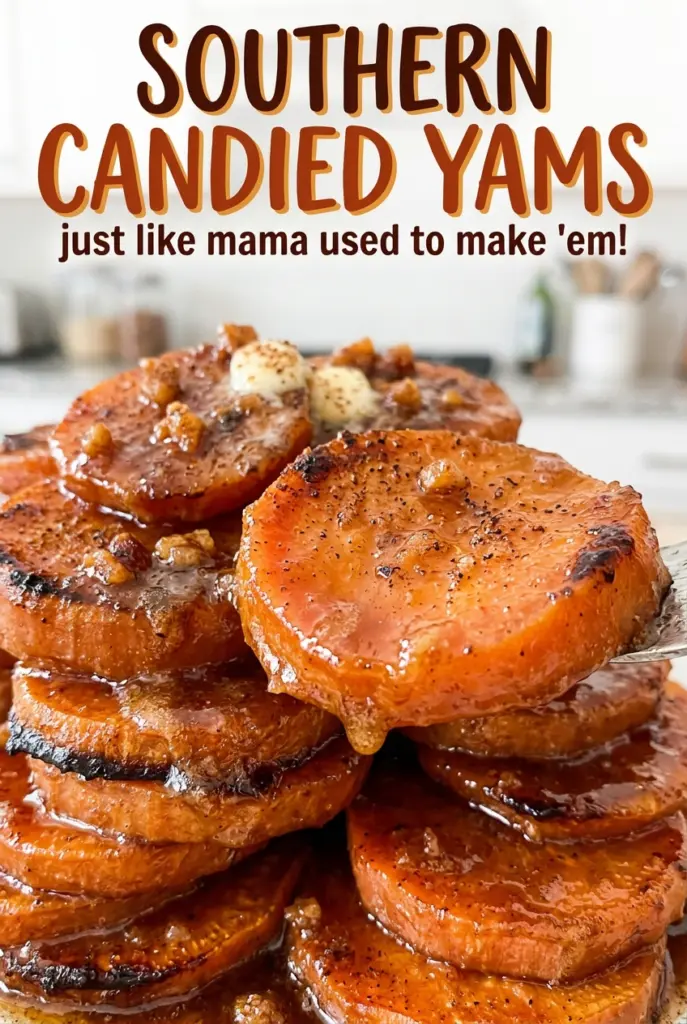
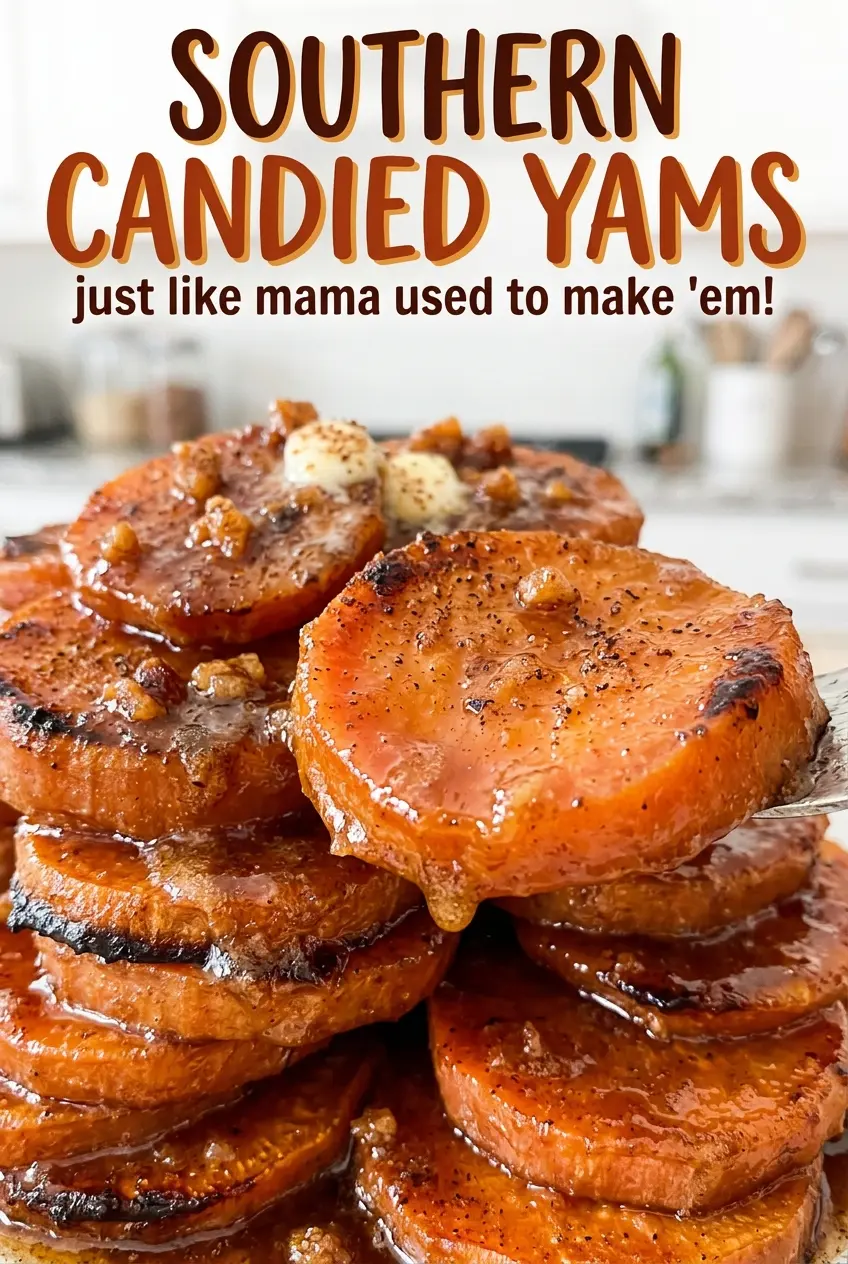
Southern Candied Yams
When the foil comes off, the sweet potatoes are tenderizing in a buttery syrup that still looks thin. Give them their uncovered bake, and the syrup starts bubbling around the…
Tip: save now, cook later.When the foil comes off, the sweet potatoes are tenderizing in a buttery syrup that still looks thin. Give them their uncovered bake, and the syrup starts bubbling around the edges, turning glossy as it coats the rounds. That two-stage change is what I watch for with Southern Candied Yams: soft slices, a spoonable brown-sugar sauce, and no guesswork about when to baste.
I arrange the rounds in a 9×13-inch dish, letting them overlap where they need to, then pour the cinnamon-spiced butter mixture over the top. The covered time lets the potatoes cook through without the exposed edges drying out; the uncovered time concentrates the syrup. Let the dish sit for 10 minutes after baking, too. The syrup thickens a little as it rests, so it clings better when you spoon it over the yams.
Kitchen Note
Baste once as soon as the foil comes off, then again during the uncovered bake. The rounds at the edges can catch less syrup than the ones in the center, so reach into the corners of the dish when you spoon it over.
Save these Southern Candied Yams for a holiday table or Sunday supper: tender sweet potato rounds under a glossy cinnamon-brown-sugar syrup.
Why the Syrup Needs Two Different Oven Stages
The covered bake and the uncovered bake do different jobs. Under foil, the sweet potatoes cook in the moisture from the water and butter mixture, while the covering slows evaporation. If you bake the dish uncovered from the start, the exposed syrup can reduce before the centers of the rounds are tender. Keeping the foil on for the first 40 minutes gives the potatoes time to soften.
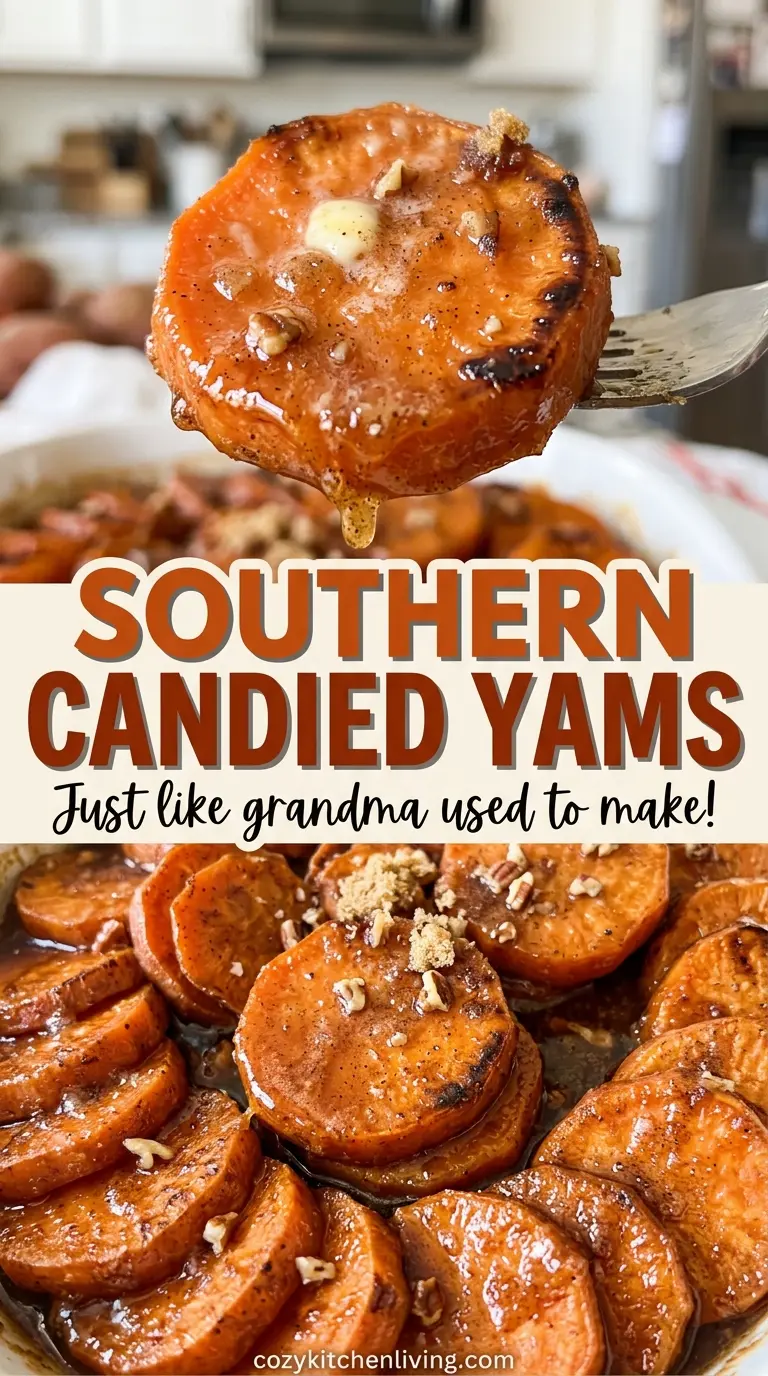
Once the foil comes off, the sauce can bubble and reduce around the potatoes. That’s when it shifts from a loose mixture to a glossy syrup. Look for bubbling across the dish and fork-tender rounds rather than waiting for the sauce to become thick like caramel; it will thicken slightly during its rest, and it should still be easy to spoon. The result has both tender slices and enough syrup to coat them at the table.
The rounds overlap as needed in the dish, so some edges sit above the sauce. Basting during the uncovered bake helps those exposed surfaces pick up the cinnamon-brown-sugar mixture instead of drying out while the liquid concentrates.
What Butter, Brown Sugar, and Water Each Bring to These Yams
- Sweet potatoes — Choose firm sweet potatoes that feel heavy for their size, with no soft spots. Peeling them and cutting evenly thick rounds helps the pieces cook at a similar pace. In the U.S., grocery-store “yams” are often sweet potatoes; this dish uses sweet potatoes, not a separate type of true yam.
- Unsalted butter — Butter gives the syrup its rich, rounded base. Unsalted butter also lets the measured kosher salt do the seasoning, rather than making the salt level depend on the butter brand. Melt it gently over medium-low heat so it’s liquid without browning.
- Light brown sugar — Its molasses notes give the syrup its familiar caramel-like taste and color. Packed brown sugar measures consistently; it should be pressed into the measuring cup rather than loosely scooped. Granulated sugar adds sweetness without adding more molasses flavor.
- Water — Water loosens the butter and sugar mixture so it can spread over the rounds before baking. It also supplies moisture during the covered stage. Don’t leave it out expecting the butter alone to make the same syrup.
- Cinnamon and nutmeg — Cinnamon carries the warm spice through the sauce, while a smaller amount of nutmeg adds a quieter, earthy note. Fresh, fragrant spices make a difference here; if the jars smell faint when opened, the finished syrup will taste less warmly spiced.
- Vanilla extract — Stirring it in after the saucepan comes off the heat keeps its aroma noticeable in the finished syrup. Use vanilla extract rather than omitting it if you want the full warm, rounded flavor.
- Nonstick cooking spray — A light coating helps keep the sugary syrup from sticking hard to the baking dish. Coat the dish before adding the potatoes, especially around the corners.
How to Cook Tender Rounds in a Glossy Syrup
Arrange the potatoes for even baking
Heat the oven to 350°F and coat a 9×13-inch baking dish with nonstick cooking spray. Arrange the peeled sweet potato rounds in the dish, overlapping them only as needed to fit. Try to keep the slices in an even layer rather than piling several on top of one another, since buried pieces have less contact with the syrup. Cut the rounds about 1/2 inch thick so they have time to turn tender during the covered bake.
Stir together the spiced butter mixture
Melt the butter in a medium saucepan over medium-low heat. Take the pan off the heat before stirring in the brown sugar, granulated sugar, water, cinnamon, nutmeg, and salt. Add the vanilla and stir until the mixture is combined. Removing the pan from the burner before adding the sugars keeps the mixture from cooking further on the stovetop.
Cover the dish for the first bake
Pour the butter mixture evenly over the sweet potatoes, aiming to distribute it across the dish rather than leaving one area dry. Cover the dish tightly with foil and bake for 40 minutes. Keep the foil snug around the dish so the covered stage can cook the potatoes in the moist heat. Be careful when you handle the foil afterward; trapped steam escapes as you lift it.
Baste, uncover, and check for tenderness
Carefully remove the foil and spoon the syrup over the rounds. Bake uncovered for 20 to 30 minutes, basting once more during that time. The syrup should be bubbling and glossy, and a fork should slide into the potatoes easily; if a round is still firm, it isn’t ready to serve. Let the dish rest for 10 minutes so the syrup thickens slightly.
Two Ways to Serve the Same Cinnamon-Syrup Yams
Keep the rounds intact for a composed side
Lift the tender rounds into a serving dish with a broad spoon, keeping their shape, then spoon the syrup over them. This presentation shows off the slices and lets each serving include a little glossy sauce. Work gently because fully tender rounds can break if you press or stir them.
Make a softer, spoonable serving
For a more casual serving, gently break a few of the baked rounds with the serving spoon and turn them through the syrup in the dish. The pieces won’t look as neat, but the broken surfaces catch more sauce in each spoonful. Keep the movement gentle so the potatoes stay in tender pieces rather than becoming a mash.
Storage and Reheating
- Refrigerator: Refrigerate leftovers within 2 hours and keep them covered for 3 to 4 days. The syrup will firm up when cold, and the potatoes will be softer after storage.
- Freezer: Freeze cooled yams with their syrup in a tightly sealed freezer-safe container for up to 2 to 3 months. Thaw in the refrigerator; the sweet potatoes may be softer after freezing.
- Reheating: Reheat covered in the microwave in short intervals, spooning syrup over the potatoes between intervals. Avoid heating them uncovered for a long stretch, which can dry the exposed rounds before the center is warm.
Questions That Come Up When Making Southern Candied Yams
Southern Candied Yams
Ingredients
Equipment
Method
- Heat the oven to 350°F.
- Coat a 9x13-inch baking dish with nonstick cooking spray.
- Arrange the sweet potato rounds in the dish, overlapping them as needed.
- Melt the butter in a medium saucepan over medium-low heat.
- Remove the saucepan from the heat and stir in the brown sugar, granulated sugar, water, cinnamon, nutmeg, and salt.
- Stir in the vanilla.
- Pour the butter mixture evenly over the sweet potatoes and cover the dish tightly with foil.
- Bake for 40 minutes.
- Carefully remove the foil and baste the sweet potatoes with the syrup.
- Bake uncovered for 20 to 30 minutes, basting once more, until the potatoes are fork-tender and the syrup is bubbling and glossy.
- Let the yams rest for 10 minutes before serving so the syrup can thicken slightly.