

Hot Honey Brussels Sprouts
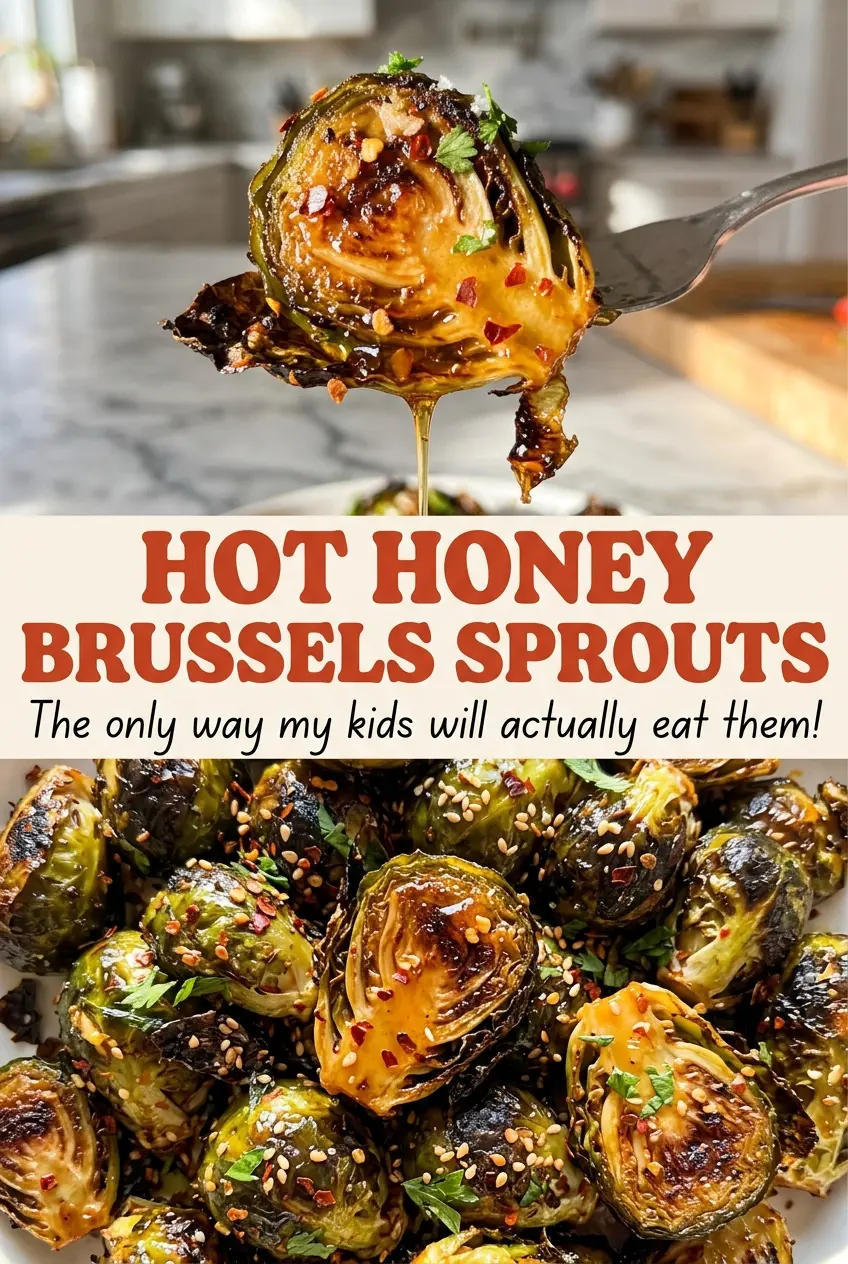
The first thing you notice is the flat side of each sprout: pressed against the hot pan, it turns deeply brown while the rounded leaves soften. I used to flip…
Tip: save now, cook later.The first thing you notice is the flat side of each sprout: pressed against the hot pan, it turns deeply brown while the rounded leaves soften. I used to flip them halfway through, thinking every side needed equal time, but that only got in the way of the best browning. For these Hot Honey Brussels Sprouts, keeping the cut sides down gives you tender centers and browned edges before the honey goes anywhere near the pan.
The sauce comes together separately while the sprouts roast. Honey brings sweetness, butter smooths it out, and hot sauce with a little vinegar and red pepper flakes gives the finish its heat. I keep the saucepan over low heat and stir just until the butter melts; the sauce should be warm and pourable, not bubbling away. Toss it with the sprouts right before serving, and the glossy coating clings to all those browned cut sides.
Kitchen Note
Keep the honey mixture over low heat and take it off as soon as the butter has melted. If it bubbles hard, it can thicken before you have a chance to coat the sprouts evenly.
Save these Hot Honey Brussels Sprouts for a side with browned cut sides and a sweet, spicy glaze.
Why the Cut Side Needs to Stay Put on the Pan
Brussels sprouts have plenty of uneven leaves and folds, so the pan contact matters more than trying to brown every surface. When the flat cut face sits directly on the baking sheet, it has a broad, steady patch of heat to develop color. That browned surface gives the sprouts a deeper, toastier taste to stand up to the honey, while the inside turns tender.
Arrange the halves in a single layer with their cut sides facing down. The sprouts need contact with the pan, not a mid-roast shuffle. Turning them too soon can interrupt browning, and piling them together leaves less room for heat to reach each piece. Use the center rack and let the 425°F oven do its work for the full 20 to 25 minutes, checking for tender sprouts and browned cut sides near the end. If the smaller halves are ready before the larger ones, take those out and give the rest a little more time.
Parchment keeps the roasted sprouts easy to lift off the rimmed baking sheet, but it doesn’t replace the need to arrange them well. Give each half a little breathing room, and keep the cut face flat against the lined surface. That simple setup gives this dish its most important contrast: soft, savory sprouts underneath a sweet-hot coating.
What the Honey, Butter, and Vinegar Each Bring to the Sauce
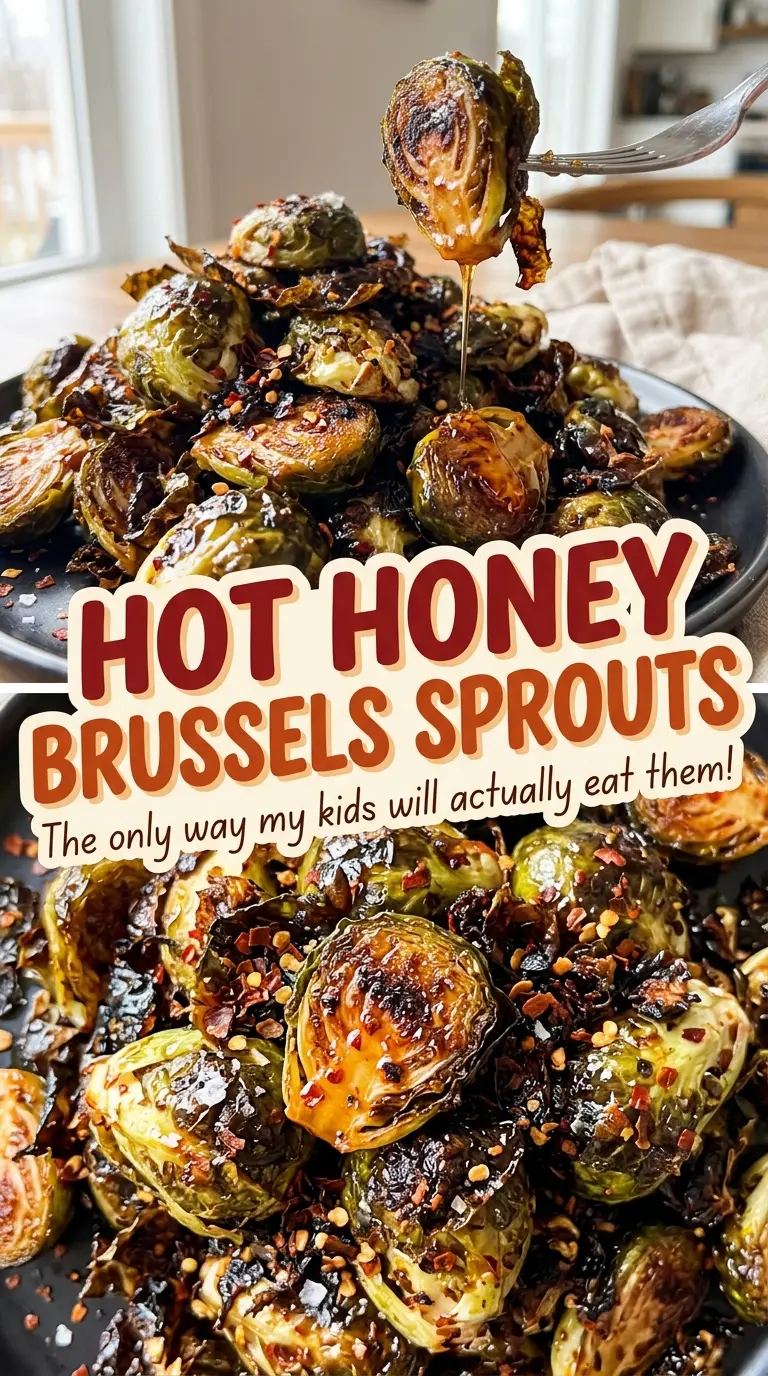
- Brussels sprouts — Choose firm sprouts with tightly packed leaves and trim off the dry stem ends before halving. Similar-sized pieces roast more evenly; especially large sprouts can be cut into quarters so their pieces are closer in size, though halves are the preparation used here.
- Olive oil — It coats the cut surfaces so the sprouts roast rather than dry out. A basic olive oil is fine; there’s no need to use a special finishing oil because the sprouts will be coated with hot honey after roasting.
- Honey — Honey gives the sauce its sweetness and its thick, clingy body. Use a honey you like the taste of, since its character carries through the glaze. A thinner sweetener won’t behave exactly the same way in this sauce.
- Unsalted butter — Butter rounds out the sharp heat and helps the honey mixture coat the vegetables smoothly. Unsalted butter lets the kosher salt on the sprouts stay in balance; salted butter would make the finished dish saltier.
- Hot sauce — The hot sauce supplies a direct, tangy heat, while the red pepper flakes add a separate, lingering peppery note. Brands vary in heat and acidity, so use a familiar bottle if you want to know what kind of kick to expect.
- Apple cider vinegar — A small splash cuts through the sweetness and keeps the sauce from tasting flat. Its fruity tang fits naturally with honey; leaving it out makes the glaze sweeter and less bright.
- Red pepper flakes — These add little bursts of heat throughout the coating rather than only the vinegary heat from the hot sauce. The flakes are easy to leave out if you prefer a gentler finish, without changing how the sauce melts together.
Roast the Sprouts First, Then Coat Them While Hot
Set Up the Halves for Browning
Heat the oven to 425°F with a rack in the center, then line a rimmed baking sheet with parchment paper. Toss the trimmed, halved sprouts with olive oil, kosher salt, and black pepper until the cut surfaces look lightly coated. Spread them cut sides down in one layer rather than letting the halves overlap. Crowding makes it harder for the flat faces to brown evenly.
Roast Until Tender and Browned
Roast for 20 to 25 minutes, keeping the sprouts cut side down. As they cook, the cut faces should turn browned while the centers become tender. Start checking near the end of the time range, since the size of the halves affects how quickly they soften. If the centers are still firm, leave them in until they’re tender rather than relying on color alone.
Warm the Honey Mixture and Toss
While the sprouts roast, combine the honey, butter, hot sauce, apple cider vinegar, and red pepper flakes in a small saucepan over low heat. Stir until the butter melts; the mixture should come together without a hard boil. Transfer the hot sprouts to a serving bowl, pour the warm honey over them, and toss until coated. Serve right away so the glaze is glossy and the browned surfaces remain distinct.
Two Ways to Adjust the Heat or Serve the Glaze
Make the Honey Milder
For a softer heat, leave out the red pepper flakes and use less hot sauce in the honey mixture. The glaze will still be sweet and buttery, with a subtler tang and less lingering spice. Keep the honey, butter, and vinegar together so the sauce still has its rounded, glossy texture.
Put the Hot Honey on the Side
For a less-coated finish, transfer the roasted sprouts to a serving platter and offer the warm honey mixture separately. That lets each person add as much glaze as they like, and leaves more of the roasted vegetable flavor in the foreground. Keep the sauce warm until serving so it stays easy to drizzle.
Storage and Reheating
- Refrigerator: Store leftovers in a covered container for up to 3 days. The sprouts soften as they sit, and the honey coating becomes less glossy.
- Freezer: Freezing isn’t recommended; thawed Brussels sprouts tend to lose their firm texture, and the coated surface can turn watery.
- Reheating: Warm leftovers in the oven until heated through. The sprouts won’t be as crisp-edged as they were fresh, and microwaving can soften them further.
Questions That Come Up When Roasting Brussels Sprouts
Hot Honey Brussels Sprouts
Ingredients
Equipment
Method
- Heat the oven to 425°F.
- Arrange a rack in the center.
- Line a rimmed baking sheet with parchment paper.
- Toss the Brussels sprouts with the olive oil, salt, and black pepper.
- Spread them cut sides down on the baking sheet and roast for 20 to 25 minutes, until tender and browned on the cut sides.
- While the sprouts roast, combine the honey, butter, hot sauce, vinegar, and red pepper flakes in a small saucepan over low heat and stir until the butter melts.
- Transfer the hot sprouts to a serving bowl.
- Pour the hot honey over them.
- Toss to coat.