
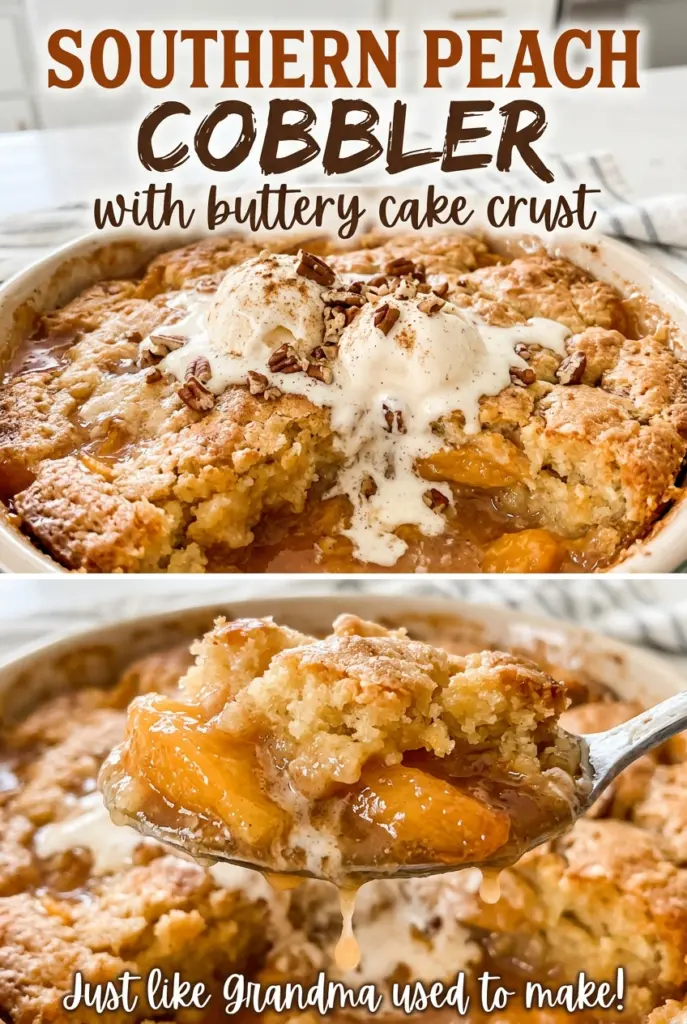
Southern Peach Cobbler with Buttery Cake Crust
When the melted butter spreads across the bottom of the baking dish, it looks like a lot to pour cake batter over. That’s exactly the setup for this Southern peach…
Tip: save now, cook later.When the melted butter spreads across the bottom of the baking dish, it looks like a lot to pour cake batter over. That’s exactly the setup for this Southern peach cobbler with buttery cake crust: the batter goes over the butter, then the peaches and their juices are spooned across the top. Nothing gets stirred together, so the finished cobbler has tender fruit tucked into a golden cake layer.
I like this style because the crust is made from a quick batter rather than rolled dough. The peaches get a brief cook on the stove before they meet the batter, and the whole dish finishes in the oven. Once the top is golden and the peach filling is bubbling, let the cobbler rest before serving. The result is soft, buttery cake with warm peaches in every spoonful.
Kitchen Note
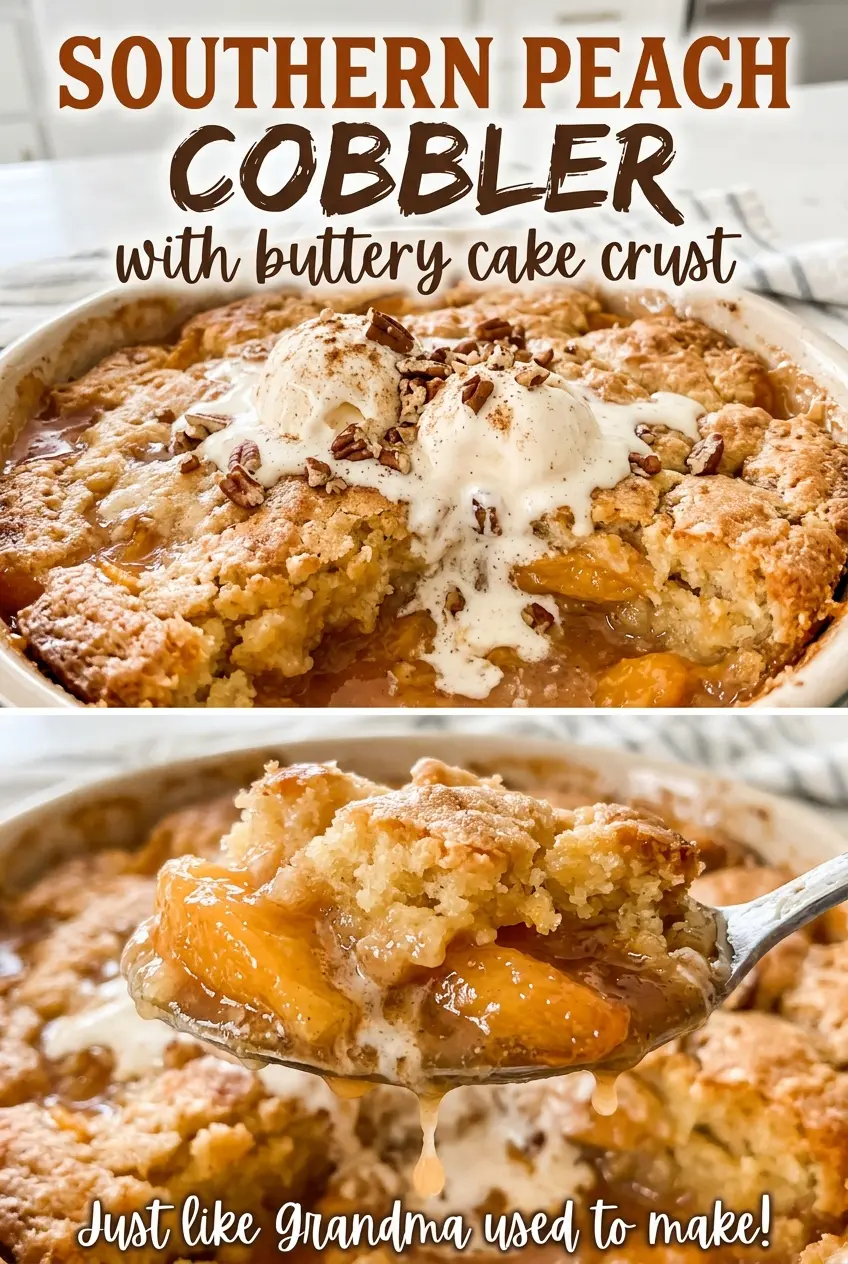
Give the cobbler its full 20-minute rest before scooping. The fruit juices settle into the cake as it cools, so the first serving holds together better than one lifted straight from the oven.
Save this Southern peach cobbler with buttery cake crust for ripe peach season, when a bubbling fruit layer and golden, tender topping are exactly what you want.
Why the Peach Filling Goes on the Stove Before the Oven
Peaches release plenty of juice as they heat. If that liquid goes straight into the baking dish, it has to thicken while the cake batter is baking around it, and the center can stay loose even when the top looks ready. Cooking the fruit briefly first gives the cornstarch a chance to thicken the juices before the layers go into the oven.
That short stovetop step also gives you a useful checkpoint: the peach mixture should bubble and look thicker before you take it off the heat. Stir gently so the fruit stays in slices, and spread the cornstarch evenly through the ingredients at the start. A few minutes of attention here gives the filling a head start; the oven then finishes the cake and brings the fruit layer to a bubbling finish. It’s a small difference in method, but it helps the two parts bake together instead of leaving a watery puddle beneath the crust.
The Ingredients That Keep the Peach Layer Juicy and the Crust Tender
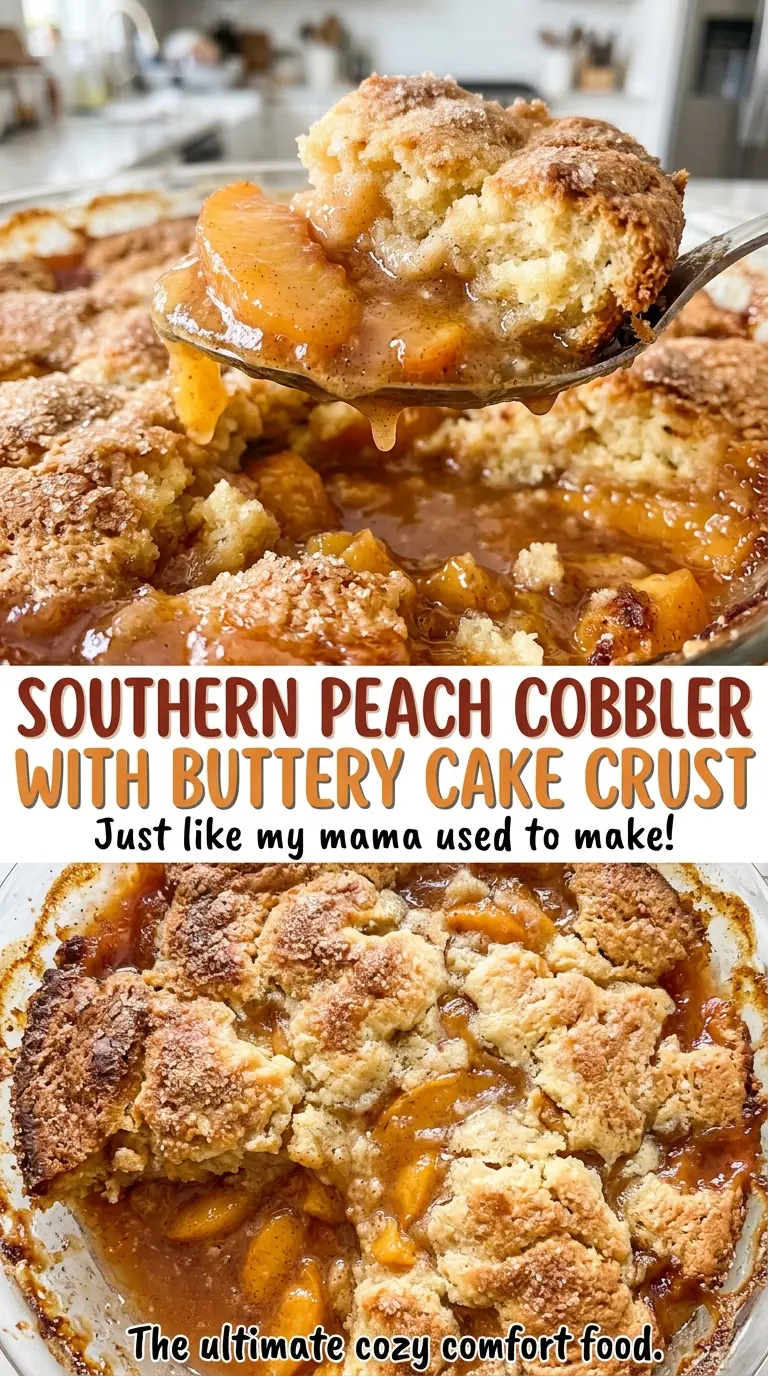
- Ripe peaches — Good, ripe fruit brings the peach flavor and juice that make the filling. Peel, pit, and slice them before they go into the saucepan; underripe peaches tend to be less sweet and firm in the finished cobbler. There isn’t a direct fruit swap that keeps this specifically peach-forward result.
- Cornstarch — This thickens the peach juices. Distribute it through the fruit mixture before cooking so it doesn’t collect in dry pockets. I wouldn’t replace it with flour in this version; flour thickens differently and can leave the filling cloudy.
- Unsalted butter — The melted butter forms the rich base under the cake batter. Since salt is measured separately in the batter, unsalted butter keeps that seasoning predictable. A standard grocery-store butter works well here; there’s no need for a specialty brand.
- All-purpose flour and baking powder — Together they give the batter its cake-like structure and lift. Use baking powder that’s fresh and active; old leavening can leave the crust dense. The flour is part of the batter’s balance, so a gluten-free flour isn’t a direct one-for-one change for this particular crust.
- Whole milk — It adds the liquid and richness that bring the batter together. Whole milk gives the cake crust a tender texture; a lower-fat milk changes that richness, and I stick with whole milk for this version.
- Lemon juice, cinnamon, vanilla, and sugar — Lemon juice brightens the fruit, while cinnamon gives the filling a warm background note. Vanilla rounds out the batter. Granulated sugar works in both layers, so keep it measured separately for the filling and crust rather than combining it all in one bowl.
How to Layer the Batter So the Butter Stays in the Crust
Start with the peaches in the saucepan
Heat the oven to 350°F while you prepare the filling. In a 4-quart saucepan, combine the peeled, pitted, sliced peaches with the filling ingredients, stirring until the cornstarch is evenly distributed. Keep the stirring gentle so you don’t mash the fruit. Starting with an even coating helps the filling thicken consistently.
Cook until the juices bubble and thicken
Set the saucepan over medium heat and stir gently for 5–8 minutes. Watch the liquid around the peaches: it should bubble and look thicker, not remain thin and watery. Take the pan off the heat when it reaches that point. Don’t rush past the bubbling cue, because the filling is meant to be partly thickened before it goes into the oven.
Whisk a smooth cake batter
Melt the butter in a microwave-safe bowl in 30-second bursts. Pour it into an ungreased 9×13-inch baking dish, then whisk the flour, sugar, baking powder, and salt in a medium bowl. Whisk in the milk and vanilla until the batter is smooth. If you see dry pockets of flour, keep whisking gently until they disappear.
Keep the three layers separate
Pour the batter evenly over the melted butter, but don’t stir it into the butter. Spoon the peach filling and its juices evenly over the batter. The order matters: butter on the bottom, batter in the middle, and fruit on top. Resist the urge to swirl everything together, which would change the distinct cake-and-fruit layers.
Bake until the cake is golden and the fruit bubbles
Bake for 45–55 minutes, until the cake is golden and set around the peaches and the filling is bubbling. The top should look baked rather than wet in the spaces between the fruit. If the fruit is bubbling but the cake still looks unset, give it a little more time within the baking range. Rest the cobbler for 20 minutes before serving.
Two Peach Cuts That Change the Texture Without Changing the Recipe
Keep the peach slices more defined
Cut the peeled peaches into even, fuller slices for fruit that stays easy to spot in each serving. Cook the filling until its juices bubble and thicken, then layer and bake it the same way. The cobbler will have a more noticeable contrast between pieces of peach and the soft cake crust.
Make the fruit layer more integrated
Slice the peaches into smaller pieces before cooking if you prefer fruit spread more evenly through the filling. Keep the same ingredients and watch for the same bubbling, thickened juices before taking the pan off the heat. Smaller pieces make the peach layer feel softer and more blended with the cake.
Storage and Reheating
- Refrigerator: Cover and refrigerate the cooled cobbler; it keeps for 3–4 days. The cake topping softens as it chills.
- Freezer: Freeze cooled portions in an airtight freezer-safe container for up to 3 months. Thaw overnight in the refrigerator; the fruit will be softer after freezing.
- Reheating: Warm portions in a 350°F oven until heated through. The oven warms the cake without steaming it as much as reheating a full pan in the microwave can.
Questions That Come Up Before the First Slice
Southern Peach Cobbler with Buttery Cake Crust
Ingredients
Equipment
Method
- Preheat the oven to 350°F.
- Combine the peaches, sugar, cornstarch, lemon juice, and cinnamon in a 4-quart saucepan, stirring until the cornstarch is evenly distributed.
- Cook over medium heat, stirring gently, for 5–8 minutes, until the juices bubble and thicken.
- Remove from the heat.
- Melt the butter in a microwave-safe bowl in 30-second bursts.
- Pour the melted butter into an ungreased 9x13-inch baking dish.
- Whisk together the flour, sugar, baking powder, and salt in a medium bowl.
- Whisk in the milk and vanilla until smooth.
- Pour the batter evenly over the melted butter without stirring.
- Spoon the peach filling and its juices evenly over the batter.
- Bake for 45–55 minutes, until the cake is golden and set around the peaches and the filling is bubbling.
- Rest for 20 minutes before serving.