
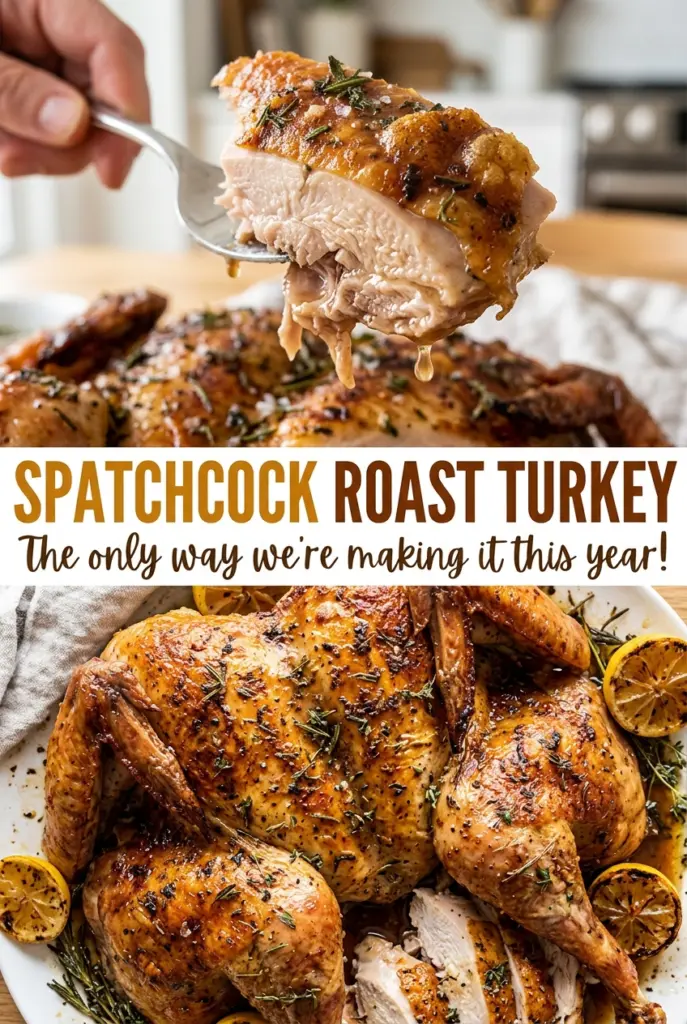
Spatchcock Roast Turkey
A whole turkey can brown beautifully on top while the meat near the joints still needs more time. Spatchcocking fixes that uneven shape before the bird ever reaches the oven.…
Tip: save now, cook later.A whole turkey can brown beautifully on top while the meat near the joints still needs more time. Spatchcocking fixes that uneven shape before the bird ever reaches the oven. I remove the backbone and press the breastbone flat, so the turkey sits in one broad layer instead of towering over the pan.
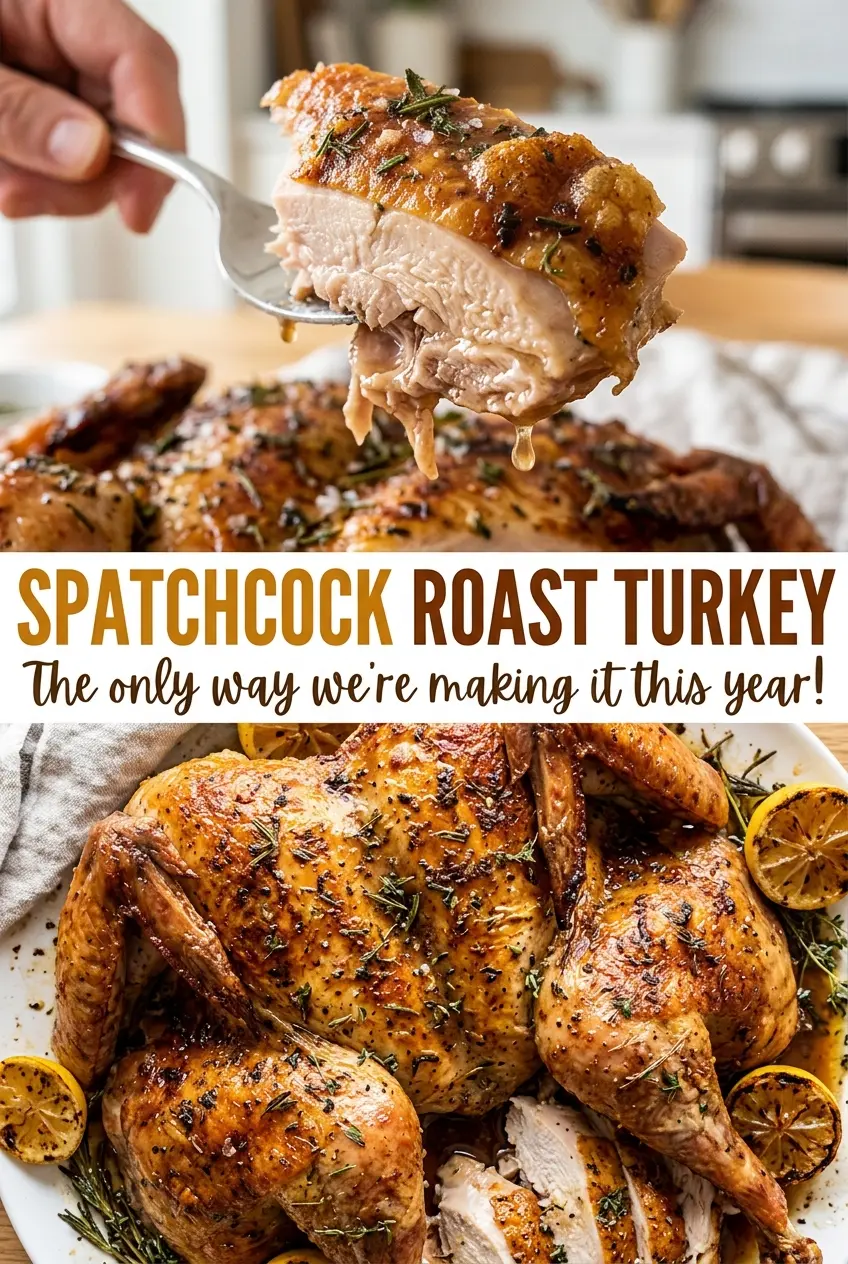
For this spatchcock roast turkey, an uncovered rest in the refrigerator gives the salted skin time to dry, and softened herb butter goes both underneath the skin and over the outside. That combination builds flavor where it counts without hiding the turkey under a complicated coating. Once it’s roasted, the skin is golden and the meat stays juicy beneath it, ready to carve after a proper rest.
Kitchen Note
Keep the turkey uncovered while it rests in the refrigerator. That open-air chill dries the skin, so it roasts up better than skin that’s been covered and damp.
Save this spatchcock roast turkey for a crisp-skinned centerpiece with garlic, rosemary, and thyme butter.
Why Flattening the Turkey Helps the Breast and Thighs Finish Together
A whole bird’s rounded shape makes the breast and legs sit at different heights and distances from the heat. Flattening the turkey changes that geometry. The legs spread out instead of tucking beneath the body, and the breast lies in a more even layer, which helps both areas roast on a closer schedule.
That’s the practical advantage of spatchcocking: you’re not relying on the breast to wait patiently while the thickest parts of the legs catch up. It also gives the skin more direct exposure to the oven’s heat. The backbone comes out, but the rest of the turkey stays together, so you still get a dramatic roast to bring to the table. A thermometer—not color alone—settles the question of doneness in both the breast and thigh.
What the Salt, Butter, and Fresh Herbs Each Bring
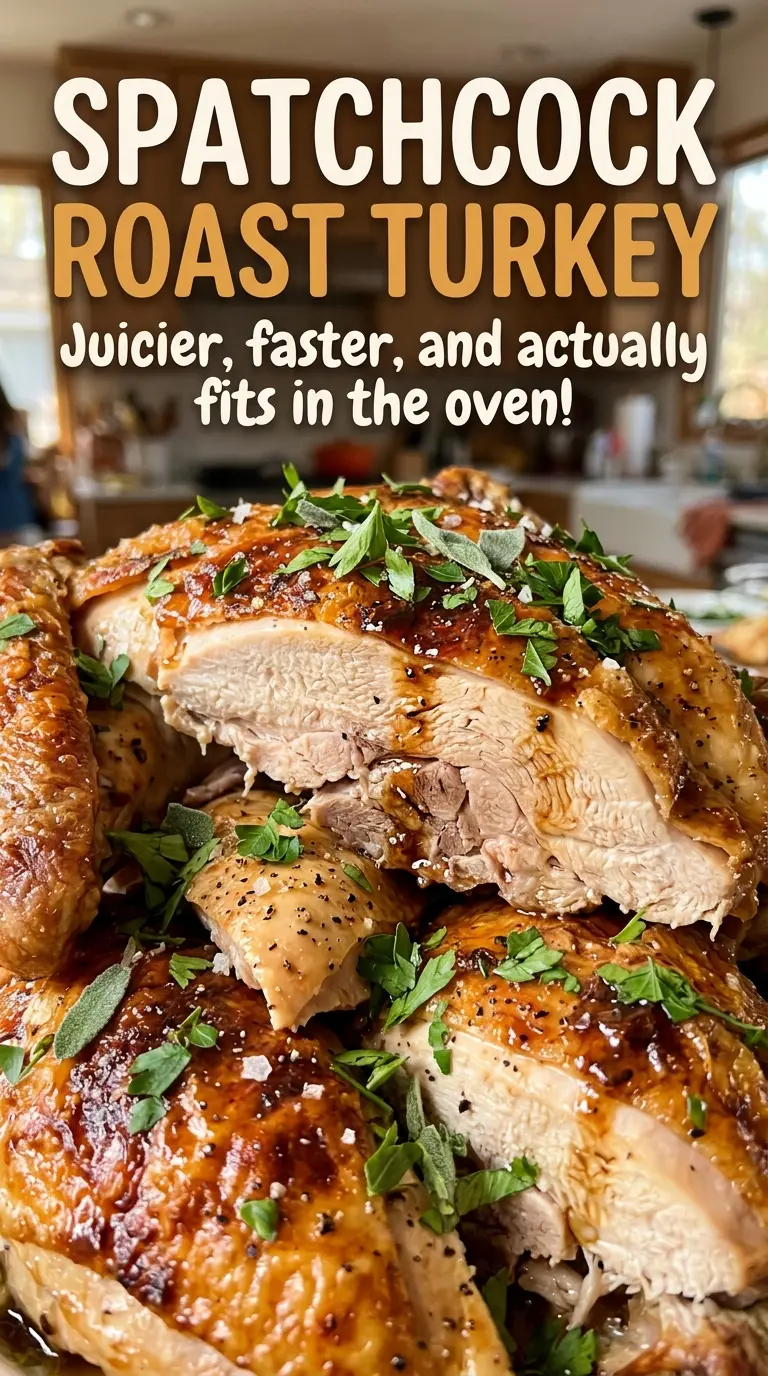
- Turkey — Start with a fully thawed 12- to 14-pound bird with the giblets removed. A turkey in this size range fits the timing and the 18-by-13-inch rimmed baking sheet used here; a partly frozen bird won’t roast predictably.
- Fine salt — Fine grains spread easily over the skin and into the cavity, giving the dry brine an even reach. Coarser salt won’t distribute the same way, so stick with fine salt for this version.
- Unsalted butter — Softened butter makes a spreadable base for the garlic and herbs, and choosing unsalted keeps the butter from adding hidden salt to an already salted bird. It should be soft enough to mash but not melted.
- Garlic, rosemary, and thyme — Fresh garlic and chopped fresh herbs make a fragrant paste that clings to the butter and seasons the meat beneath the skin. Fresh rosemary and thyme have a brighter, more distinct aroma here than dried herbs.
- Ground black pepper — Pepper adds a little warmth to the butter mixture without competing with the fresh herbs. Use finely ground pepper so it spreads evenly through the paste.
From Cutting Board to Evenly Roasted Turkey
Cut Out the Backbone and Flatten the Bird
Set the fully thawed turkey breast-side down on a cutting board. Use sturdy kitchen shears to cut along both sides of the backbone and remove it. Turn the turkey over, then press firmly on the breastbone until the bird lies flat; if it still rocks up in the middle, press again before seasoning.
Salt and Chill Uncovered
Sprinkle the fine salt evenly over both sides of the turkey and inside the cavity. Set it skin-side up on a wire rack over an 18-by-13-inch rimmed baking sheet, then refrigerate uncovered for 12 to 24 hours. Keep the bird level on the rack so it stays supported while it chills.
Work the Herb Butter Under the Skin
Heat the oven to 425°F and position a rack in the lower-middle of the oven. Mash the softened butter with the minced garlic, chopped rosemary, chopped thyme, and black pepper. Gently loosen the skin over the breast and thighs, spread some butter underneath, and rub the rest over the outside; work carefully so the skin doesn’t tear.
Roast to Temperature, Then Rest
Roast for 1 1/4 to 1 3/4 hours. Check the thickest part of the breast and the innermost thigh with a thermometer, avoiding bone; both spots need to read 165°F. If the skin browns too quickly, loosely tent the turkey with foil, then transfer it to a carving board and rest for 30 minutes before carving.
Three Ways to Adjust the Herb Butter Without Losing the Roast
A Rosemary-Forward Bird
Leave out the thyme and keep the rosemary, garlic, butter, and pepper in the paste. The flavor turns woodsy and direct, with fewer herbal notes competing in each bite.
A Garlic-Free Herb Butter
Omit the garlic and mash the rosemary and thyme into the softened butter with the pepper. You’ll keep the fresh, savory herb coating, but the garlic won’t be the first aroma from the oven.
A Dairy-Free Herb Coating
Use an equal amount of unsalted plant-based butter in place of the unsalted butter, then mash in the garlic, rosemary, thyme, and pepper as usual. The herb coating still works, though plant-based butter may brown a little differently from dairy butter.
Storage and Reheating
- Refrigerator: Refrigerate carved leftovers in a covered container within 2 hours; they keep for 3 to 4 days. The skin softens once chilled, even when the meat stays moist.
- Freezer: Freeze carved turkey in airtight, freezer-safe portions for up to 6 months for best quality. Thaw it in the refrigerator before reheating.
- Reheating: Reheat slices covered in an oven-safe dish or in a covered microwave-safe dish, turning or rearranging the pieces so they heat evenly. Heat leftovers to 165°F, and avoid leaving uncovered slices in the oven, where they dry out quickly.
Questions That Come Up Before the Turkey Goes in the Oven
Spatchcock Roast Turkey
Ingredients
Equipment
Method
- Set the turkey breast-side down on a cutting board. With sturdy kitchen shears, cut along both sides of the backbone and remove it.
- Turn the turkey over and press firmly on the breastbone until the bird lies flat.
- Sprinkle the salt evenly over both sides of the turkey and inside the cavity.
- Set the turkey skin-side up on a wire rack over an 18x13-inch rimmed baking sheet and refrigerate uncovered for 12 to 24 hours.
- Heat the oven to 425°F and position a rack in the lower-middle of the oven.
- In a small bowl, mash together the softened butter, garlic, rosemary, thyme, and black pepper.
- Gently loosen the skin over the breast and thighs, then spread some of the butter mixture underneath.
- Spread the rest of the butter mixture over the outside of the turkey.
- Roast for 1 1/4 to 1 3/4 hours, until a thermometer inserted in the thickest part of the breast and the innermost thigh, without touching bone, reads 165°F. Loosely tent with foil if the skin browns too quickly.
- Transfer the turkey to a carving board and rest for 30 minutes before carving.