
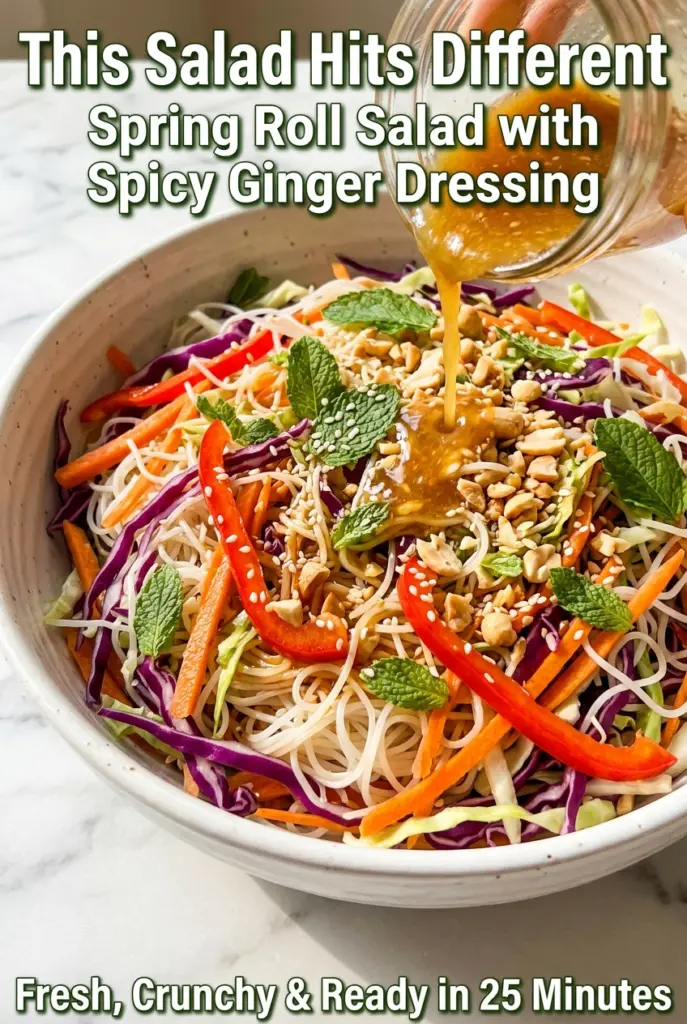
Spring Roll Salad with Spicy Ginger Dressing
All the best parts of a Vietnamese spring roll land in one bowl here: cool crunch, slippery rice noodles, fresh herbs, and a dressing that wakes everything up without drowning…
Tip: save now, cook later.All the best parts of a Vietnamese spring roll land in one bowl here: cool crunch, slippery rice noodles, fresh herbs, and a dressing that wakes everything up without drowning it. The mix hits that sweet spot between light and satisfying, which is why it works for lunch without leaving you hunting for a snack an hour later. Every bite has contrast, and that’s what keeps this salad from feeling like just another noodle bowl.
The trick is in the balance. The cabbage and cucumber bring the crunch, but they need the noodles and dressing to carry the salad and pull the herbs into the mix. The spicy ginger dressing does the heavy lifting with lime, fish sauce, sesame oil, and fresh ginger, so the final bowl tastes layered instead of flat. I also like that the vegetables are all cut to about the same size, which makes the forkfuls tidy and keeps the noodles from clumping.
Below, I’ll walk through the small details that matter most, including how to keep the herbs bright, how much dressing to add first, and the easiest swap if you want to turn this into a full meal with shrimp or chicken.
I was worried the noodles would get gummy, but rinsing them cold and tossing the dressing in right before serving kept everything light and separate. The ginger heat was perfect with the herbs and peanuts, and the leftovers still tasted great the next day.
Save this spring roll salad for the nights when you want all that crunchy, herby freshness without rolling a single wrapper.
The Dressing Only Works If the Bowl Stays Crisp
The fastest way to flatten a salad like this is to dress it too early. Rice noodles soften quickly, cucumbers shed water, and herbs lose their lift the longer they sit in acid and salt. The fix is simple: build the bowl with dry vegetables, toss in most of the dressing right before serving, and keep a little back for the table.
Another thing that matters here is texture layering. Thin rice vermicelli give you the spring roll feeling, but they’re mild and slippery, so the cabbage, bean sprouts, and herbs have to stay sharp and cold. If your bowl ever tastes dull, it’s usually because the herbs were timid or the dressing needed more lime, not because the recipe is missing another sauce.
What Each Ingredient Is Actually Doing in This Salad
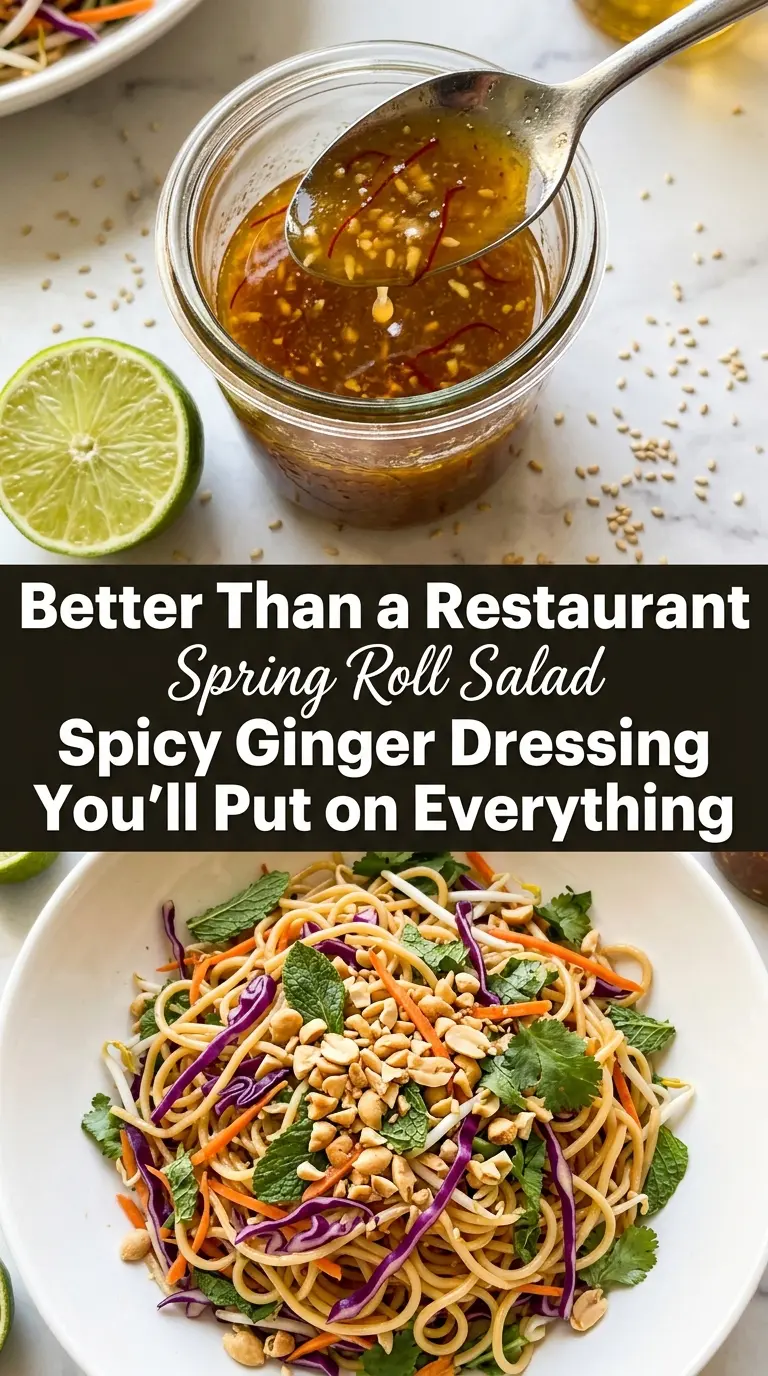
- Rice vermicelli noodles — These give the salad its spring roll backbone. Cook them just until tender, then rinse well under cold water so they don’t turn sticky and glue the bowl together.
- Purple and green cabbage — This is where the crunch comes from, and it holds up better than lettuce once the dressing goes on. Shred it finely so it mixes with the noodles instead of fighting them.
- Fresh herbs — Mint, cilantro, and basil are not garnish here; they’re part of the structure of the dish. Thai basil gives the most authentic edge, but regular basil works if that’s what you have.
- Fish sauce — This is the salty, savory piece that makes the dressing taste complete. Soy sauce can stand in for a vegan version, but the flavor will land a little softer and less briny.
- Fresh ginger and lime juice — These keep the dressing bright and sharp. Use fresh ginger, not powdered, because the raw ginger bite is what keeps the whole salad lively.
- Peanuts and sesame seeds — Add these at the very end so they stay crunchy. If you toast the sesame seeds, the nutty flavor shows up more clearly and makes the salad taste finished.
How to Build the Salad So the Noodles Stay Loose and the Herbs Stay Bright
Cook the Noodles Just to Tender
Rice vermicelli go from perfect to mushy fast, so pull them as soon as they’re tender and opaque. Rinse them under cold water right away to stop the cooking and wash off the starch that makes them clump. If they seem too long or awkward to toss, snip them with kitchen scissors after draining.
Whisk the Dressing Until It Tastes Balanced
Start the dressing in a small bowl or jar and whisk until the honey disappears and the ginger is evenly distributed. The goal is a sharp, salty-sweet dressing with enough heat to linger, not a sauce that tastes one-note. If it tastes flat, add a little more lime or a splash more fish sauce rather than extra sweetener.
Toss the Bowl in Layers
Combine the noodles, cabbage, cucumber, carrots, bell pepper, and bean sprouts first so the sturdy vegetables catch the dressing. Fold in the herbs after that, because rough stirring bruises mint and basil and turns them dark. Add most of the dressing, toss, then stop and taste before you pour in the rest.
Finish With Crunch and Protein
Sprinkle the peanuts and sesame seeds on top at the end so they don’t soften in the bowl. If you’re using shrimp or chicken, layer it over the top instead of mixing it in, which keeps the presentation clean and lets people spoon as much protein as they want. Serve it right away while the vegetables are still crisp and the noodles still feel cool.
How to Adapt This for Different Needs and Different Dinners
Make It Vegetarian or Vegan
Swap the fish sauce for soy sauce, and if you want a little more depth, add an extra half teaspoon of soy or a tiny pinch of salt. You lose some of the briny complexity, but the lime, ginger, and sesame still carry the dressing beautifully.
Turn It Into a Main Dish
Add cooked shrimp or thin slices of chicken breast and keep the portion of noodles the same if you want it to stay light. The protein soaks up the dressing on the edges, which makes the bowl feel more substantial without turning it heavy.
Make It Gluten-Free Without Guesswork
Rice vermicelli are naturally gluten-free, but check the labels on your soy sauce and chili sauce since some brands hide wheat there. Tamari is the easiest swap for soy sauce if you want a cleaner gluten-free dressing with the same salty backbone.
Storage and Reheating
- Refrigerator: Store the salad and dressing separately for up to 3 days. Once dressed, the noodles soften and the herbs lose their brightness.
- Freezer: This one doesn’t freeze well. The cucumber, herbs, and noodles all suffer once thawed, so it’s better as a fresh fridge meal.
- Reheating: Don’t reheat the assembled salad. If the noodles are a little firm from the fridge, let them sit at room temperature for 10 to 15 minutes and add a splash of extra dressing to wake everything back up.
The Things That Trip People Up With This Dish
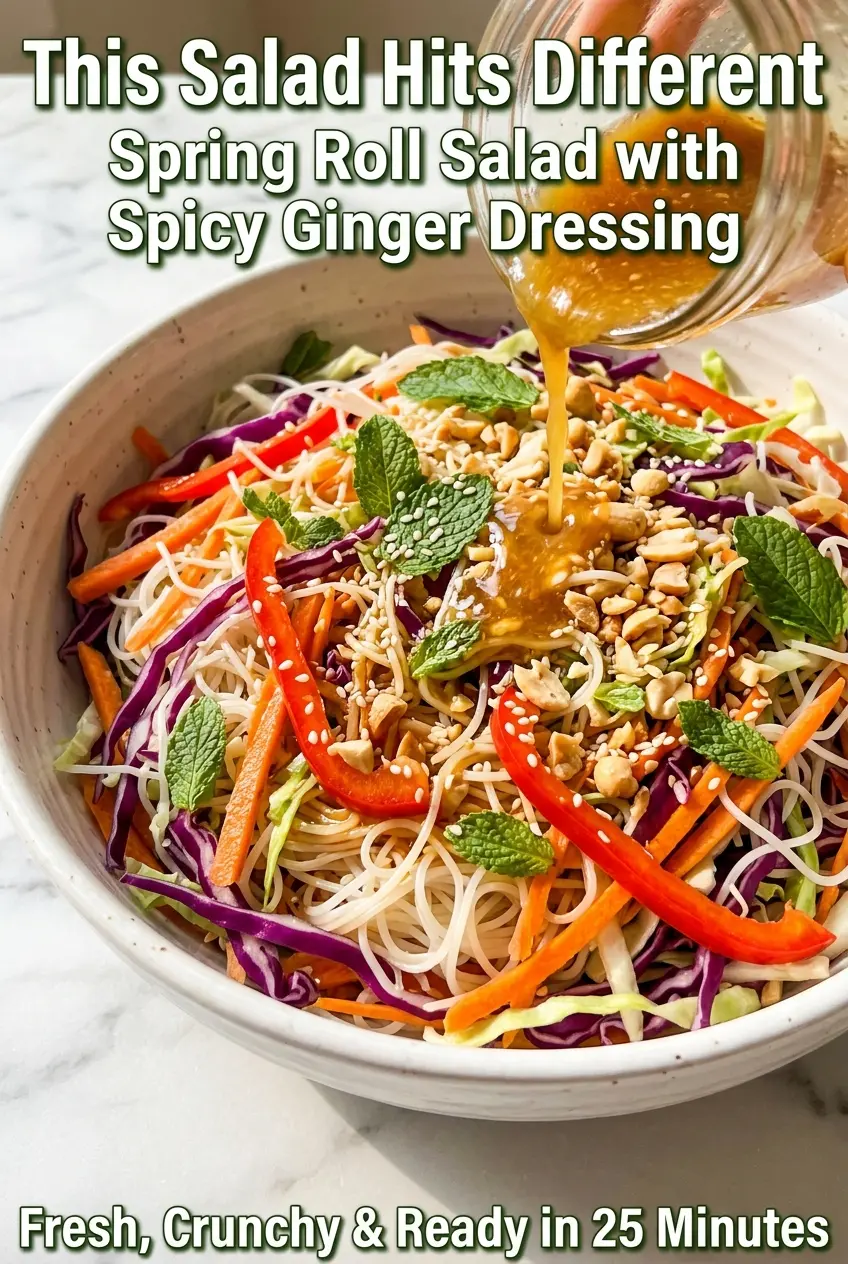
Spring Roll Salad with Spicy Ginger Dressing
Ingredients
Equipment
Method
- Cook the rice vermicelli noodles according to package instructions—usually soak in boiling water for 3–5 minutes until just tender, then drain.
- Rinse the drained noodles under cold water to stop cooking, and set aside; trim into shorter lengths with scissors if needed.
- In a small bowl or jar, whisk lime juice, fish sauce (or soy sauce), rice vinegar, sesame oil, honey (or maple syrup), grated ginger, minced garlic, chili garlic sauce (or sriracha), and soy sauce until fully combined.
- Taste and adjust the heat or sweetness to your preference, aiming for a punchy balance of tang, umami, and ginger heat.
- Prep the vegetables by shredding the purple and green cabbage, julienning the cucumber and carrots, and slicing the red bell pepper thin.
- Rinse the bean sprouts, and pat all the vegetables dry so the dressing clings instead of sliding off.
- In a large mixing bowl, combine the drained noodles, cabbage, cucumber, carrots, and red bell pepper along with the bean sprouts.
- Toss gently to mix so the noodles stay intact and the vegetables remain crisp.
- Add mint leaves, cilantro leaves, basil leaves, and green onions, then fold gently to keep the herbs vibrant and unbruised.
- Pour ¾ of the dressing over the salad and toss until everything is evenly coated, then add more dressing to taste.
- If using protein, layer cooked shrimp or sliced chicken breast on top of the salad.
- Transfer to a serving bowl, then top with chopped roasted peanuts, toasted sesame seeds, and extra fresh herbs.
- Serve immediately with the remaining dressing on the side so the salad stays crunchy.