

Sweet Potato Casserole with Marshmallows
The marshmallows can go from puffed and golden to scorched while you’re still waiting for the sweet potato underneath to finish baking. I learned to treat this casserole as two…
Tip: save now, cook later.The marshmallows can go from puffed and golden to scorched while you’re still waiting for the sweet potato underneath to finish baking. I learned to treat this casserole as two bakes: first, give the smooth sweet potato base time to cook through; then add the mini marshmallows for just long enough to toast. That keeps the topping soft and pillowy instead of dark before the center is ready.
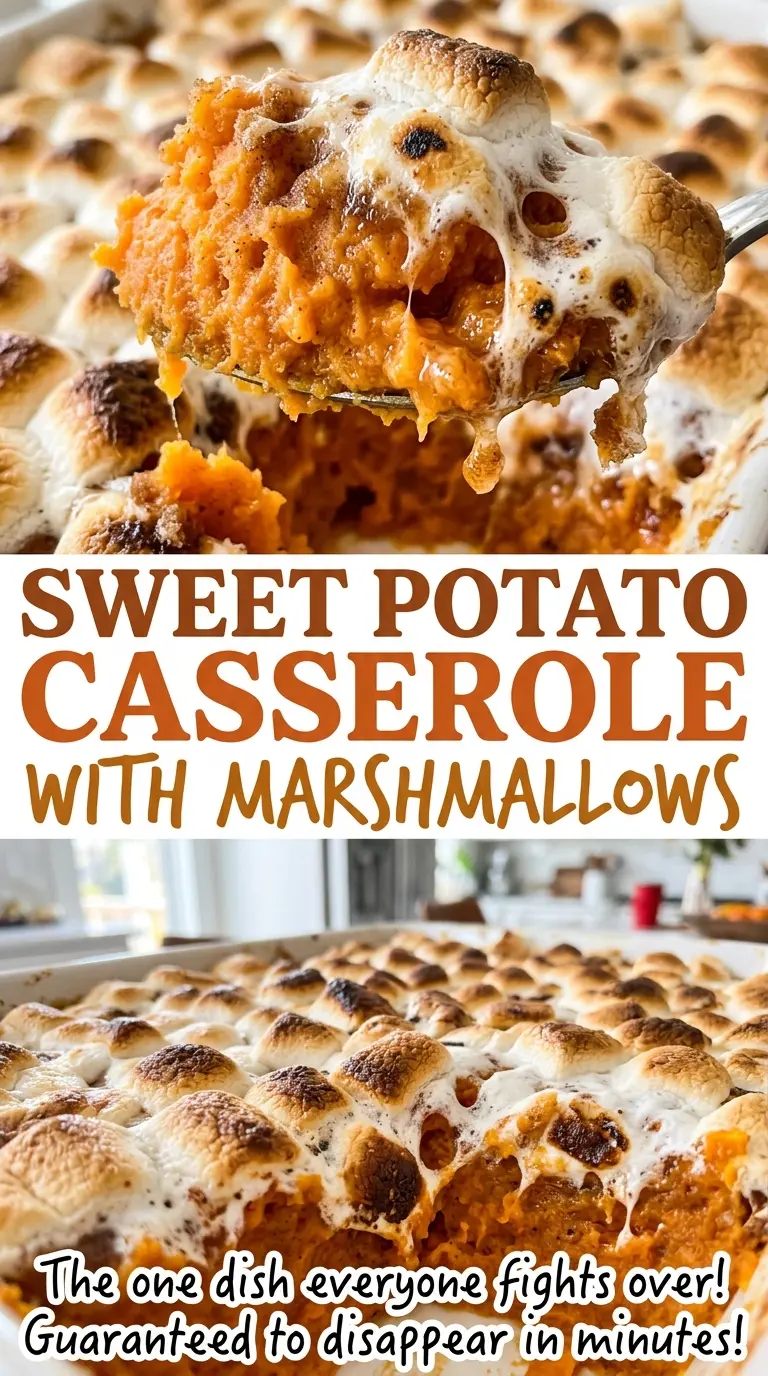
I make the base with boiled sweet potatoes, melted butter, brown sugar, milk, eggs, vanilla, and cinnamon. The eggs help it set, so I let the mashed potatoes cool for five minutes before stirring them in. Once the marshmallows are golden and the casserole has rested, each spoonful has a soft, gently spiced center under a toasted, stretchy top.

Kitchen Note
Let the mashed sweet potatoes cool for the full five minutes before you mix in the eggs. That short pause keeps the warm mash from scrambling them, so the base bakes up smooth.
Save this sweet potato casserole with its toasted marshmallow top for a holiday table or any meal that calls for a cozy, soft-centered side.
Why the Marshmallows Go on After the Sweet Potato Base Bakes
The sweet potato mixture needs a longer, gentler bake than the topping does. If the marshmallows go on at the beginning, they’re exposed to the oven for the whole bake and can get too dark before the center has finished setting. I bake the base first, then scatter the marshmallows over it and return the dish to the oven for their shorter toast.
That second bake is quick, but the visual cue matters more than chasing the longest time. Look for marshmallows that have puffed and turned golden; they’ll soften together into a light, sweet blanket. If they’re still pale, give them a little longer and keep an eye on them, since the change from golden to overly browned happens quickly.
The base has its own reliable doneness check: its center should reach 160°F before the marshmallows go on. That gives the egg-enriched sweet potato mixture time to cook through without asking the topping to sit in the oven while it does. After the final bake, let the casserole rest for ten minutes so it settles enough to serve neatly.
What the Sweet Potatoes, Eggs, and Marshmallows Each Bring
- Sweet potatoes — They’re the body of the casserole, so start with firm potatoes and peel them before cutting. Keeping the pieces close to one inch helps them cook evenly in the pot. Mash them until smooth for the creamy, cohesive base this version is meant to have.
- Eggs — Beaten eggs help the mixture set as it bakes, rather than staying like loose mashed potatoes. Add them after the potatoes have cooled briefly and stir until no streaks remain. They’re doing more than adding richness, so leaving them out changes the way the casserole holds together.
- Butter and whole milk — Melted butter brings richness, while milk loosens the mash enough to stir into an even mixture. Whole milk gives the base a rounded texture; lower-fat milk would make it less rich. Stir both in with the other ingredients so the mixture spreads easily without dry pockets.
- Light brown sugar, vanilla, and cinnamon — Together, these make the sweet potato taste warm and gently sweet without masking it. Packed brown sugar contributes a little moisture as well as sweetness; vanilla and cinnamon add aroma through the whole base. Measure the cinnamon carefully so it seasons the casserole without taking over.
- Mini marshmallows — Their small size makes it easier to cover the casserole evenly, and they puff and brown during the short final bake. Keep them for the topping stage rather than mixing them into the sweet potato base, where they won’t form that distinct toasted layer.
From Fork-Tender Potatoes to a Golden Marshmallow Top
Boil the Sweet Potato Cubes Until They Yield Easily
Heat the oven to 350°F and coat a 9×13-inch baking dish with nonstick cooking spray. Peel the sweet potatoes, cut them into 1-inch cubes, and put them in a 6-quart pot covered with cold water by one inch. Bring the water to a boil, then simmer for 15 to 20 minutes. They’re ready when a fork pierces a cube easily; if the center still feels firm, keep simmering and check again.
Mash Smoothly and Mix the Base
Drain the potatoes and return them to the pot, then mash until smooth. Let the mash cool for five minutes before adding the melted butter, brown sugar, milk, beaten eggs, vanilla, salt, and cinnamon. Stir until the mixture is combined, with no visible streaks of egg or dry pockets. Spread it evenly in the prepared baking dish so the center and edges bake at a similar pace.
Bake the Base Before Adding Any Marshmallows
Set the dish in the 350°F oven and bake the base for 25 to 30 minutes. Check the center with a food thermometer; it should reach 160°F before you add the topping. The surface should look set rather than wet, but use the temperature at the center as the doneness check. If it hasn’t reached 160°F, keep baking the base before moving on.
Toast the Topping, Then Let the Casserole Rest
Remove the dish from the oven and scatter the mini marshmallows evenly over the surface. Return it to the oven for 8 to 12 minutes, until they’re puffed and golden. Watch closely near the end so they don’t darken past the color you want. Let the casserole rest for ten minutes before serving.
Simple Ways to Change the Sweetness or Topping
A less-sweet sweet potato base
For a subtler sweet potato flavor, leave the brown sugar out of the base and keep the rest of the ingredients the same. The casserole will taste less sweet and the marshmallow topping will stand out more. This is a simple adjustment, not a sugar-free version, since mini marshmallows still make the finished dish sweet.
A marshmallow-free casserole
Leave off the marshmallow topping and serve the baked sweet potato base on its own. It keeps the cinnamon, vanilla, and brown sugar in the spotlight, though you’ll miss the toasted top and the extra sweetness it brings. Bake the base until its center reaches 160°F, then let it rest before serving.
Storage and Reheating
- Refrigerator: Refrigerate leftovers within two hours and keep them covered for up to four days. The marshmallows soften and lose their freshly toasted texture.
- Freezer: The sweet potato base freezes well, but the marshmallow topping won’t keep its airy texture after thawing. For best results, freeze the baked base without marshmallows in an airtight container for up to three months, then thaw it in the refrigerator before reheating and topping.
- Reheating: Reheat covered in a 350°F oven until the center reaches 165°F. Add fresh mini marshmallows for the final 8 to 12 minutes if you want a newly puffed topping; reheating uncovered from the start can dry the edges before the center is hot.
Questions That Come Up When Making This Casserole
Sweet Potato Casserole with Marshmallows
Ingredients
Equipment
Method
- Heat the oven to 350°F.
- Coat a 9x13-inch baking dish with nonstick cooking spray.
- Peel the sweet potatoes and cut them into 1-inch cubes.
- Place the sweet potato cubes in a 6-quart pot and cover with cold water by 1 inch.
- Bring the water to a boil, then simmer the sweet potatoes for 15 to 20 minutes, until the cubes are easily pierced with a fork.
- Drain the sweet potatoes and return them to the pot.
- Mash the sweet potatoes until smooth and let cool for 5 minutes.
- Stir in the melted butter, packed light brown sugar, whole milk, beaten eggs, vanilla extract, kosher salt, and ground cinnamon until combined.
- Spread the sweet potato mixture evenly in the prepared baking dish.
- Bake for 25 to 30 minutes, until the center reaches 160°F.
- Remove the casserole from the oven.
- Scatter the mini marshmallows evenly over the top.
- Return the casserole to the oven and bake for 8 to 12 minutes, until the marshmallows are puffed and golden.
- Let the casserole rest for 10 minutes before serving.