
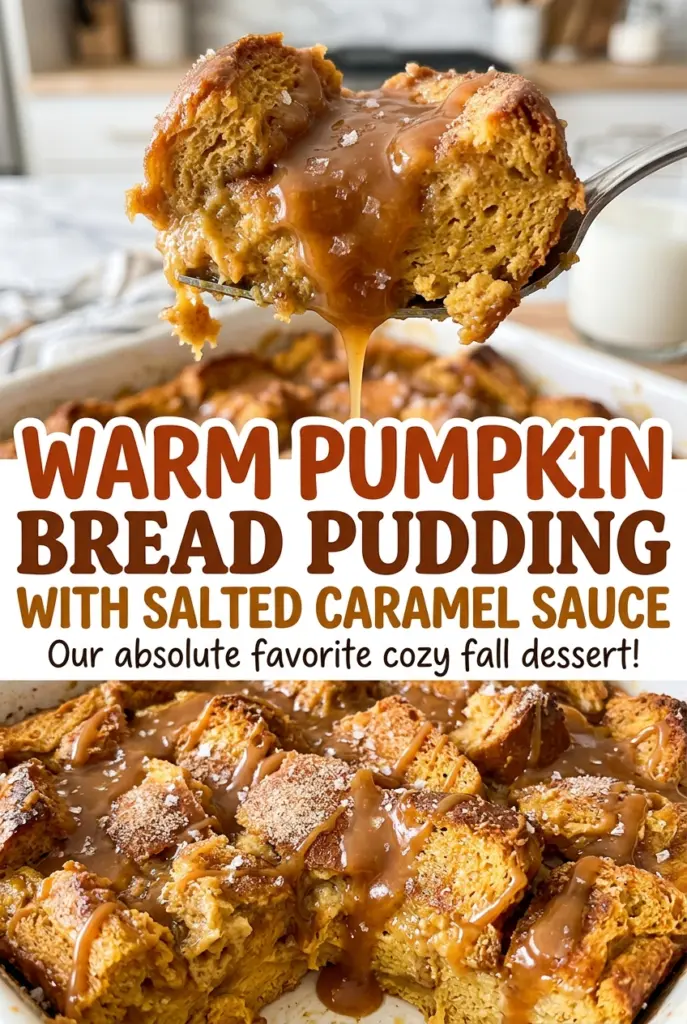
Warm Pumpkin Bread Pudding with Salted Caramel Sauce
The bread cubes should feel dry on the outside before they meet the custard, not toasted or browned. I learned that after a batch made with soft, fresh bread turned…
Tip: save now, cook later.The bread cubes should feel dry on the outside before they meet the custard, not toasted or browned. I learned that after a batch made with soft, fresh bread turned heavy in the middle; giving the cubes a short spell in the oven lets them take in the pumpkin mixture without collapsing. That small bit of patience is what makes this warm pumpkin bread pudding tender rather than soggy.
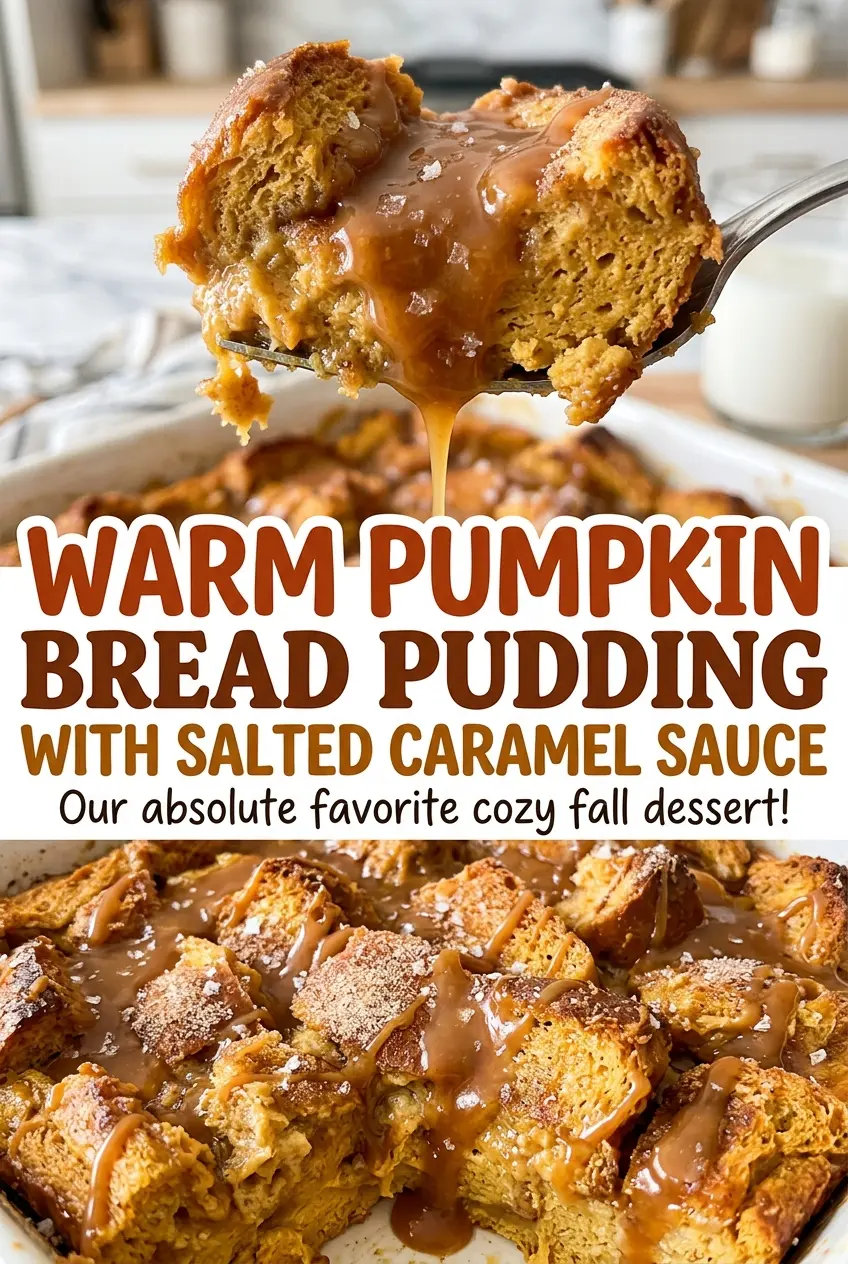
Challah or brioche brings enough richness to stand up to the pumpkin, cinnamon, and ginger, while the brown sugar gives the custard a gentle molasses note. The salted caramel is cooked separately, so you can judge its color in the saucepan and spoon it over each warm portion just before serving. The finished pudding has soft, custardy centers, and the warm sauce adds a buttery, salty-sweet finish.
Kitchen Note
Once the caramel reaches deep amber, take it off the heat before whisking in the butter. Sugar keeps cooking in the hot pan, and a moment too long can take it from rich caramel to bitter.
Save this warm pumpkin bread pudding with salted caramel for a make-ahead dessert with soft custard and a buttery, salty-sweet finish.
Why Soft, Fresh Bread Can Leave Pumpkin Custard Soggy
Bread pudding needs bread that can absorb custard and still hold its shape. Fresh challah or brioche is tender and moist to begin with, so pouring the pumpkin mixture over it right away can leave the center heavy while the edges bake through. Drying the cubes first gives them room to soak up the custard instead of turning to mush.
That doesn’t mean you want croutons. The bread should feel dry to the touch after its short bake, but it shouldn’t be browned or crisp all the way through. The 20-minute rest after tossing the bread with the custard gives the cubes time to take in the mixture evenly; pressing them into the bowl once helps the exposed pieces make contact, too. You’ll get a pudding that holds together when served but stays soft inside.
This balance matters especially with pumpkin, which adds moisture to the custard. Let the bread do its share of the work before baking, and the center has a better chance of setting without the outside drying out while you wait.
What the Pumpkin, Bread, and Two Sugars Each Bring
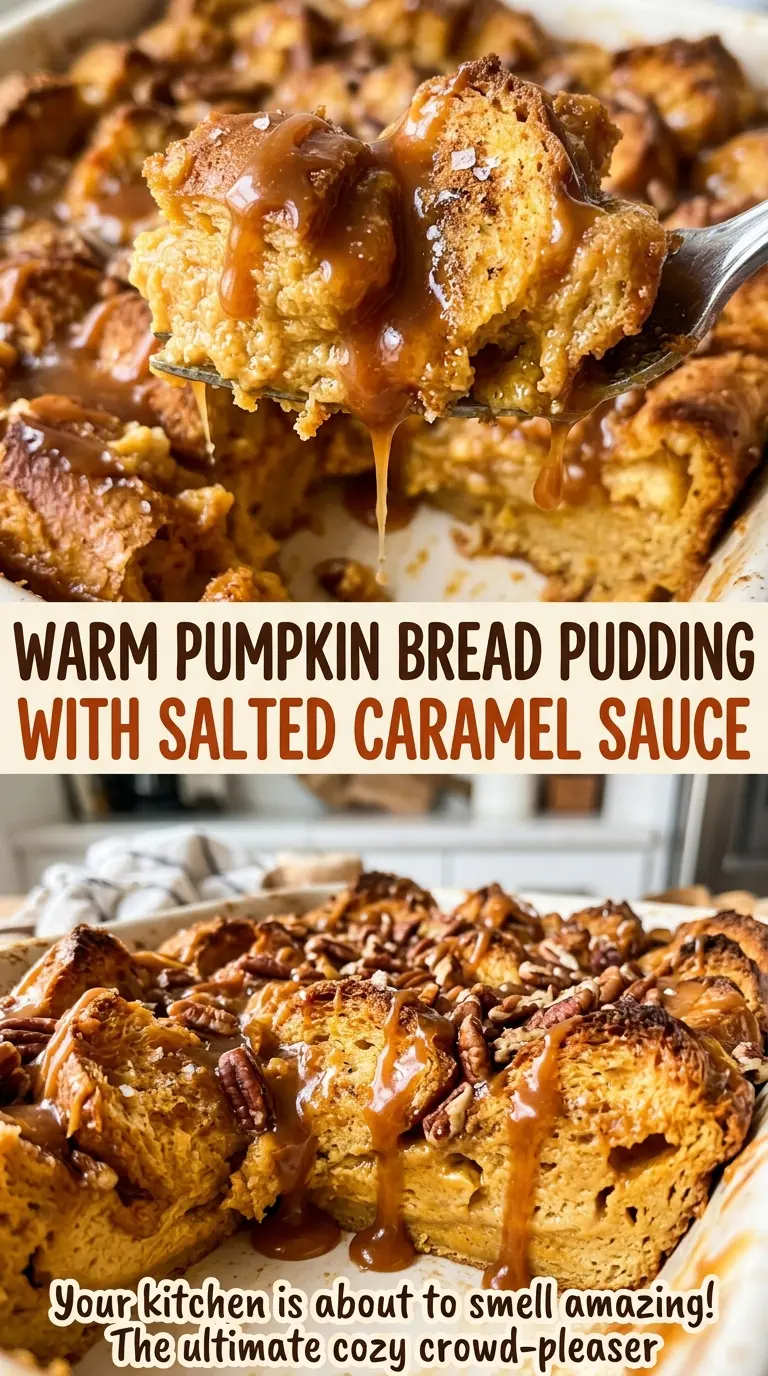
- Challah or brioche — Either works well here. Challah gives the pudding a slightly less buttery base, while brioche makes it especially rich. Use bread cut into even cubes so the pieces soak and bake at a similar pace.
- Canned pumpkin puree — Choose plain pumpkin puree, not pumpkin pie filling. Pie filling is already sweetened and spiced, which would throw off the balance of the custard and sauce.
- Whole milk and eggs — Milk loosens the pumpkin into a pourable custard, and the eggs give that custard structure as it bakes. I wouldn’t swap in a lower-fat milk here; whole milk gives the pudding a fuller, smoother texture.
- Light brown sugar and granulated sugar — Brown sugar sweetens the pudding and adds a mellow molasses note. Granulated sugar is the right choice for the caramel, where it melts into the clear syrup that develops its amber color.
- Cinnamon, ginger, and nutmeg — These warm spices round out the pumpkin without competing with the caramel. Ground spices blend straight into the custard, so whisk them thoroughly with the other ingredients.
- Heavy cream, butter, kosher salt, and vanilla — Cream and butter make the caramel smooth and rich; kosher salt keeps its sweetness from feeling flat, and vanilla rounds it out. The cream should be warm, not boiling, when it goes into the hot sugar syrup.
From Dry Bread Cubes to Smooth Salted Caramel
Dry the Bread Without Browning It
Heat the oven to 300°F and spread the bread cubes across an 18×13-inch rimmed baking sheet. Bake for 15-20 minutes, until the cubes feel dry to the touch. Check a few pieces from the center of the pan, since they may dry more slowly than the ones at the edges. You want them dry, not deeply toasted.
Whisk the Pumpkin Custard and Let It Soak
In a large bowl, whisk together the milk, pumpkin, eggs, brown sugar, cinnamon, ginger, and nutmeg until the mixture looks evenly blended. Add the bread cubes and toss until the pieces are coated. Let the mixture stand for 20 minutes, pressing the bread into the custard once so it absorbs evenly. If a few cubes are still sitting dry on top, turn them into the mixture before transferring everything to the dish.
Bake Until the Center Sets
Coat a 9×13-inch baking dish with cooking spray, then transfer the soaked bread mixture to it. Bake at 350°F for 45-55 minutes, until the center is set and an instant-read thermometer registers 160°F. The middle shouldn’t look like loose liquid when you check it. Let the pudding rest for 10 minutes before serving so it can settle.
Cook the Caramel to Deep Amber
Warm the heavy cream in a microwave-safe measuring cup for 30-45 seconds, until warm but not boiling. Combine the sugar and water in a 2-quart saucepan over medium heat, stirring until the sugar dissolves; then stop stirring and cook for 8-12 minutes, swirling the pan occasionally, until the syrup is deep amber. Remove the pan from the heat and whisk in the butter until melted, then carefully whisk in the warm cream, salt, and vanilla. If the caramel hardens, return the pan to low heat and whisk for 1-2 minutes until smooth.
Two Useful Ways to Adapt the Timing and Bread
Choose Challah for a Lighter Bread Base
Use challah in place of brioche if you want the pumpkin and spices to come through without quite as much buttery richness. The pudding will still bake up soft and custardy, with the caramel providing the richest part of each bite.
Make the Caramel Before the Pudding
Cook the sauce ahead and keep it separate from the pudding, then warm it gently before serving. This is handy when you want the oven and your attention free for the bake; the sauce may firm up as it cools, so whisk it over low heat until smooth again.
Storage and Reheating
- Refrigerator: Cover the pudding and refrigerate for up to 3 days. Store the caramel separately in an airtight container for up to 1 week.
- Freezer: Freeze the pudding without sauce in airtight portions for up to 2 months. Thaw it in the refrigerator; the texture may be a little softer after freezing. I don’t recommend freezing the sauce, since its smooth texture is best when freshly made.
- Reheating: Warm covered portions in the microwave or oven until hot throughout. Rewarm the caramel gently over low heat and whisk until smooth; high heat can scorch it before the center loosens.
Questions About Pumpkin Bread Pudding and Caramel
Warm Pumpkin Bread Pudding with Salted Caramel Sauce
Ingredients
Equipment
Method
- Heat the oven to 300°F.
- Spread the bread cubes on an 18x13-inch rimmed baking sheet and bake for 15-20 minutes, until dry to the touch.
- In a large bowl, whisk together the milk, pumpkin, eggs, brown sugar, cinnamon, ginger, and nutmeg.
- Add the bread cubes and toss to coat.
- Let stand for 20 minutes, pressing the bread into the custard once so it absorbs evenly.
- Coat a 9x13-inch baking dish with cooking spray.
- Transfer the bread mixture to the dish.
- Bake at 350°F for 45-55 minutes, until the center is set and registers 160°F on an instant-read thermometer.
- Let rest for 10 minutes.
- Warm the heavy cream in a microwave-safe measuring cup for 30-45 seconds, until warm but not boiling.
- Combine the sugar and water in a 2-quart saucepan.
- Cook over medium heat, stirring until the sugar dissolves.
- Stop stirring and cook for 8-12 minutes, swirling the pan occasionally, until the syrup is deep amber.
- Remove the pan from the heat and whisk in the butter until melted.
- Carefully whisk in the warm cream.
- Whisk in the salt and vanilla.
- If the caramel hardens, return the pan to low heat and whisk for 1-2 minutes until smooth.
- Spoon the warm salted caramel sauce over portions of the warm bread pudding before serving.