
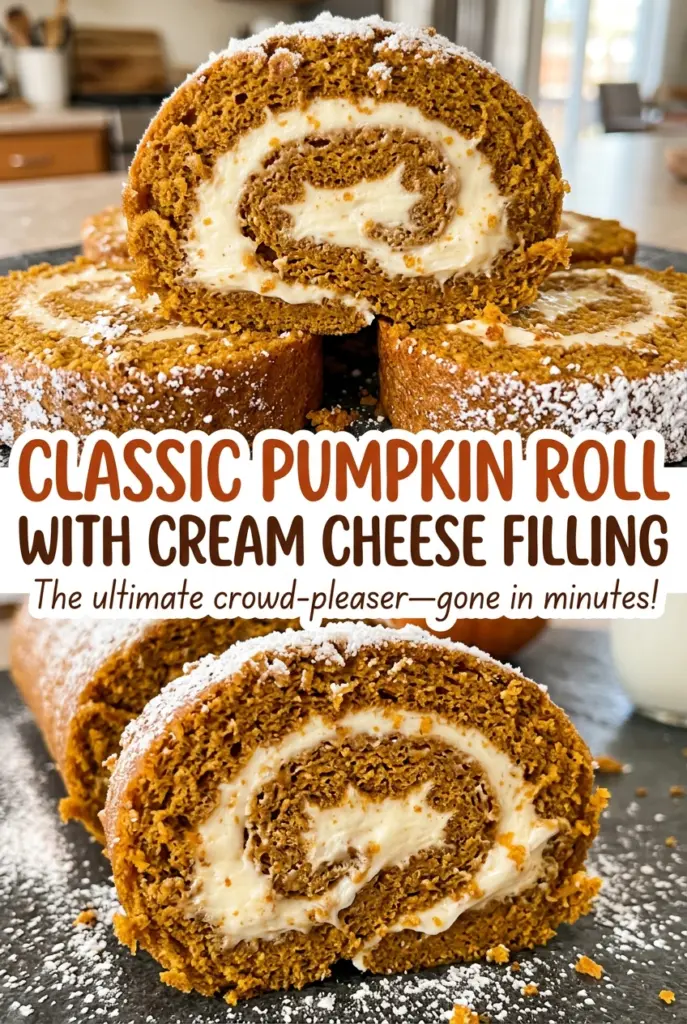
Classic Pumpkin Roll with Cream Cheese Filling
The thin cake comes out of the oven soft and springy, and it can seem almost too delicate to turn into a neat spiral. This classic pumpkin roll pairs that…
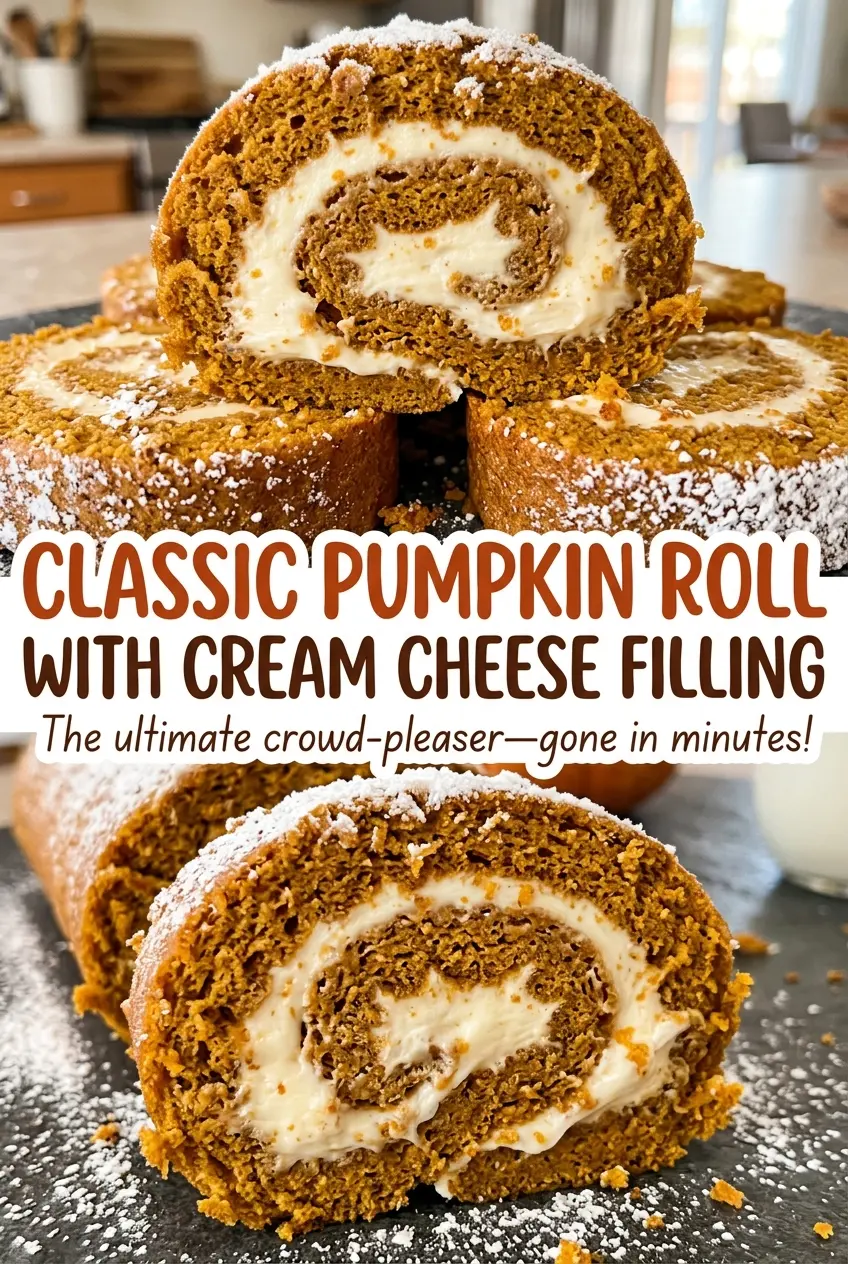
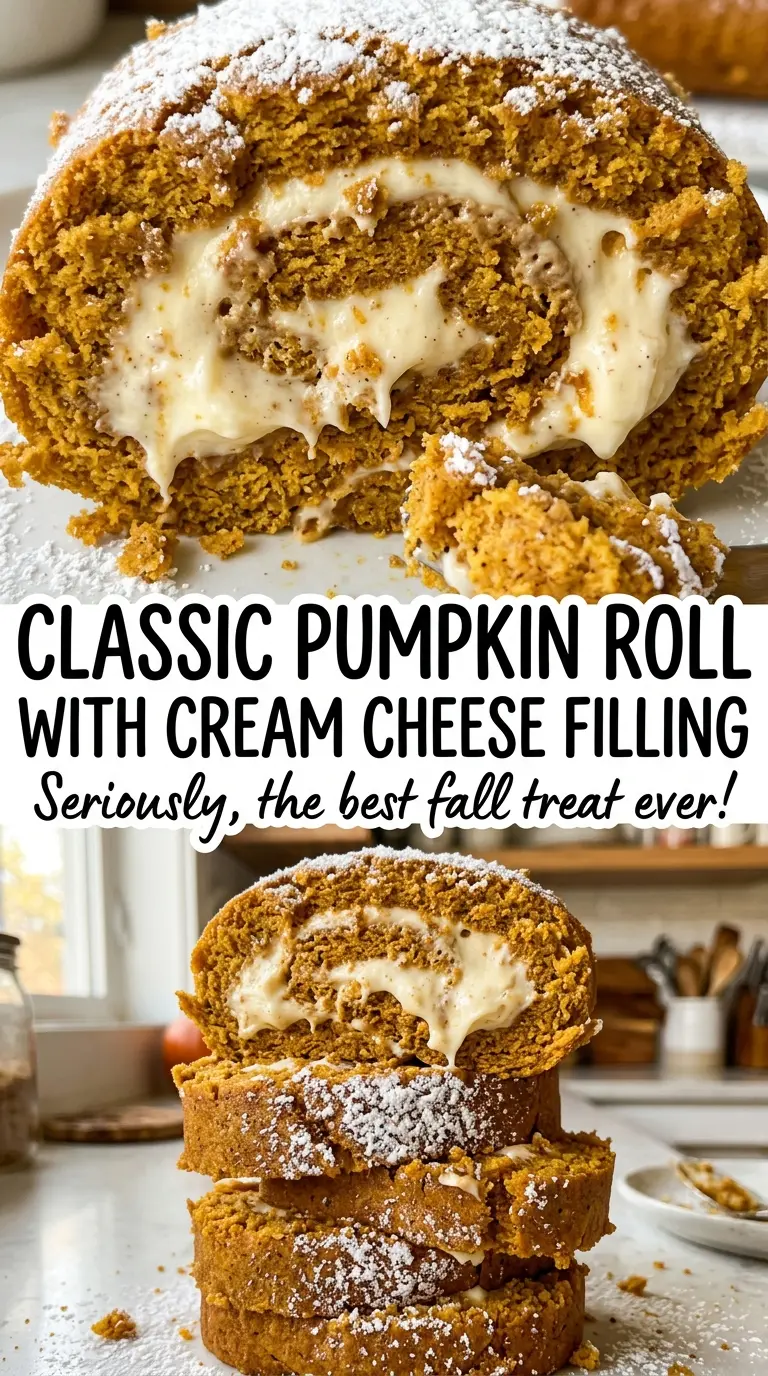
Tip: save now, cook later.The thin cake comes out of the oven soft and springy, and it can seem almost too delicate to turn into a neat spiral. This classic pumpkin roll pairs that tender pumpkin sponge with a smooth cream cheese filling, so each slice has a clear swirl instead of a dense layer of cake and frosting.
Beating the eggs and sugar until thick and pale gives the batter some air before the pumpkin goes in. Then the flour mixture gets folded in just until the dry streaks disappear. That light touch helps the baked cake stay tender enough to roll, with cinnamon running through every slice and a cool, creamy center.
Kitchen Note
Let the cream cheese and butter soften before you beat them together. When they’re pliable, the filling turns smooth without stubborn little lumps.
Save this classic pumpkin roll for its soft cinnamon sponge and creamy cream cheese spiral.
Why You Roll the Pumpkin Cake While It’s Still Hot
A thin sponge cake is easiest to shape while it’s warm and flexible. Let it cool flat first, and the cake is more likely to resist bending when you try to form the spiral. Rolling it around the towel as soon as it’s inverted gives the cake a chance to cool in that curved shape. Once it’s completely cool, it can be unrolled gently, filled, and rolled back into place.
The towel has a job beyond carrying the cake: the powdered sugar helps keep the warm surface from sticking as you roll and unroll it. Use a clean, lint-free towel and dust it evenly, rather than leaving bare patches. Work carefully when peeling away the parchment, and keep the first roll snug without pulling hard on the cake. The goal is a rounded shape, not a tight squeeze that presses the delicate sponge flat.
What the Pumpkin, Eggs, and Cream Cheese Bring to This Roll
- Canned pumpkin puree — Plain puree gives the cake pumpkin flavor and moisture without adding sweeteners or extra spices. Pumpkin pie filling isn’t a like-for-like substitute; its added sugar and seasoning change the batter. A basic can of puree works well, so there’s no need to seek out a specialty brand.
- Eggs — Room-temperature eggs beat more readily with the sugar and help create the airy base for this thin cake. Bring them to room temperature before mixing rather than trying to compensate with extra beating.
- All-purpose flour — It gives the sponge enough structure to hold its shape around the filling. I don’t recommend swapping in a different flour here; the cake is thin, and a change in how the flour absorbs moisture can affect its flexibility.
- Cream cheese — A block softens into a thick, smooth filling that stays in the spiral. Tub-style cream cheese is softer and can make the filling looser, so use the block called for here. A standard grocery-store block is fine.
- Unsalted butter — Softened butter blends with the cream cheese to make the filling creamy and easy to spread. Since the recipe uses unsalted butter, salted butter would change the seasoning; there isn’t a need to buy a premium brand.
- Cinnamon and vanilla — Cinnamon gives the sponge its familiar warm spice, while vanilla rounds out the cream cheese filling. Use ground cinnamon that still smells fragrant when you open the jar; the vanilla extract doesn’t need to be an expensive specialty product.
From a Thin Pumpkin Batter to a Clean Spiral
Prepare the jelly-roll pan
Heat the oven to 375°F and grease a 10×15-inch jelly-roll pan with nonstick cooking spray. Line it with parchment paper, then spray the parchment too, including the corners. That second coating helps the thin cake release cleanly instead of tearing at the edges. Set the pan aside while you mix the batter.
Beat and fold the batter gently
Beat the eggs and granulated sugar in a large bowl until the mixture is thick and pale, about 3 minutes, then beat in the pumpkin puree. In a separate bowl, whisk together the flour, baking soda, cinnamon, and salt. Fold the dry mixture into the pumpkin mixture only until no dry streaks remain; keep scraping along the bottom of the bowl so you don’t leave flour hidden there. Stop folding once the last streak disappears.
Bake, invert, and roll the warm cake
Spread the batter evenly in the prepared pan and bake for 13 to 15 minutes. The top should spring back when lightly touched, and a toothpick should come out clean; don’t wait for the edges to become deeply browned. While it bakes, lay a clean, lint-free kitchen towel on the counter and dust it evenly with powdered sugar. Invert the hot cake onto the towel, carefully peel off the parchment, then roll from a 10-inch end with the towel inside; set it seam-side down and let it cool completely, about 1 hour.
Fill, reroll, and chill before slicing
Beat the cream cheese and softened butter in a medium bowl until smooth, then beat in the powdered sugar and vanilla until creamy. Carefully unroll the cooled cake and spread the filling evenly over it, leaving a 1/2-inch border around the edges. Roll it back up without the towel, keeping the spiral even rather than pressing down on the sponge. Wrap the finished roll tightly and refrigerate it for at least 1 hour before slicing and serving.
Two Ways to Change the Pumpkin Roll Without Changing Its Character
A cinnamon-free pumpkin sponge
Leave the cinnamon out of the dry mixture and keep the rest of the cake ingredients and method the same. The pumpkin flavor comes through more plainly, though the cake loses the warm spice note that makes the classic version recognizable.
A dairy-free, unfilled sponge roll
For a dairy-free adaptation, leave out the cream cheese filling and use a nonstick cooking spray that contains no dairy. The cake ingredients themselves contain no dairy, but the result is an unfilled pumpkin sponge roll rather than the classic cream cheese version; it will be less rich and won’t have the creamy spiral.
Storage and Reheating
- Refrigerator: Keep the roll tightly wrapped and refrigerated for 3 to 4 days. The cake may firm up as it chills, while the filling stays creamy.
- Freezer: Wrap the whole roll tightly, then freeze it for up to 1 month for the best texture. Thaw it overnight in the refrigerator before slicing.
- Reheating: Don’t reheat this dessert; serve it chilled. Heat softens the cream cheese filling and can make it slide out of the spiral.
Questions That Come Up While Rolling and Slicing
Classic Pumpkin Roll with Cream Cheese Filling
Ingredients
Equipment
Method
- Heat the oven to 375°F.
- Grease a 10x15-inch jelly-roll pan with nonstick cooking spray, line it with parchment paper, and spray the parchment.
- In a large bowl, beat the eggs and granulated sugar until thick and pale, about 3 minutes.
- Beat in the pumpkin puree.
- In a separate bowl, whisk together the flour, baking soda, cinnamon, and salt.
- Fold the dry mixture into the pumpkin mixture just until no dry streaks remain.
- Spread the batter evenly in the prepared pan.
- Bake for 13 to 15 minutes, until the top springs back when lightly touched and a toothpick comes out clean.
- While the cake bakes, lay a clean, lint-free kitchen towel on the counter and dust it evenly with the powdered sugar.
- Immediately invert the hot cake onto the prepared towel and carefully peel off the parchment.
- Starting at a 10-inch end, roll the cake up with the towel, place it seam-side down, and cool completely, about 1 hour.
- Beat the cream cheese and butter in a medium bowl until smooth.
- Beat in the powdered sugar and vanilla until creamy.
- Carefully unroll the cooled cake.
- Spread the filling evenly over the cake, leaving a 1/2-inch border.
- Roll the cake back up without the towel.
- Wrap the roll tightly.
- Refrigerate for at least 1 hour before slicing and serving.